

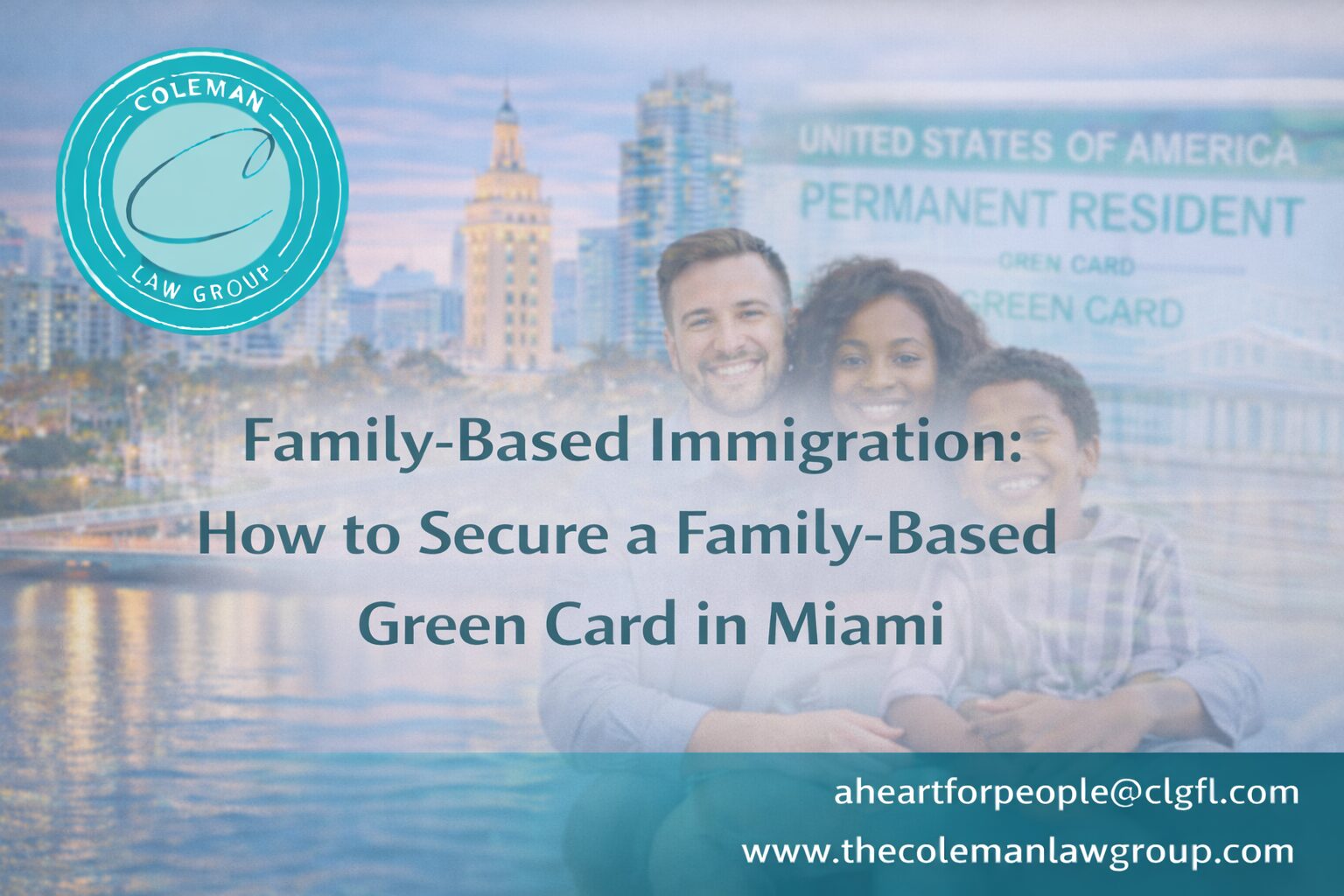
Families sometimes get separated, and for many, this can be a significant source of frustration. It even gets worse because reuniting may become challenging in such cases, especially when the other family member is a foreign national. Luckily, the family-based Green Card exists for this very reason, to reunite loved ones separated by the border barrier.
For U.S. citizens and lawful permanent residents, this process can be quite helpful to bring alien relatives into the country. In fact, it has always been an integral part of the country’s immigration policy, especially across Florida. However, interested candidates must first understand the process involved if they intend to be successful with their appeal. Here, this post explores the concept of the family-sponsored Green Card and the steps to securing one in Miami.
What is Family-Based Immigration and Who Qualifies?
As explained earlier, the family-based Green Card is a primary option in the U.S. immigration system and one of the most successful; it’s little wonder qualified individuals never hesitate to seize this opportunity. Family-based immigration basically refers to a system that allows relatives of U.S. citizens or LPRs to enter and live in the United States legally. It also provides a pathway to securing permanent residency for such immigrants. The immigration process usually requires the U.S. sponsor to petition for the family member or visa beneficiary they intend to bring.
As with other Immigration options, there are eligibility requirements that ensure only qualified people explore the option. Here’s a breakdown of the family-based Green Card pathways and the various qualifying relationships.
- Immediate Relative Visa: IR visas are the primary option in this category, and they mainly have to do with close family members. The qualifying relationships here include spouses and parents of U.S. citizens. Unmarried children also qualify for this visa type, but only if they are under 21. These visas usually have no annual limit and generally allow for faster processing.
- Family Preference Visa: This is more like a secondary option that allows other nuclear family members to apply for a Green Card procedure in the USA. Unlike its counterpart, this visa has an annual limit and can often take a little longer to process. Qualifying relationships include unmarried children above 21, spouses, and unmarried children of LPRs, married children of U.S. citizens, and siblings of U.S. citizens.
Note that extended family members are not included in this package.
Why Miami is a Popular Hub for Family-Based Immigration
Miami has always been an exceptional destination for tourists seeking to experience Florida’s natural beauty and appeal. But, beyond that, it’s also an excellent option for immigrants trying to find their feet in the United States. Miami is especially popular among people seeking family-based Green Cards for their loved ones. The easy access to immigration services it offers significantly eases the process, while the obvious community and support here make the aftermath more manageable, and for good reasons too.
Firstly, the large immigrant population here makes it easy for newcomers to blend in. But for most petitioners, there’s just no overlooking the legal infrastructure Miami offers. With easy access to immigration attorneys and a USCIS branch office, information is readily available here, and that makes the process slightly easier.
How to Secure a Family-Based Green Card Miami?
Family-based immigration and its advantages help put smiles on the faces of reunited families. However, the Green Card procedure in the USA may not be as friendly as you think. However, there is no need to be afraid because it is absolutely possible. In fact, places like Miami, which have key immigration resources, provide you with a significant head start. But applying the right approach can still make all the difference; here are the proper steps to follow.
- Check Eligibility: The family-based Green Card option offers two different pathways, and your first task is to determine which one is for you. If you are a close relative of a U.S. citizen, you’re eligible to file for the immediate relative visa. But if you’re not a dependent family member, then you’ll most likely fall under the family preference category.
- File Petition: Since this immigration option is sponsored, the U.S. citizen will be tasked with filing this petition. It typically involves completing the Petition for Alien Relative correctly. The form basically helps ensure a qualifying relationship between the sponsor and the beneficiary, and subsequent processes are often subject to the approval of this petition.
- Determine Pathway: Once the petition is approved, applicants must choose one of the two options based on their location. Those 2 options are – people applying from within the United States will require an adjustment of status, while those outside the country usually go through consular processing.
- Visa Interview: The final step often involves a face-to-face interview with USCIS officials. This is usually intended to determine the true motive and confirm the relationship status between the sponsor and the benefactor. Since there’s a local USCIS field office in Miami, it’s much more convenient for applicants who get an interview in this city.
The family-based Green Card not only allows immigrants to live legally in the United States but also enables them to reunite with their families. It also comes with a work permit and offers them a pathway to permanent residency after a specific period.
Common Challenges Applicants Face in Miami
The truth is that acquiring a family-based Green Card is usually not as complicated as it sounds. The only problem is that it can also get tricky really quickly if you are not very familiar with the process. However, knowing what to expect from this process can help you avoid these challenges. Here are some of the obstacles applicants faces, especially in Miami.
- Backlogs at the USCIS Office: Miami has a field office, and that’s an obvious advantage for immigrants processing in this locality. But it’s not all rosy for applicants in these parts, as even if they are not immune to delays. This is because officials are often left to process large numbers of applications due to Miami’s large immigrant population. And this, in turn, delays the family-based Green Card processing time.
- Documentation: Little mistakes like typos and missing pages, or even incorrect information, can put your entire immigration application at risk. The best-case scenario in such situations is that you’ll be required to produce more evidence via RFEs. But it could also mean that you have to start the entire process from scratch, which can cause significant delays.
- Proving Your Relationship: Regardless of how closely related family members are, access to the family-based Green Card can only be granted when the relationship is proven. For some, this can be a significant challenge, especially for relatives who have been living separately for a long time. Prospective immigrants will need to submit tangible evidence such as account statements, joint leases, pictures, travel records, marriage certificates, or any other available documents.
- Language Barriers: Language can often prove a significant challenge for immigrants, especially if English is not their first language. Understanding the legal terms in immigration forms is already taxing enough, but it becomes even more difficult in such cases.
Also, the fact that immigration laws are subject to reform often adds a layer of difficulty to this process. This is because you might be stuck trying to navigate an old system while new ones have already been introduced. In other words, working with outdated information can leave you behind in your bid to secure a family-based Green Card.
How Important is a Family-Based Immigration Lawyer in Miami
The challenging task of getting your immigration requests approved on time can sometimes get overwhelming, and for some, that’s the cue to hire a professional. However, it doesn’t have to be so. In fact, partnering with an immigration lawyer on time can often be the difference between approval and a delay.
Firstly, USCIS is trained to identify and flag application errors; however small they may be. But immigration lawyers are also skilled in this process and can help you spot and avoid such mistakes promptly. This single act can often save significant time, as it typically means your family-sponsored Green Card is processed without issues. Beyond that, your attorney can also help with evidence gathering, and since they are professionals, you can trust them to do a perfect job of it. But if in any case you get an RFE, they’re also experienced in that aspect and can help you respond accordingly.
Additionally, since the USCIS office in Miami often receives a high volume of applications, some may become stuck in limbo. Your lawyer can also come in handy in such cases. You see, lawyers do not just handle applications; they also follow up on them to ensure they go through. Basically, you subscribe to peace of mind with an immigration lawyer because they handle the difficulties and leave you to enjoy the U.S. Green Card benefits. Additionally, when it’s time for your visa interview, you can rely on your lawyer to assist you with your preparation.
Coleman Law Group Can Help You
The advantages of having a Green Card are many, but hiring professional assistance for this delicate task is a no-brainer. However, applicants must partner with the right legal aid if they intend to take advantage of these benefits. Well, Coleman Law Group is your absolute best option in Miami. Our firm is highly reputable throughout Florida, and our lawyers have extensive experience with family-based immigration cases.
At Coleman Law Group, we take your immigration needs personally and offer excellent assistance throughout this process. You can also rest assured that we have the capacity to see your appeal to the end. Our attorneys are also skilled in the field of evidence gathering, so you won’t have a problem establishing relationships. But most importantly, we’re well-rooted in the Miami Immigration system and can guarantee tailored assistance when you partner with us. At times, this can often be the key difference in helping you secure a family-based Green Card in Miami.
Frequently Asked Questions About Family-Based Green Card
- What is the purpose of a Green Card?
According to USCIS, having a Green Card allows foreigners to live and work legally in the United States permanently.
2. How long does a family-based Green Card last?
Family-based visas usually last 10 years before they are due for renewal. Note that the actual permit doesn’t expire, but the renewal is necessary to maintain your status.
3. Does the family-based Green Card have a limit?
Yes, but only for family preferences. The immediate relative visa has no limit.
Legal Disclaimer
This blog is for informational purposes only and does not constitute legal advice.