

Once a judge finalizes a divorce or custody order, things can finally begin to calm down slowly. This relief can be over at any time because life is unpredictable. Problems can arise if your former spouse ignores the court’s orders or if your circumstances change and no longer fit the previous court orders. Whenever these problems occur, a post-judgment dispute arises. These fights can escalate quickly and become very stressful.
Trying to handle a post-judgment dispute by yourself in Florida puts your family and your financial well-being at risk. The best thing you can do in this situation is to seek out and retain a Post-Judgment family law attorney who has relevant experience with post-judgment matters.
What is a Post-Judgment Dispute in Florida?
You and your spouse are both bound by Florida law to follow the court orders once a judge signs your final judgment. You should not ignore a court order. Post-judgment issues fall into one of the two categories below:
1. Modification (Changing the Court Order)
A modification is a legal term used to ask the court to change an existing court order. Under Florida law (Florida Statutes 61.13 and 61.14), a person cannot ask to change the court order because the previous order no longer fits their situation.
You will need to provide evidence to the court that there has been a substantial and unanticipated change in your circumstances.
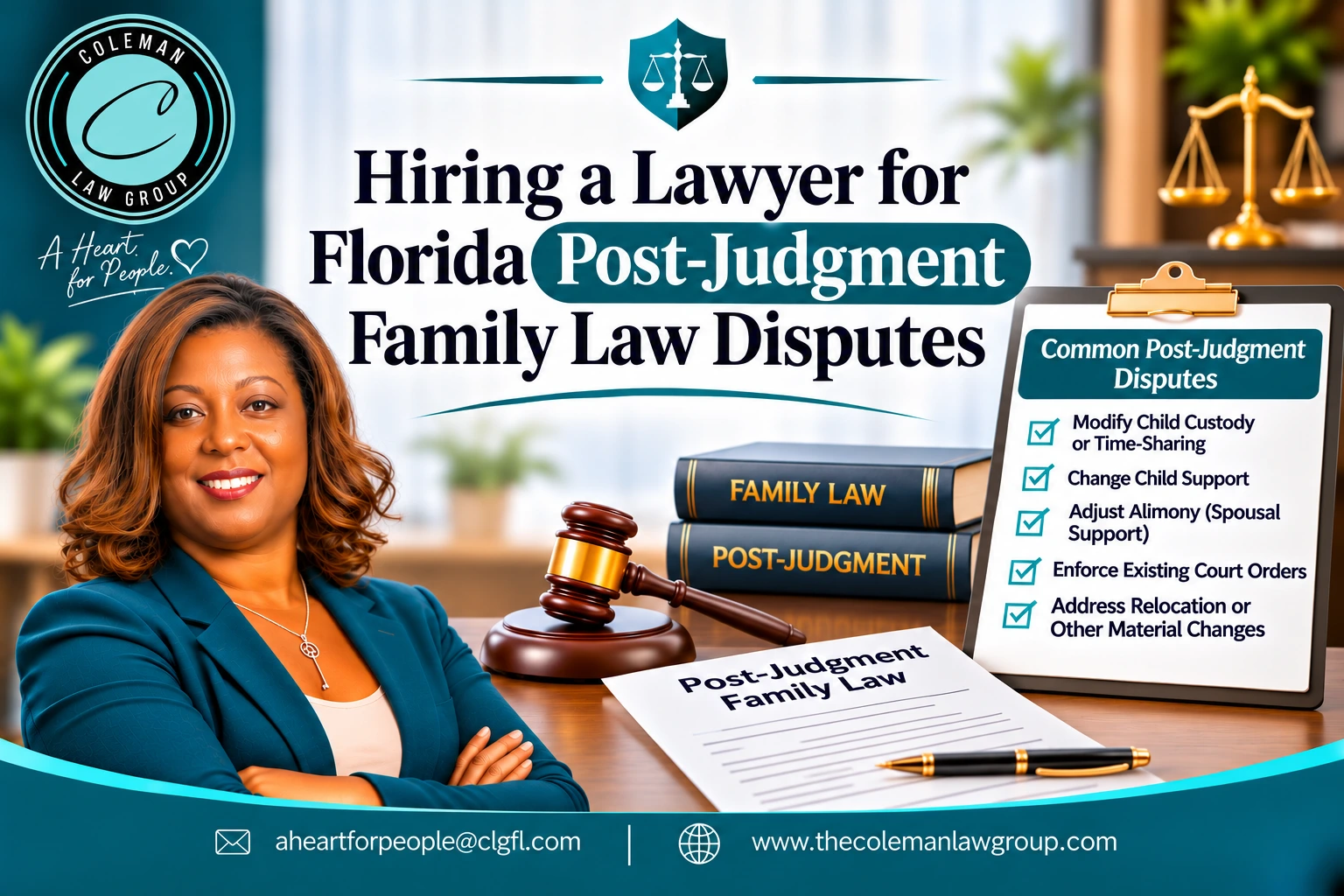
You can ask the court to modify:
- Child Support:
Spouses can ask to modify the child support orders if one of the parents loses their job and the child has expensive medical needs. - Custody/Time-Sharing:
Every child deserves to have a stable life. Under Florida Statute 61.13001, the Judge can change the custody arrangement if one parent moves more than 50 miles away or works a permanent night shift. You will also need to prove that your arrangement is in the children’s best interests. - Spousal Support:
Depending on the divorce orders given by the court, you may be able to reduce or stop spousal support payments if the paying party loses their job permanently or if the receiving party moves in with a new partner. Some spousal support agreements state that they cannot be modified, so it’s important to talk to a post-judgment family law attorney about your agreement first.
2. Civil Contempt and Enforcement
Sometimes your former spouse ignores court orders. They may refuse to pay child support or hand over property agreed to in the divorce.
Your family law attorney in Florida can file a motion for civil contempt and enforcement. If the Judge determines that your spouse can pay but refuses to do so, they can penalize them with significant fines.
Under Florida Statute 61.13, the court can:
- Suspend their driver’s license
- Take money from their tax return
- Put them in jail for a short period
- Ask them to pay the legal fees of the opposing party
Why You Should Not Handle Post-Judgment Disputes Alone
Many people attempt to save money by handling the disputes alone. Although your divorce may have gone smoothly, there are several reasons why attempting post-judgment disputes without a lawyer is risky:
- No verbal agreements:
This is the most common issue most people face. For example:
If someone loses their job and their former spouse texts, “It’s fine, just pay me half the child support for a few months.” A text message or handshake doesn’t erase a court order in Florida. Your ex can take you to court years later to collect the child support. The Judge will make you pay it back with interest because you never returned to court to get a new order.
- Strict rules:
You can lose the case if you don’t use the proper legal language to describe your situation. Bring the right evidence to court to demonstrate the change in your circumstances.
- Incorrect documentation:
You have to file petitions and documentation to change your situation. You must serve the proper records and include all your bank account information. If you leave out the required forms or serve the other side incorrectly, the Judge will dismiss your case before you get to say a word.
- Your ex might hire a lawyer:
If your former spouse hires an attorney and you are going to handle the situation by yourself, you are at a huge disadvantage. A lawyer knows how to utilize the court rules to their advantage. Your evidence probably won’t be admissible.
Step-by-Step Process of a Post-Judgment Case
When you hire a post-judgment family law attorney, they will take the pressure off you and help you with:
1. Reviewing your documents:
Your lawyer will review your final judgment and parenting plan to see what modifications you want or whether you should try mediation first.
2. Gathering Evidence:
Judges always prioritize evidence. Your lawyer will help you gather evidence such as:
- Pay slips
- Tax documents
- Bank statements
- School attendance
- Screenshots showing missed payments
3. Filing:
Your lawyer will draft the official legal request, ensure your former spouse receives it, and serve the papers correctly. After this step, your spouse cannot claim they never knew about the court date.
4. Mediation:
Almost all family courts in Florida require you to attend mediation with a neutral mediator before trial. Your post-judgment family law attorney will sit beside you and help you negotiate.
5. Court:
If your spouse refuses to be fair in mediation, your lawyer will take the case to court. They will present your evidence and argue your case using the applicable Florida statutes.
How to Choose the Right Post-Judgment Lawyer for Your Case?
Not all divorce lawyers spend much time dealing with post-judgment disputes. While searching for a lawyer, look out for:
- Experience:
Ask how many modification and contempt cases they deal with each month. Modifying an old order is completely different from a new divorce. - Local knowledge:
While the laws are the same throughout the state, every county and Judge runs court differently. Hiring a post-judgment family law attorney who regularly works in your local court is a massive bonus, as they will know what the Judge likes to see.
- Honesty:
A good lawyer will be honest with you. They will tell you whether your issue falls under Florida law. Avoid any lawyer who promises you will win without reviewing your old divorce papers. - Transparent:
Make sure they are transparent about their fees. Choose someone who answers your calls and uses simple language.
Prepare for Your Initial Meeting
Keep your important documents handy. These can include your final judgment, divorce settlement agreement, and parenting plan. Make a short list of each time your circumstances changed or when your ex-spouse failed to follow the rules of those agreements. If you are experiencing a financial problem, bring in your current pay stubs and bank accounts.
Post-judgment disputes are exhausting. You may have believed that you would never need to appear in court again. Usually, waiting and hoping your former spouse will be fair causes more issues. Talking to an experienced post-judgment family law attorney at Coleman Law Group can help you understand your rights under Florida law and give you a clear plan to protect you and your children.
Contact Coleman Law Group today at 7272140400 or aheartforpeople@clgfl.com to speak with an experienced family law attorney in Florida if you need to modify or enforce a final family law order.