

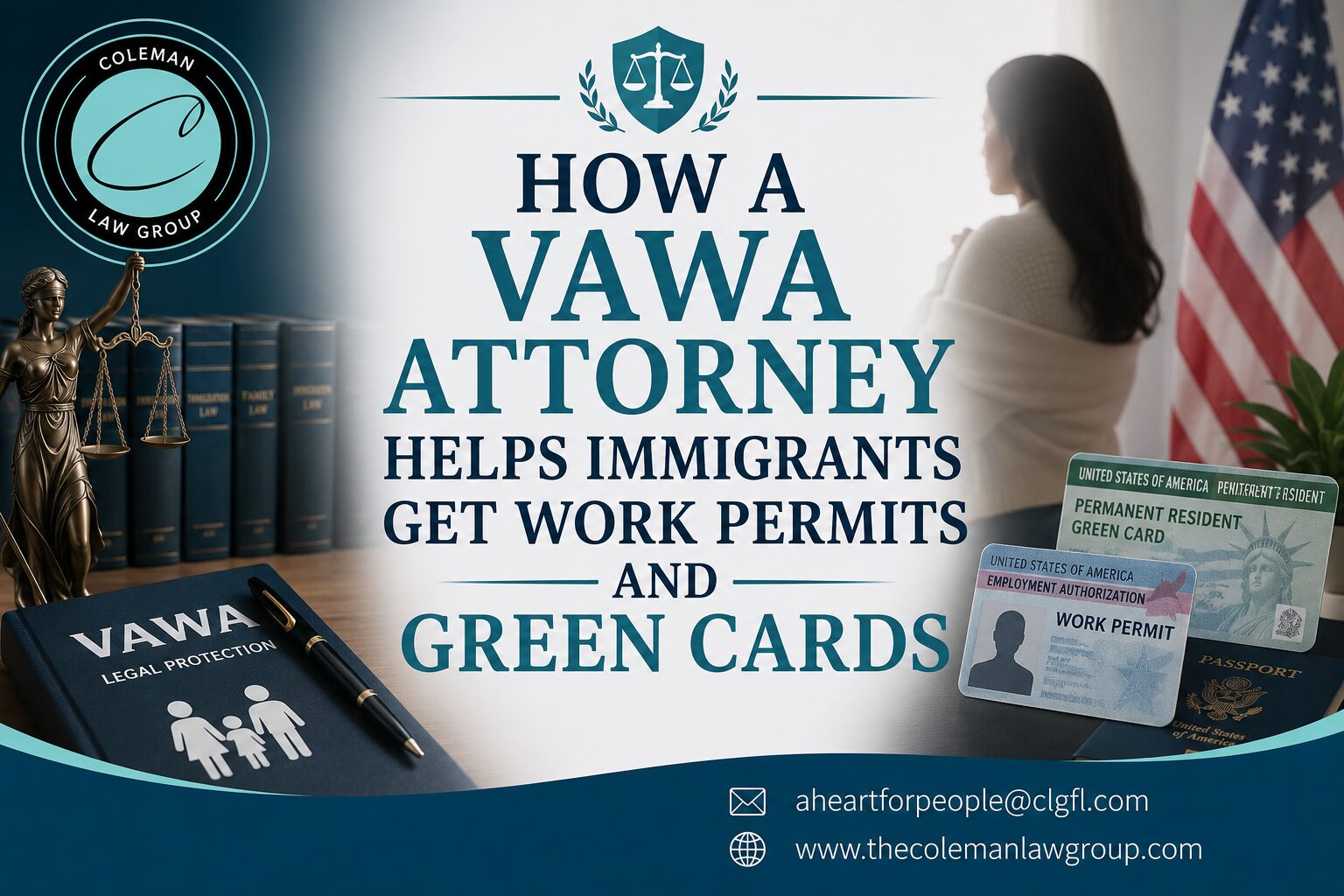
A partner who twists your immigration status against you is playing a dangerous game to make you feel helpless. They bank on you being too afraid of deportation to ever reach out for help. This is a classic control tactic, and you aren’t forced to live by their rules anymore. The Violence Against Women Act, or VAWA, was written specifically to stop this kind of abuse. It allows you to file a “self-petition,” which means you can apply for your own legal status without your abuser ever knowing, and certainly without their permission.
Going through the immigration process is tough under the best of circumstances, but when you are dealing with past abuse, it can feel impossible. A qualified VAWA attorney changes that by becoming your voice and your protection. Having an attorney acts as a buffer between you and your abuser. They keep your details private and make sure you have someone standing with you instead of dealing with the courts on your own. Peace is something you are entitled to. Let a lawyer take on the legal grind. You can stop stressing over the mountain of paperwork and focus entirely on finding a safe, stable home for your family.
Understanding the Role of a VAWA Attorney
An experienced VAWA lawyer serves a dual purpose: they are both a master of the legal system and a dedicated safeguard for your personal security. Filing a VAWA self-petition is not just a simple application. You are crafting a legal argument from scratch. That said, you need to show both your eligibility and specific evidence of the abuse, often while the person responsible for the harm is doing nothing to help. An attorney knows how to connect those pieces and turn your lived experience into the formal documentation required for approval.
Beyond the technical filings, this role is deeply protective. It is natural to worry that seeking legal status will backfire and lead to more retaliation from your abuser. Having a lawyer involved provides a necessary shield. They ensure that all official correspondence goes through their office rather than yours, keeping your location and actions hidden. Because your location and legal strategy are kept confidential, you do not have to worry about facing these dangers in isolation. This setup shifts the experience entirely, trading that feeling of terror for a sense of calm, step-by-step progress.
Determining Eligibility: Who Qualifies for a VAWA Self-Petition?
Your first real move is to figure out whether your story aligns with the specific groups Congress designated for this type of legal protection. There is no prerequisite for a police report, nor is there a requirement for a specific standard of victimhood to pursue your petition.
Who Can File?
The foundation of a VAWA claim is a qualifying relationship with a U.S. citizen or a lawful permanent resident. This generally includes:
- Spouses: If you are currently married to a U.S. citizen or a lawful permanent resident, you meet the requirement. If you are already divorced, you are not out of luck. You don’t have to worry that a divorce disqualifies you. As long as it was finalized within the last two years and the cruelty you suffered is what finally forced you to leave, you still have every right to pursue this.
- Children: Are you unmarried and under the age of 21? If you have been mistreated by a parent who is a U.S. citizen or a green card holder, you have grounds to file. Your age and marital status are the keys here, along with the history of how they’ve treated you.
- Parents: You are the parent of a U.S. citizen son or daughter, and you have suffered abuse at their hands.
What Counts as “Extreme Cruelty”?
A lot of people think they don’t count because there wasn’t any physical hitting, but that’s just not true. The law actually has a much wider definition of abuse that includes “extreme cruelty,” which is really just a formal way of describing the ways someone tries to take over your life or lock you away from the world. This often looks like:
- Control over your life: Control tactics involve active restrictions on personal autonomy, including monitoring digital communications, limiting access to transportation, and physically confining an individual within the home.
- Financial tactics: They keep you trapped by stopping you from working, taking all the money, or forcing you to justify every single penny you spend.
- Emotional and verbal harm: Includes ongoing verbal harassment and the specific threat to report you to immigration authorities as a means of intimidation.
- Isolation: Keeping you away from your friends, family, or other people who could support you.
Living together satisfies a core eligibility requirement, as the law does not demand evidence of an ideal living environment, but rather proof that these patterns of control occurred while you resided in the same home.
Good Moral Character
USCIS will look at your “good moral character.” Do not let this worry you—it does not mean your life has to be flawless. The authorities are looking at your conduct over the three years leading up to your filing. While certain criminal issues can create roadblocks, the law includes exceptions for cases where those issues were a direct result of the abuse you were suffering. A lawyer’s job in this phase is to help you present a clear, honest picture of your life, ensuring that your history is understood in the context of the trauma you had to survive. Every situation is different, and finding how these rules fit your specific life is key to building a strong, solid case.
The Heart of Your Case: The Personal Declaration
If one part of your application carries the most weight, it is your personal declaration. This is the place where you share your story, written entirely in your own words. It isn’t just a formal letter; it is the core evidence that gives the government a clear, human context for everything else in your file. Officers at USCIS see hundreds of documents every day. Still, your declaration is how they understand your lived experience: how the abuse started, how it evolved, and the specific ways it impacted your life and your freedom.
Why Your Story Matters Most
You might be worried about having a weak case because you lack police reports, injury photos, or medical records, but honestly, that is much more common than you think and doesn’t mean you’re out of options. VAWA was specifically created for cases where abuse happened behind closed doors, away from witnesses and public records. These cases rely on what’s called “credible evidence,” which is just a way of saying your own story is the most important proof.
What to Include
A strong declaration usually covers the full arc of the relationship. It helps to walk through:
- The beginning: Begin by sharing the story of your first meeting and how the relationship felt at the start, before that pattern of control ever entered the picture.
- The shift: Talk about when and how the behavior changed, and the specific tactics used to control or hurt you.
- The impact: Detail the specific ways that fear influenced your daily decision-making, limited your personal autonomy, and affected your overall mental health.
- The turning point: What finally led you to seek safety, or what you are doing now to move forward.
The Power of Detail
Sharing real-life moments, like a casual jab that was really a threat or a time you were trapped at home, gives your story weight and helps others see the cycle of control.
Working with Professional Guidance
Putting your story on paper is a heavy thing to do, so it’s natural to feel swamped or stuck on which details matter most. A VAWA attorney helps bridge that gap by helping you structure your experience clearly and effectively. You don’t need to worry about a lawyer making your story sound “staged” or fake. Their goal is to help you lay out the facts logically so the most critical details are impossible to miss. They handle the technical side of the paperwork so you can focus on being honest about what you went through. Your words carry the weight here, and this support only makes sure they are heard as clearly as possible.
Building Your Case: Evidence Beyond Police Reports
It is a myth that you must have a police report or a restraining order to file for VAWA. These items are optional, not required. The law is designed to account for why survivors often don’t involve the police, whether it’s fear of retaliation or the pressure of being threatened with deportation. For this reason, you are allowed to submit a wider range of “credible evidence” to show what really happened.
-
The “Mosaic” Approach to Evidence
Stop worrying about finding a single perfect piece of proof; you need to gather enough small details to show the full picture. Every bit of information helps confirm your side of the story. If you provide a wide range of proof, it creates a much stronger and more honest account of the abuse you faced. Useful evidence often includes:
-
Medical and Mental Health Records
Even if you told a doctor that an injury happened by accident, that paperwork is still relevant to your case. Similarly, other records, such as counseling or support group discussions, carry significant weight. Looking at these files, it’s clear that your current mental health issues are a direct result of those experiences.
-
Witness Statements (Affidavits)
Ask yourself: who were all the people aware of your situation? Having their account in writing is a big deal for your case. It fills in the gaps that only they can see. Did they see bruises? Did they see your partner acting as if they owned you? Those aren’t just details; they are proof. A written statement from them carries a ton of weight when you’re filing this.
-
Digital Communication
Don’t clear out your inbox or delete any history. If your partner sent messages that were cruel, threatening, or just constant demands about your daily routine, keep those. They’re proof. Just make sure when you screenshot these, the phone clearly shows the date and the person’s contact name. That detail matters as it’s how you turn a digital message into something an officer can actually verify.
-
Photographs
Pictures of injuries, torn clothing, or damage to your home (like a broken door or holes in a wall) serve as physical markers of the volatility you lived through.
-
Shelter or Advocacy Records
If you have ever reached out to a domestic violence shelter, hotline, or advocacy group, those records carry significant weight. They show that you sought a way out and corroborate the timeline of when you began looking for safety.
Layering Your Evidence
Don’t just dump a massive pile of random paperwork on them. That usually backfires. It is far more effective to pick specific items that actually prove a pattern over time. If you have a doctor’s note from last July, pair it with texts from that same month and maybe a letter from a friend who saw you struggling back then. That combination paints a much clearer picture than a random stack of files ever could. This “layering” is what makes a petition strong.
It is a heavy job to act as your own lawyer while you’re still processing what happened. You don’t have to do it alone. A VAWA attorney can sit down with your history and help you see which documents will actually make a difference. It moves your case from a simple request into something much stronger: a documented, undeniable legal record.
From Self-Petition to Residency: Understanding VAWA Adjustment of Status
Getting your self-petition approved is a huge win, but it’s just the start; the final goal is completing your VAWA adjustment of status so you can finally get your green card. This is the formal legal step that changes your status to that of a Lawful Permanent Resident.
-
How the Process Works
Because you’re already in the United States, you can use the VAWA adjustment of status to apply for your green card right where you are. It’s the concrete link between your first approval and having the peace of mind that comes with permanent residency.
-
Why This Step Is Important
While the self-petition focuses on proving that you are a survivor of abuse and meet specific eligibility requirements, the adjustment phase looks at your overall admissibility to the country. It involves filing Form I-485. This is the application to register permanent residence. This is the stage where you finalize your standing with immigration authorities, confirm that you meet health and security requirements, and officially transition into your new life as a permanent resident.
The Value of Professional Help
Moving from the initial VAWA self-petition to an adjustment of status introduces different paperwork and regulatory hurdles. Many survivors choose to maintain their relationship with a VAWA immigration attorney during this period to ensure the final application for residency is handled with the necessary legal precision. A lawyer ensures that your adjustment application is filed correctly. They track any necessary follow-up documentation and act as your representative throughout the transition.
Achieving your VAWA adjustment of status is the ultimate goal. It is the moment you secure your independence. This status gives you the genuine independence to live and work here, finally moving forward without your past weighing on your future.
Your Future Starts Today
Reclaiming your life is a major undertaking that demands immense strength, but you do not need to face it alone; pursuing legal status is a tangible way to regain control and define your own future. We are here to help you build a real shield around your future and officially strip that tool of control away from your abuser. At the Coleman Law Group, our VAWA attorney team is ready to handle the legal grind so you can focus entirely on the life you deserve.
This process is about more than just a permit or a card. Securing your freedom to live without looking over your shoulder is possible through the legal paths available to you. We invite you to reach out at 727-214-0400 or aheartforpeople@clgfl.com so we can guide you through the process.