

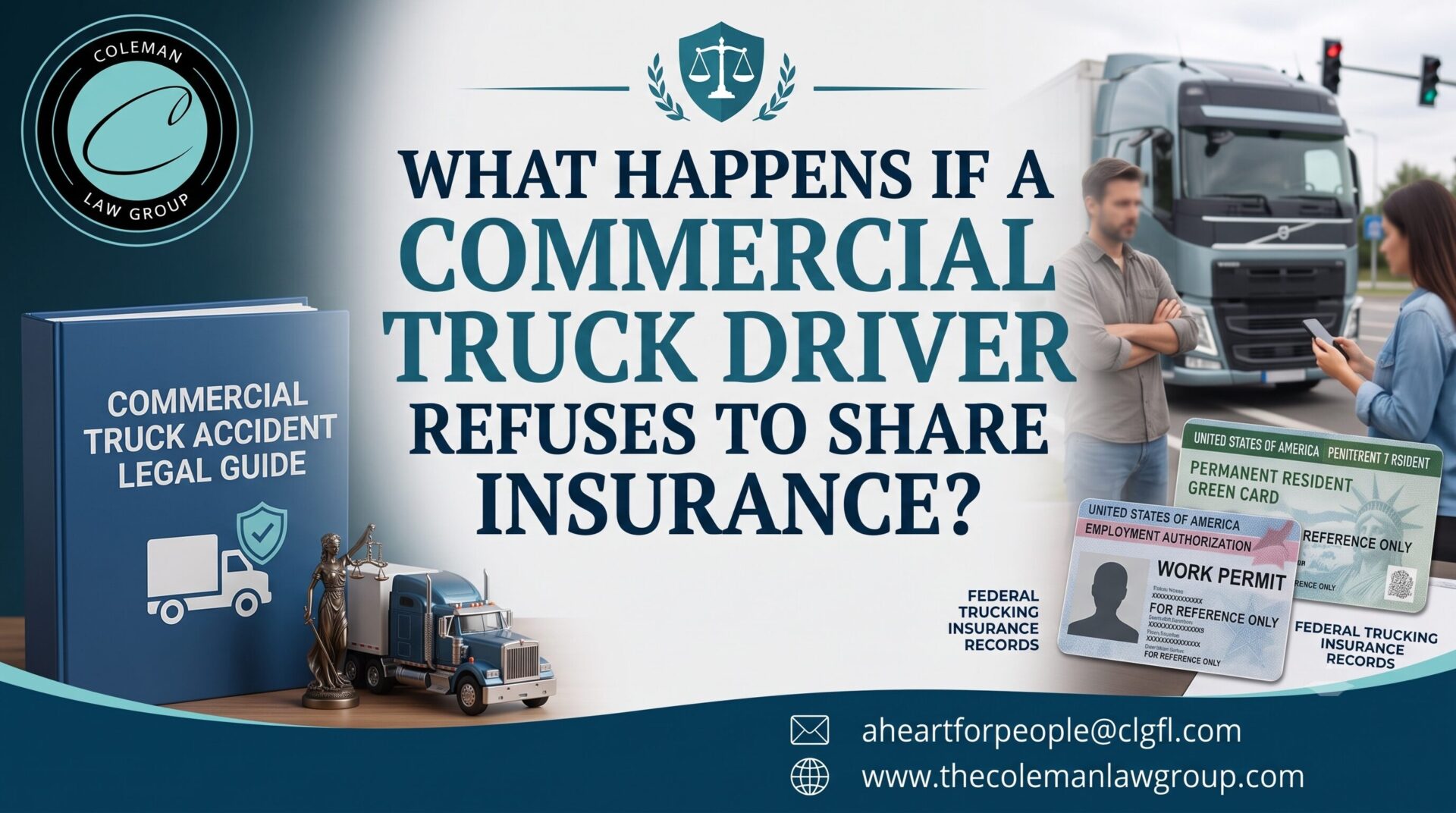
Following a truck accident, things are a mess, and you have almost no time to think. You get out to check your injuries and walk over to the truck driver to ask for their information. You expect a normal conversation, but the dynamics can change without warning. If the driver starts stalling, claims they don’t have their insurance, or won’t show you their registration, you need to recognize that this is no longer just a standard insurance claim. The matter has officially escalated into a high-stakes legal conflict.
It is easy to feel totally blindsided when this happens. You are left wondering how even to begin seeking compensation if the other person won’t admit the crash occurred in the first place. The good news is that your ability to recover damages doesn’t hinge on the driver’s cooperation at the scene. You need a truck accident lawyer for hit-and-run commercial vehicle incidents to step in and secure the evidence before it disappears. Finding a skilled commercial truck accident attorney near me is the best way to regain the upper hand. We know how to track down the details the driver withheld and ensure their lack of cooperation does not stand in the way of your recovery.
Why Compliance Matters: Understanding Florida Trucking Regulations
Every driver in Florida has a clear legal obligation to exchange information after a crash. When you are dealing with a commercial truck, this duty becomes even more rigid. Truck drivers are professionals subject to specific state and federal oversight. They are fully aware of what the law demands of them, given how much time they spend behind the wheel, so a refusal to cooperate is rarely an accident. This goes deeper than a simple breakdown in communication or a minor mistake. It is an intentional move that defies the regulations designed to hold these operators accountable.
When a driver refuses to share their credentials, it often suggests deeper issues the trucking company wants to keep hidden. Perhaps the driver does not have a valid Commercial Driver’s License (CDL), maybe they were pushed past their legal hours of service, or the truck itself may lack required insurance coverage. A commercial truck accident attorney near me can immediately spot these warning signs. In Florida, holding these operators accountable starts with documenting that they chose to ignore the law. By refusing to show their registration, they are essentially trying to gamble with your ability to seek justice. Your role is to remain calm and let us handle the fallout, knowing that we have the legal tools to force the disclosure that they were too afraid to provide.
Immediate Steps: What to Do at the Scene
As soon as the driver stops being forthcoming, shift your priority to protecting yourself. See a doctor immediately if you’re injured. Don’t bother getting into a fight with the driver. It won’t get you the information you need, and it will only end up complicating things for your attorney later. Focus on gathering evidence that will help a truck accident lawyer for hit-and-run commercial vehicle cases build your claim, even if the driver is being difficult.
- Call the police immediately. Make this your top priority. Tell them that the other driver is withholding their insurance information. The police have the authority to make them provide it, and they will document the info for you in the official accident report.
- Document the scene thoroughly. Use your phone to photograph the truck from every angle. Focus on the license plate and the carrier’s name or logo, which is clearly visible on the cab. These identifiers are essential for a commercial truck accident attorney near me to track down the responsible party later.
- Secure witness information. If bystanders saw the driver refuse to cooperate, they should try to get the driver’s contact information. Their testimony can prove vital if the driver later tries to claim they were helpful or disputes what happened.
- Record what happened. Make sure to record exactly what the driver said or did when you tried to get their information. Having a detailed account of how they blocked you will make a big difference for us once we start working on your claim.
How to Investigate: Finding Information Without the Driver
You are not stuck just because the driver refused to cooperate. If you captured the truck’s USDOT number from the side of the cab or the trailer, you have the most important piece of information needed to move your claim forward. The federal government maintains a public database that tracks every commercial carrier on the road. By using the Federal Motor Carrier Safety Administration (FMCSA) system, you can bypass the driver entirely to identify the company and its insurer.
-
Locate the USDOT Number
Look at the photos you took of the truck. Commercial vehicles are required to display a unique identification number, which is the USDOT number, on the side of the cab. This acts as the digital fingerprint of the trucking company and is the most reliable way to trace the vehicle back to its owner.
-
Access the FMCSA SAFER Database
Visit the official FMCSA website and search for how to look up public insurance records via the FMCSA Safer Tool. This is a free, public database designed to hold trucking companies accountable. It is a powerful resource that turns what feels like a dead-end situation into a solvable investigation.
-
Generate the Company Snapshot
Enter that USDOT number into the search field. The system will pull a “Company Snapshot.” This report provides the carrier’s legal name, their main contact address, and the specific insurance provider covering their fleet. When a driver refuses to hand over a physical card, this database confirms the exact policy you need to target.
-
Review the Carrier’s Safety History
This snapshot does more than show insurance; it reveals the company’s track record. It lists past accidents and federal safety violations. When a commercial truck accident attorney reviews this, it helps us build a stronger case by showing if the company has a pattern of prioritizing profit over public safety.
Having this data allows your legal team to act immediately. While the driver may have thought that refusing to hand over a card would stop you, the public record ensures they cannot hide. We use these official documents to locate the correct insurer and hold the responsible carrier accountable for your injuries and damages.
Holding the Company Accountable: The Power of Legal Discovery
If the driver refused to talk at the scene, how does an attorney actually force them to pay up? This is where the legal process takes over. Once a commercial truck accident attorney is involved, the situation changes from a roadside interaction to a formal legal investigation. We do not need the driver’s cooperation to secure the evidence because the law allows us to demand it directly from the trucking company.
When we file a claim or lawsuit, we initiate a process called the discovery phase. This is a powerful legal tool that forces the trucking company to open its files to us. They can no longer hide behind silence or excuses. Here is how we use this process to build your case:
-
Issuing a Spoliation Letter
The moment we take your case, we send a spoliation letter to the trucking company. This is a formal legal demand that puts them on notice that they must preserve all evidence related to the crash. This covers everything from electronic logs and maintenance reports to in-cab camera footage. If they destroy or “lose” this evidence after receiving our letter, they face severe penalties in court, which often works in our favor.
-
Accessing Electronic Logging Device (ELD) Data
Trucking companies must keep strict records, and today’s trucks use Electronic Logging Devices (ELDs) to track driving hours automatically. We get this data during the discovery process to see exactly how long the driver was on the road. If the records show they violated federal safety rules, we have proof that exhaustion contributed to the accident, making it much easier to prove negligence.
-
Reviewing Maintenance and Inspection Records
By law, trucking firms have to keep their rigs up to federal safety standards. We use the discovery process to force them to turn over every maintenance record. We dig through those files for missed inspections or ignored mechanical problems. If the company failed to maintain that truck, they are liable for the accident—even if the driver didn’t say a word to you after the crash.
-
Investigating Driver Qualifications
We dig past the accident itself and look at the driver’s background. By reviewing the company’s files, we can see whether they conducted due diligence before putting that person behind the wheel. If we find that they hired a driver with a history of safety problems or failed to provide them with the proper training, we can hold the company responsible for negligent hiring. This shifts the focus to the company’s failures, which adds significant weight to your claim.
Why You Must Hire a Lawyer to Subpoena Trucking Company Logs
While the initial discovery process gets us the basics, trucking companies often resist turning over the most damaging evidence. This is why you need a legal group that knows how to litigate these cases aggressively. When a company plays games with your recovery, you need to hire a lawyer to subpoena the trucking company’s logs and other critical documentation, such as internal disciplinary records and pre-trip inspection reports.
A subpoena is a court-ordered mandate that leaves the carrier with no choice but to comply. It ensures that internal communications, satellite data, and driver safety reports are preserved and produced. If you are left wondering what happens when a commercial truck driver refuses to show their registration, understand that our firm uses this legal leverage to strip away their secrecy. Once we’ve completed the subpoena process, we’ll have the evidence to show exactly how their negligence caused your injuries. They can’t just brush it off by pointing out that their driver refused to talk when the crash happened.
Understanding Florida’s Statute of Limitations
After we begin holding the carrier accountable, we must remain vigilant about the legal timeline. You must move quickly because Florida law sets a hard deadline for these cases. The statute of limitations for the majority of personal injury claims in Florida is two years from the accident date, as established in Florida Statutes Section 95.11(4)(a), and this rule covers large commercial truck cases as well.
-
Why the Two-Year Deadline Matters
This is a strict deadline. If a formal lawsuit is not filed within 24 months of the crash, the court will likely dismiss the case, regardless of the strength of the evidence or the clarity of the trucking company’s fault. Insurance companies are well aware of this countdown and often intentionally delay claims, hoping that the deadline will pass before legal action is taken.
-
Don’t Confuse Claims with Lawsuits
Many people think that telling an insurance company about a crash or starting informal talks stops the clock. It doesn’t. You only stop the clock by filing a formal lawsuit in court. Even while you are receiving medical care or negotiating, our team keeps this deadline front and center to ensure your rights remain protected.
-
Why Prompt Action Strengthens Your Case
If you wait to take action, you risk losing your case. Things like dashcam video or truck black box data are often erased or lost if you don’t request them quickly. On top of that, witnesses forget what happened and become tough to track down. We act quickly to lock in this evidence so we are ready to file if the insurance company won’t pay what you deserve.
-
The Risk of Delay
Recognize that the longer you wait to involve a professional, the more power you hand over to the trucking company. They rely on the passage of time to weaken your position. By consulting with a truck accident lawyer for hit-and-run commercial vehicle cases early, you ensure that your right to compensation is preserved. We handle the process of obtaining necessary logs and building a case that forces them to the table, but we need time to execute these steps effectively.
Do not wait until the deadline is looming to seek counsel. If you have been injured, the work of documenting the scene and identifying the insurer, using tools like the FMCSA Safer System to look up public insurance records, is only the beginning. Protect your future by ensuring your case is handled with the urgency it requires.
Turning the Tables: Taking Control of Your Truck Accident Claim
When a truck driver keeps quiet at the scene, it’s rarely their own decision. It is a planned move to shield the company from liability. You shouldn’t have to deal with these games on your own. At the Coleman Law Group, our attorneys know the tactics these companies use to dodge responsibility, and we know exactly how to fight back. Our team of personal injury attorneys takes control of your entire legal case. We dig for the facts and secure all required records, keeping the pressure on the trucking company to account for the injuries they caused.
A driver’s refusal to speak after a commercial accident should not stand in the way of your recovery. We are ready to track down the facts, hold the right parties accountable, and work toward the compensation you are owed. Give us a call at 727-214-0400 or email aheartforpeople@clgfl.com to talk through what happened.