


When a marriage starts falling apart, it can be hard to resist rushing things along to get it over with. Between the thick, constant unease weighing over your home and the frightening uncertainties of what tomorrow will bring, every route that offers an easy way is like immediate salvation.
During this vulnerable stretch, your spouse or their attorney might slide a paper across the table, calling it a “temporary agreement,” a “standard draft,” or a “routine property waiver.” They will likely claim it is just a formality meant to save you both money on legal bills, or swear up and down that you can easily change the terms later once the dust settles.
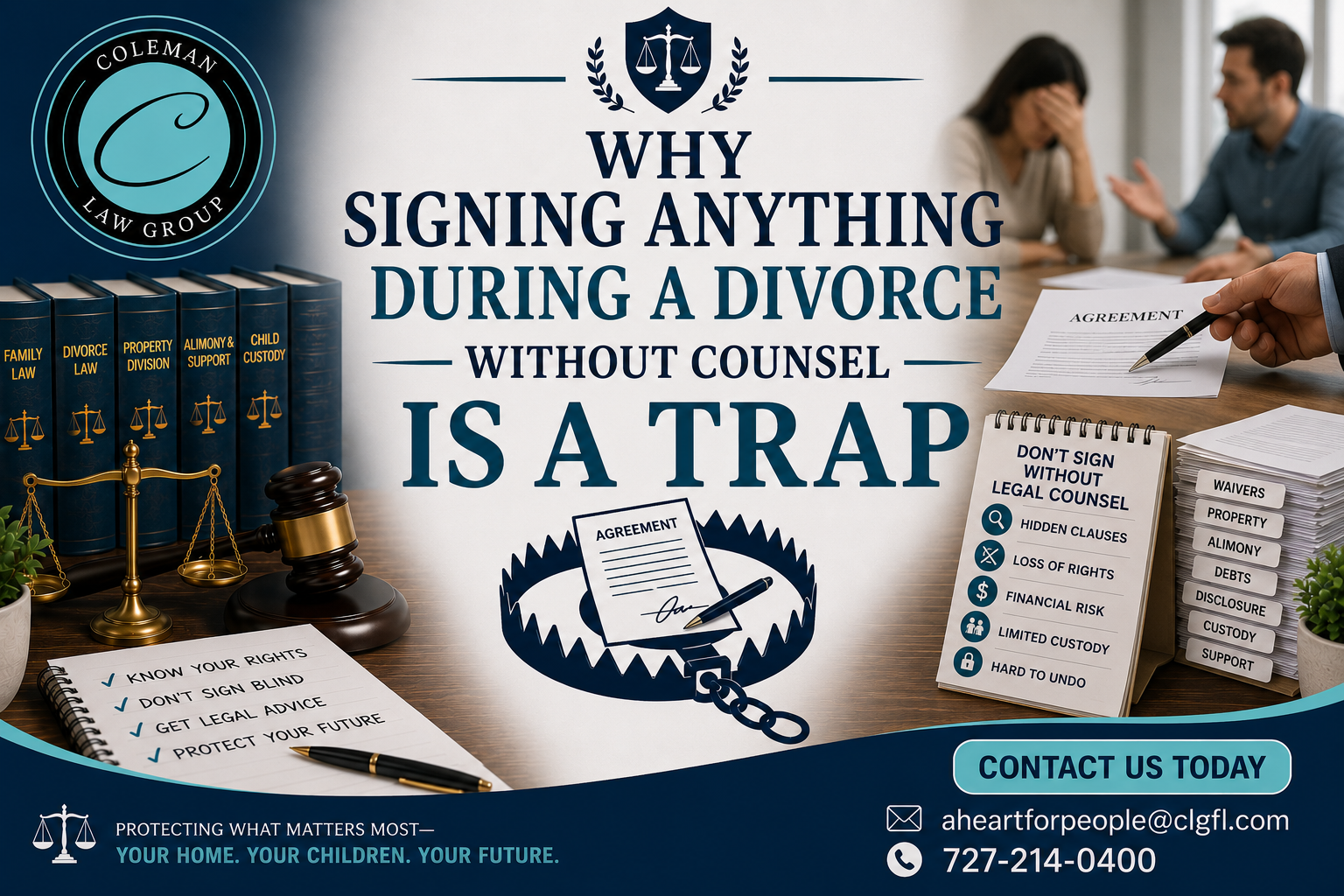
Signing any document during a divorce without an independent attorney reviewing it first is a massive trap.
In a courtroom, your signature is not a draft of your current thoughts; it is a binding surrender of your legal rights. Once ink hits paper, reversing what you signed is an uphill battle that almost always costs far more than hiring a lawyer would have in the first place.
There Is No Such Thing as a “Standard” Agreement
An opposing party drafts no neutral, one-size-fits-all divorce paperwork.
When your spouse hires an attorney, that lawyer owes a strict legal duty to one person only: your spouse. Their job is to secure the best possible deal for their client on assets, debts, support, and parenting time.
Even if the paperwork looks simple, every clause was chosen to protect your spouse’s long-term interests—not yours.
The Real Meaning of Legal Jargon
Contract writing is all about hyper-specific legal terminology backed by state laws and precedent. Miss a nuance like “shall” versus “may,” and a flexible suggestion instantly becomes a mandatory, court-enforced requirement.
Common terms that carry heavy consequences include:
- Waivers of Interest: Tucked inside property clauses, phrases waiving rights to retirement accounts, business equity, or home equity permanently strip you of marital property you spent years helping build.
- Non-Modifiable Alimony: Signing an agreement with this phrasing means that even if you lose your job, face a medical crisis, or suffer a massive pay drop, you remain legally forced to pay the exact amount written on the page.
- Indemnification Clauses: If you agree to hold your ex blameless for a joint credit card or loan, creditors can still come after you if your ex stops paying, regardless of what your private divorce contract says.
The Danger of “Temporary” Agreements
A huge mistake people make in family law is assuming they can sign a quick temporary paper now to keep the peace, then fix the bad terms at the final trial.
In reality, temporary orders almost always become the permanent baseline for the entire divorce.
Setting a Permanent Baseline
Judges value stability above almost everything else. If you sign a temporary paper granting your spouse primary physical possession of the home or agreeing to a limited visitation schedule, you have voluntarily established a new daily routine.
When you later go to court asking for an equal 50/50 split or exclusive use of the house, your spouse’s lawyer will point to your signed paper and argue that the current setup is working fine. Changing a routine you agreed to in writing requires proving major, unexpected circumstances, a burden that is nearly impossible to meet.
Giving Up Your Right to Financial Truth
Signing a settlement agreement early without legal counsel usually means signing away your right to full financial discovery.
During a formal divorce, both spouses are legally required to undergo mandatory financial disclosure. This forces both sides to hand over verified bank records, tax returns, retirement statements, business valuations, and debt records under oath.
Uncovering What Is Hidden
Skipping formal discovery means relying entirely on trust, hoping your ex-spouse will be completely transparent about their finances.
It is easy for an unrepresented spouse to miss valuable assets, such as:
- Deferred bonuses, stock options, or executive perks.
- Off-the-books business income or padded company expenses.
- Undisclosed retirement accounts, pensions, or digital wallets.
If you sign an agreement containing a clause stating you are satisfied with the financial disclosures provided, you permanently lock the door on investigating whether your spouse hid money from you.
You cannot simply “Undo” a Signed Contract.
Many individuals sign away their rights in bad divorce paperwork, thinking it is easily reversible. They assume they can always return to court down the line, point out how overwhelmed and unrepresented they felt at the time, and get a do-over.
Courts prioritize finality. A judge will not throw out a signed settlement agreement just because it turned out to be a bad financial deal or because you regret signing it.
To overturn a signed divorce contract, you have to meet an extreme legal bar, such as proving:
- Physical Duress: Proving you were under direct physical threat or illegal compulsion when you signed, which is exceptionally difficult to prove.
- Outright Fraud: Proving your spouse intentionally falsified sworn financial records to trick you into signing.
- Unconscionability: Establishing just how absurdly one-sided the terms are, to the point where no reasonable individual would agree to them, alongside proof that you were deliberately denied legal counsel.
Don’t Trade Your Long-Term Rights for Short-Term Relief
Signing a document out of sheer exhaustion might give you a day of relief, but the financial and personal fallout will follow you for decades.
When everything you’ve built is on the line, vague promises and rushed paperwork are not an option. At the Coleman Law Group, we examine every paragraph and catch every hidden trap long before it becomes a permanent mistake. We are here to ensure your financial foundation, parental rights, and long-term future remain entirely secure.
Do not sign away your rights out of frustration. Reach out to our team at aheartforpeople@clgfl.com or call 727-214-0400 to schedule a consultation before putting your name on any agreement.