

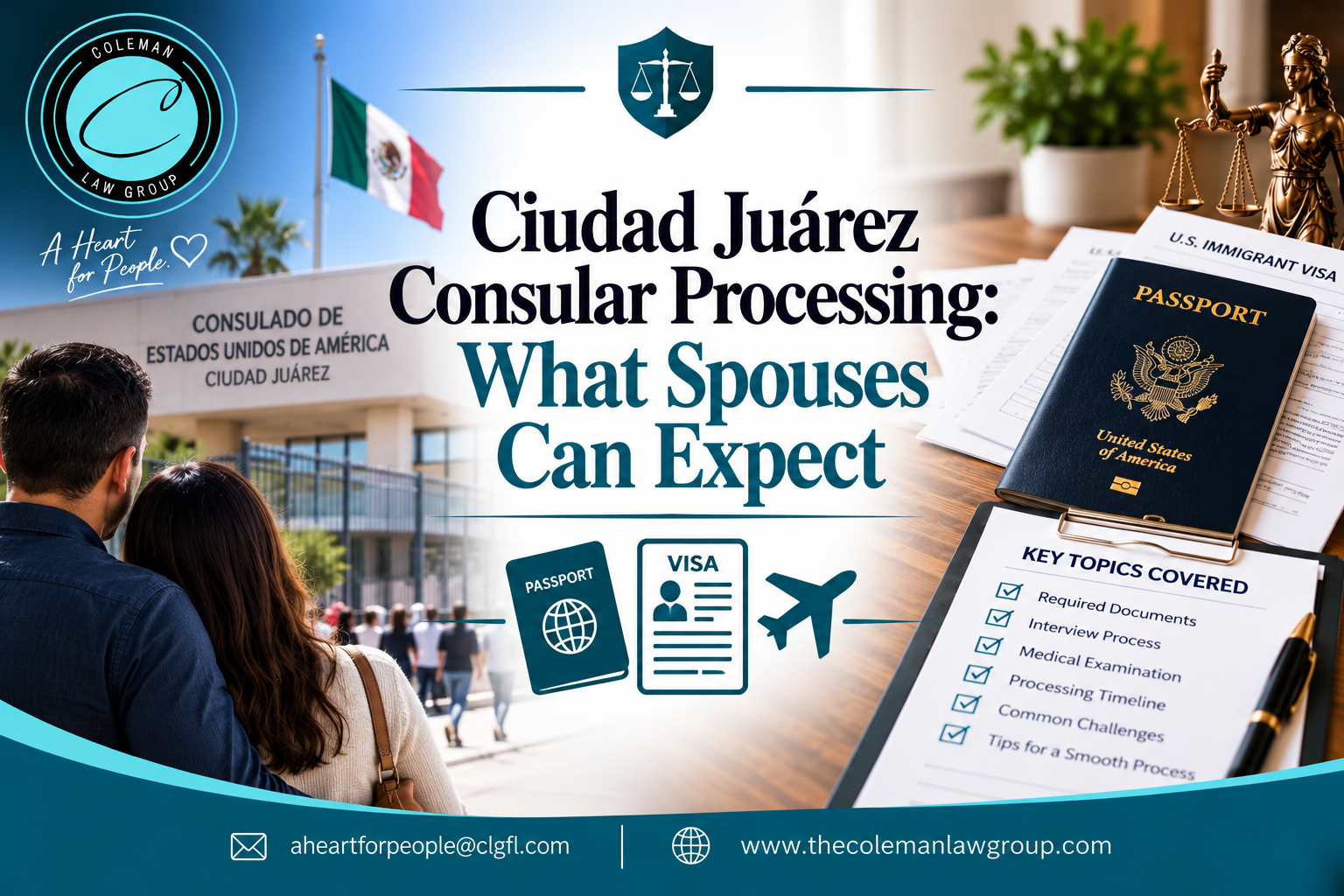
Consular processing may assist a petitioner residing in another country to help a spouse apply for an immigrant visa if the petitioner is from Florida. Unlike adjustment of status, this process takes place when the beneficiary applies for an immigrant visa at a U.S. embassy or consulate in their home country.
There are several processes for a spouse (petitioner) in Florida. These processes entail filing Form I-130, processing at the National Visa Center, submitting financial and civil documents, going for a medical exam, and attending an immigrant visa interview.
If the petition is turned over to the United States Consulate General in Ciudad Juárez, the beneficiary is bound to the instructions given.
What is Consular Processing for a Spouse?
It is the procedure through which you can petition for a relative or spouse who is not physically present in the United States. You can continue this type of case through consular processing of the immigrant visa.
Your relative will need to visit a U.S. embassy or consulate in their country of citizenship or residence for their interview.
Consular processing was considered the most daunting area of immigration Law because, conventionally, cases were handled at the local level by individual embassies or consulates. The U.S. government has streamlined the process. Under current procedures, most of the processing is handled by the National Visa Center (“NVC”) of the U.S. Department of State.
NVC processing is a smooth process that takes months off the waiting time to bring your relative to join you in the United States.
Adjustment of Status and Consular processing are different. Adjustment of status applies to eligible beneficiaries who are already in the United States. Consular processing involves an immigrant visa application through the Department of State.
How Form I-130 and NVC Move the Case Forward
The I-130 petition establishes the qualifying family relationship between the U.S. citizen petitioner and the foreign spouse. Approval of the I-130 does not confer permanent resident status on the beneficiary.
The NVC creates the immigrant visa case after the approval and begins the next stage of processing. The NVC collects the fees and all the supporting documents.
The beneficiary may need to complete the following requirements for a typical spousal visa case:
- Immigrant Visa and Alien Registration Application
- Affidavit of Support
- Required immigrant visa fees
- Financial evidence
- Civil documents
- Passport and photographs
- Other documents required for the individual case
The NVC reviews the submitted information. Once the case is documentarily complete and an interview slot is available, it can proceed to interview scheduling. The Department of State explains that interview scheduling is based in part on when the case becomes documentarily complete and on the appointment capacity of the relevant post.
Understanding CR1 and IR1 Spousal Visas
A spouse of a U.S. citizen may receive a CR1 or IR1 immigrant visa through consular processing.
Under 22 CFR §42.11:
- IR1 means the spouse of a U.S. citizen.
- CR1 means the spouse of a U.S. citizen who will receive conditional permanent resident status.
The main difference depends on the length of the marriage when the spouse becomes a permanent resident.
If the marriage has existed for less than two years when the spouse becomes a permanent resident, the spouse generally receives CR1 classification. This results in conditional permanent residence.
If the marriage has lasted at least 2 years at that time, the spouse generally receives an IR-1 classification.
CR1 visa status is subject to the conditional residence rules under INA §216.
How is the interview location determined?
One may not assume that all cases involving Mexico for immigrant visas will be conducted in Ciudad Juárez. The United States Department of State has revised its general policy on the location of immigrant visa interviews as of November 1, 2025. The NVC generally schedules applicants in the consular district where they reside. Alternatively, an applicant may ask to schedule their interview in their country of nationality.
As a result, the beneficiary’s country of residence and nationality help determine the interview location.
If the case is already assigned but the applicant requires scheduling in a different country, the Department of State’s guidance should be followed. The NVC may request information to support the requested location.
For this reason, a Florida petitioner should not make travel arrangements for Ciudad Juárez until the interview location has been confirmed.
What to Expect in Ciudad Juárez?
The beneficiary must follow the consulate’s instructions if the immigrant visa case is assigned to the U.S. Consulate General in Ciudad Juárez.
The Ciudad Juárez post provides specific instructions for immigrant visa applicants. These include information about:
- Medical examination
- Documents
- Appointments
- Interview procedures
The applicant needs to arrange their travel for the appointments necessary for the case. According to the present instructions, the applicants are recommended to stay in Ciudad Juárez for at least three working days.
The applicant needs to follow the appointment instructions and not follow a generic schedule.
What Documents are Necessary for the Interview?
The specific list of documents may depend on the applicant’s individual situation.
The Department of State generally requires documents such as:
- Valid passport
- Form DS-260 confirmation page
- Form I-864 and required financial evidence
- Birth certificate
- Marriage certificate
- Divorce or death records from any previous marriage, when applicable
- Police certificates when required
- Two required photographs
- Medical examination documentation
- Other documents requested for the individual case
The Department of State instructs immigrant visa applicants to bring original civil documents or certified copies along with photocopies and required translations.
The applicants are required to read the instructions before traveling.
How is the Ciudad Juárez interview conducted?
Immigration visa interviews are normally done by consular officers under 22 CFR §42.62. The officer will examine the immigration visa application and determine whether the applicant is qualified for the visa. An immigration visa interview contains immigration-related questions and background questions.
However, for spousal visas, the officer will review the approved I-130 petition, marriage documents, supporting financial information, civil registry documents, and other relevant documents.
It is the applicant’s duty to answer all questions and submit the required documents to the consular officer. A consular interview does not necessarily mean that a visa will be issued.
What if a Visa is not issued after the interview?
It is possible that the case will not be finished by the date of the interview.
Further documentation or information might be required from the consular officer. The applicant should follow the instructions of the consular post and submit the documentation as directed.
Some cases may also require administrative processing after the interview. The Department of State states that the consular officer will inform the applicant when administrative processing is required.
Applicants should book refundable travel plans based only on their interview date. The visa should be approved before the individual is allowed to immigrate to the United States.
What Services Does an Immigration Lawyer in Texas Provide?
There may be instances in which a petitioner seeks legal counsel if the beneficiary has a difficult immigration history or potential inadmissibility issues.
Such issues may include:
- Previous visa refusals
- Unlawful presence
- Removal or deportation proceedings
- Criminal history
- Prior immigration violations
- Possible fraud or misrepresentation
- Problems with the financial sponsorship requirements
- Difficulties with civil documents
- Requests for additional evidence
- Problems during NVC processing
- Interview location or transfer issues
The relevant immigration law can depend on the facts of the individual case. A legal review may help the petitioner understand the requirements before the case reaches the interview stage.
Get Legal Guidance from Coleman Law Group
For a Florida petitioner sponsoring a Mexican spouse through consular processing, each stage of the case may entail distinct immigration requirements.
Coleman Law Group can evaluate the situations of the petitioner and the beneficiary and inform the client about the consular process. This includes an I-130 filing and matters that could be raised before or during the immigrant visa interview.
When the case becomes complicated due to immigration history, among other factors, legal counsel can assist the petitioner in evaluating their options.
Contact Coleman Law Group at +1 (7272140400) or send an email to aheartforpeople@clgfl.com to speak with an immigration attorney in Texas about your spouse’s consular processing case and any applicable requirements.