

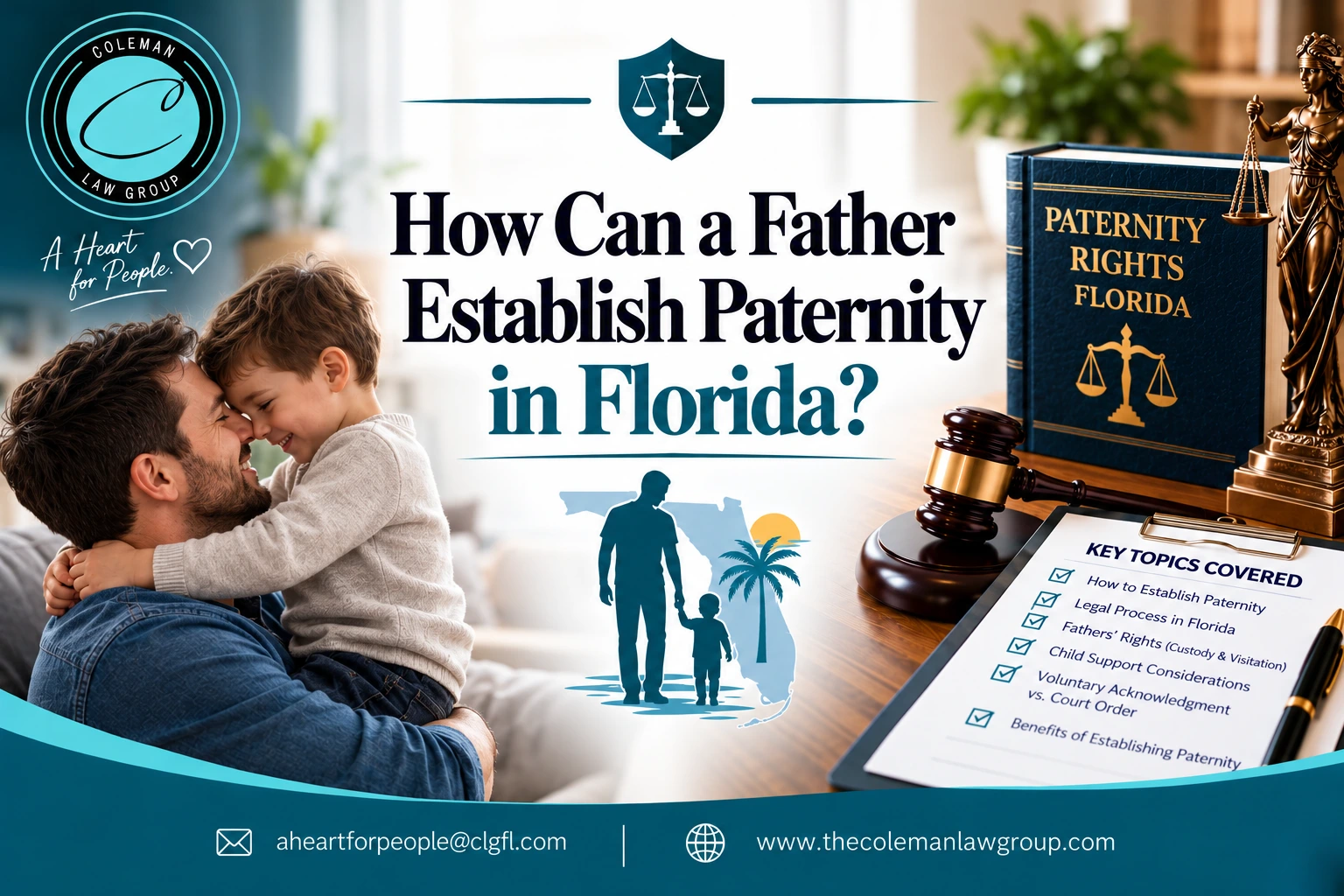
It appears so easy to be a father: the child calls you “Dad” and knows you are his father. But it’s not necessarily an easy task. It is presumed that a husband or wife is the child’s legal parent, but unmarried fathers can also take steps to establish their parental rights, including visitation and custody.
You may file a paternity action with the court under Florida Statute §742.011 to establish paternity. It is also valid when there is no legal paternity.
It is important to grasp the entire paternity establishment process. It can impact your relationship with your child during its development and maintenance.
Understanding the Meaning of Paternity in Florida
Paternity is the official recognition of the father of a child and his legal responsibilities and rights. Establishing paternity can provide the child with:
- Health and life insurance
- Access to the family’s medical history
- Financial support
- Right to inheritences
Can an Unmarried Father Establish Paternity?
Yes, but through various ways. The easiest way is through mutual discussion between the parents when the child is born; to do so, you need to sign an Acknowledgment of Paternity at the hospital.
In case your spouse doesn’t agree, you still have other options. You can ask the court to determine paternity even if the mother objects. Florida Statutes § 742.011 allows any man who believes he is a child’s father to begin this process.
It is often wise to talk to a paternity lawyer in Florida. The lawyer will take you through all of the procedures regarding the situation.
How to Establish Paternity?
A DNA test can prove legal paternity and establish the legal relationship between the father and the child. Other consequences of establishing paternity include:
- Parental responsibility and plans
- Time-sharing
- Child support
If there is a conflict between the parents, or if adoption may be necessary, prompt action should be taken.
Ways to Establish Paternity Without Reaching the Courtroom
Not every paternity case goes to court. The father can sign an acknowledgment of paternity if both spouses mutually agree to avoid courtroom hassle. This can be done at the hospital, as long as the proper process is followed.
Do not think of this as paperwork. Signing means you take on rights and responsibilities as your child’s legal father. If you are not completely sure you are the father, seek advice before you sign anything.
What If the Mother Doesn’t Agree to Paternity?
You are not out of luck if the mother says no. If she will not cooperate, you can file a paternity action in circuit court. If necessary, the court can order testing to resolve the matter. The Department of Revenue (DOR) uses DNA testing to establish paternity. There is more to this type of case than just recognition of fatherhood. It may also involve decisions about child support and time-sharing.
Can a DNA Test Prove Legal Paternity in Florida?
A DNA test can be used to prove who the child’s biological father is; it will not automatically make you the legal father. Paternity can be established under Florida law in several ways, such as voluntary acknowledgment and certain Department of Revenue proceedings. Presenting a birth certificate or sharing DNA is not enough. The legal status is important since it implies visits and ongoing support.
What Are the Rights of Fathers in Florida After Establishing Paternity?
When a father establishes legal paternity, it creates a foundation for full participation in a child’s life. This important step not only confirms a biological relationship but also grants access to a range of legal rights and responsibilities. A father can request parenting time or physical custody.
You can also be ordered to pay child support. Both father and mother are legally bound to support the child.
What rights are given to unmarried fathers in Florida?
Unmarried fathers can take action to protect their relationship with their child. You might need to act in adoption situations. Florida Statutes § 63.053 requires unmarried fathers to take action to protect their rights. You can file with Florida’s Putative Father Registry to help keep your say in adoption matters. Do not wait because there are deadlines and requirements.
Can a Father Get Custody After Paternity?
Establishing paternity means taking responsibility and agreeing to a visitation schedule. Legal fatherhood does not guarantee custody. Sometimes, both parents agree on a plan. The court approves it. A judge will sort things out if the father cannot agree.
What If a Man Is Already the Legal Father but Later Questions Paternity?
You may face legal consequences if it’s found out that you are not the father. Florida Statutes §742.18 establishes specific procedural requirements to terminate child support. Know that getting a DNA test kit alone does not change your status. You must have a court order to prove it.
What Should a Father Do After Paternity is Established?
The father needs to consider certain steps after he is recognized. If the father and mother agree on parenting, the father can develop a plan. Avoid court hearings. If not, the father might need a judge to set things up for him.
Pay attention to any child support orders. Legal paternity also means the father is legally responsible for supporting the child. If adoption is an issue, the father should know that he may have steps to preserve his rights with the Putative Father Registry.
Every situation is a little different, so fathers choose steps based on what they hope to achieve.
When Is a Paternity Lawyer Needed?
If you find yourself in the following scenarios, you should think about hiring a paternity lawyer:
- You think your paternity status is uncertain.
- The other party isn’t interested in establishing paternity.
- You are having trouble seeing your child.
- You are unclear about child support.
Fathers who take steps to establish paternity can build a lasting role in their child’s life. Seeking legal guidance from a paternity lawyer in Florida may help clarify available options and protect those rights for the future.
It is always best to seek legal help without delay. Deadlines can hurt your situation if you don’t take them seriously. You will end up signing important documents without even reviewing them.
How Can Coleman Law Group Help with a Florida Paternity Case?
When paternity issues arise, it can hurt your relationship with your child. You might think it’s difficult to establish paternity, but it’s fairly easy. Understanding your rights is important when trying to establish paternity. If you are having problems negotiating time-sharing or thinking about adoption, speaking with a paternity attorney could be the best option.
The Coleman Law Group walks fathers through the Florida process. Figure out what works for a father’s situation. If a father is facing a paternity dispute, a time-with-child issue, or complicated legal questions, contact our family law attorney at 727-214-0400 or aheartforpeople@clgfl.com to schedule your consultation.