

Divorce brings major changes for every member of a family. Both parties should agree upon the terms of divorce. This makes the divorce process less stressful. This way, spouses can pursue an uncontested divorce in Florida. Although reaching an agreement can help reduce disputes, an uncontested divorce still requires the appropriate legal documentation and court approval.
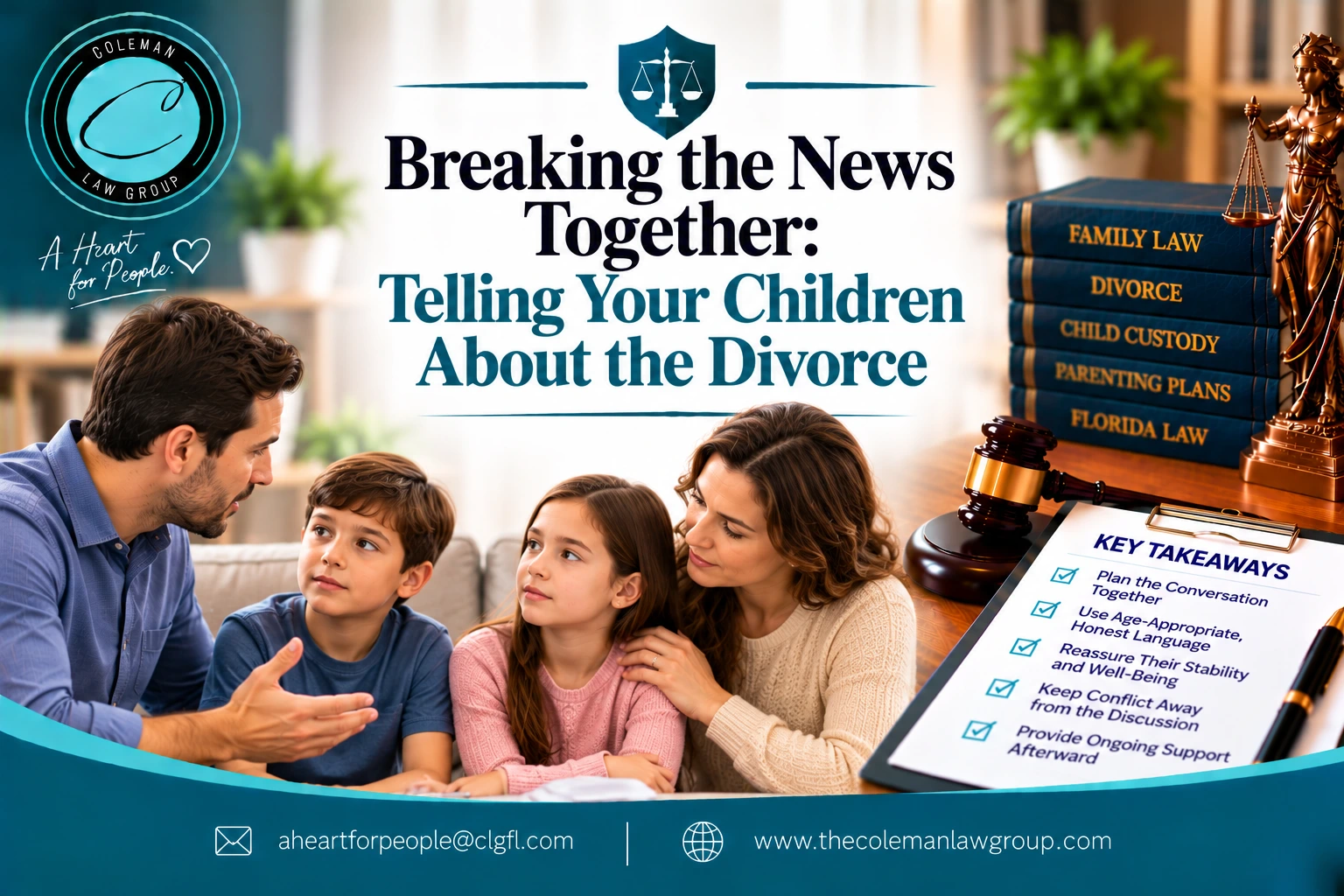
Before moving forward, parents should also consider how to explain the decision to their children. Learning how to tell children about divorce can help parents approach the conversation with care, clarity, and reassurance.
You will have to be quite careful in planning this conversation to keep your children feeling supported. Discuss your decision calmly with your children.
An experienced divorce lawyer can assist in making certain that your legal rights are secured. Below are some ways to explain your uncontested Florida divorce to your children in an easy way.
Prepare Your Message (telling about divorce) as a Team
You and your spouse must discuss the situation with each other before you speak to your children. What you say must be agreed upon. Both parents need to send a consistent message to children when dealing with news. Do not assign responsibility or get into debates. In Florida, the child’s best interests are emphasized.
Key Points to Agree On First
- Simple explanation behind separation without sharing serious adult issues.
- The living arrangements for the immediate future.
- Support that both parents continue to love and support them.
Choose the Right Time
Choose the time wisely to discuss this decision with your children. Follow some of these tips to ensure the safety of your children:
- Avoid having a conversation with your kids immediately after an argument.
- Find a time when both of you can concentrate on being parents and not spouses.
- Always have a support system ready for them in advance. This can include their teacher as well as a family member they can communicate with.
- Continue supporting your children during their special occasions in the near future.
Keep the Language Simple
Talk to your children using simple language. Do not use legal or jargonized terms. Discuss how mother and father have decided to live in separate homes. Children need clear information about their living arrangements.
What You Can Say
- Mom and Dad have decided to live in separate homes.
- We both love you very much, and that will never change.
- You will not be blamed for this decision. This is an adult choice.
How Can You Match the Conversation to Their Age?
Children’s mindsets change as they grow up. Every child needs a different explanation.
- Younger children will require simple explanations repeatedly. This is common for them to keep asking the same question for the next few weeks.
- School-aged children can ask for a little more information about where they will live and when they can see each parent.
- Teenagers may want detailed answers. They should know the real reason behind the divorce. Respect their privacy and avoid involving them in adult conflicts.
What Should You Avoid Saying?
There is no one-size-fits-all for each family’s situation and no one script for each conversation. However, some words cause more damage to children than the parent is aware of at the time.
- Don’t place blame on the other parent in front of your child.
- Never make your child a go-between for families.
- Avoid legal or financial issues.
These conversations can be emotionally challenging for children. Their effects linger longer than parents think.
Navigating Co-Parenting in an Uncontested Divorce
There can be a lot of benefits to an uncontested divorce, and one of those is that it can give you a guideline for co-parenting. You can help minimize stress and help your child feel better after a separation if you work together as parents. Here are a few ideas on how to achieve a mutually agreeable co-parenting arrangement:
-
Unified Decision-Making:
Major medical or educational issues should be discussed between you, even after you live separately. It is important to encourage a “whole family attitude” to help children get used to and understand the boundaries of both homes. The parenting plans should reflect the child’s best interests while providing a clear framework for parental responsibilities and time-sharing.
-
Flexibility Where Needed:
Consistency of rules and expectations is important while offering reasonable flexibility. Both houses should have different routines.
-
Respecting Each Other’s Time
Plan and adhere to pickup/drop-off times, and advise of any changes to that plan well in advance. This reliability helps children to learn that “both mom and dad are reliable”.
-
Don’t Fight in Front of Kids:
Information about changes, if necessary, shall be communicated privately or respectfully. Try to keep adults’ conflict from impacting children as much as possible.
-
Promote a Positive Relationship
Reflect positively on the other parent in the children’s presence. Angry comments might make a child feel alone and lose a loss of security.
Get Legal Advice and Emotional Support
The uncontested divorce procedure is straightforward. However, this divorce process still requires proper documentation and legal action. You will gain peace of mind throughout the divorce process with professional legal advice.
An uncontested case continues to run smoothly in court when you hire a professional divorce lawyer from Coleman Law Group. It might be advisable to seek advice from a child therapist as well. Family counselors can give you excellent support as your children cope with these changes.
Call Coleman Law Group Today
It is important to have a clear understanding of uncontested divorce. Most families in Florida rely on Coleman Law Group for guidance. We guide families in every aspect of the uncontested divorce process and educate parents on how to tell their child about divorce. Our divorce lawyers create thorough parenting plans that adhere to Florida statutes and preserve parental rights.
Contact Coleman Law Group at +1 727-214-0400 or aheartforpeople@clgfl.com to set up a confidential meeting with a knowledgeable Florida divorce attorney.