

Divorce raises difficult questions for parents. When parents separate, one common question arises in every divorce case: what will happen to the children? Several families in Florida are undergoing divorce proceedings and are unaware of how to prepare for child custody hearings. Understanding what factors are involved in determining child custody in Florida can help you protect your child’s best interests.
Custody labels are less common in Florida. In addition to discussing “custody,” the law uses different terms: parental responsibility and time-sharing. This will make a difference because these arrangements are not about one parent winning against the other. Parents should not be able to manipulate the court by presenting arguments that benefit them rather than the child. The court always makes a decision that’s in the best interests of a child despite the parents’ disagreement.
How Child Custody is Decided in Florida?
Florida courts do not simply decide which parent gets custody. The parents should reach an agreement on the terms of custody and visitation. Parents or co-parents must work together to create a parenting plan based on their schedules and their child’s needs, rather than waiting for the judge to decide. Florida parenting plan factors should outline:
- Time-sharing schedule
- Decision-making
- Each parent’s ability to meet the child’s needs
- The child’s needs for stability in a safe environment
The court may approve the parenting plan if it includes the best interests of the child in a Florida custody case. Sometimes parents fail to reach an agreement. In this situation, the judge decides the parenting arrangements based on the circumstances of the case, evidence, and Florida law.
Does Florida Presume Equal Time-Sharing?
Florida law establishes a presumption that equal time-sharing is in the child’s best interests. This means equal time-sharing is the starting presumption in applicable cases, but it is not automatically guaranteed in every family.
The court considers the family’s circumstances and the relevant statutory factors, including each parent’s involvement in the child’s life, the child’s need for stability, the feasibility of the proposed schedule, and any relevant safety concerns.
Neither parent is automatically guaranteed equal time-sharing simply because they requested it via a custody modification petition.
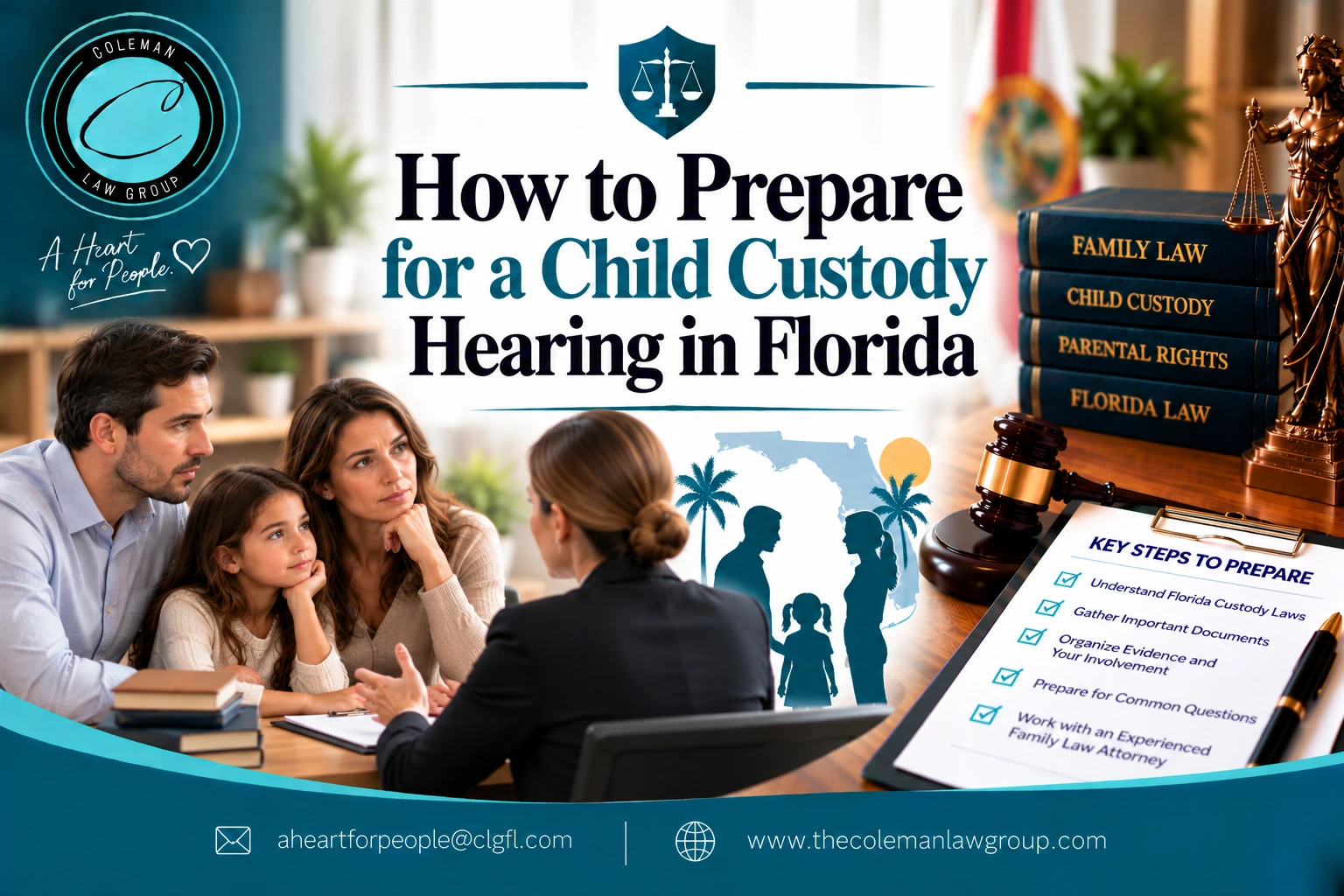
Tips on How to Prepare for a Child Custody Hearing
You must prepare to present your case effectively to increase your chances of presenting your circumstances well for a child custody hearing:
Tip 1 – Gather Documentation
Collect all relevant documents, including:
- School records
- Medical records
- Bills you paid for the child’s needs
- Any communication between spouses regarding the child
These documents can provide evidence of your involvement in your child’s care.
Tip 2 – Create a Parenting Plan
Parents must work together to create a parenting plan. It should be fair on paper as well as in reality. If the parenting plan doesn’t fit school hours or work shifts, or highlights long commutes, it causes new issues to arise almost immediately.
Tip 3 – Positive Safe Environment
Maintain a safe, stable, and nurturing home for your child. Keep adult disagreements away from the child, avoid involving them in disputes, and support their relationship with the other parent when it is safe and consistent with applicable court orders.
Tip 4 – Demonstrate Stability
Florida courts consider continuity and stability. Prove that you can provide a nurturing environment for your child.
Prepare Your Child Custody Hearing Testimony
Be prepared to speak at your child custody hearing. Your testimony is a chance to communicate and explain what you want for your child. The focus needs to be on your child’s needs.
Here are some tips for a powerful testimony:
-
Explain your involvement in your child’s daily care, education, health, and activities.
- Avoid being defensive in every discussion.
- Do not lose your temper during the hearing. The judge may be wondering what you are like behind closed doors.
- Give straight answers because lawyers can intentionally ask you tricky questions. Don’t lose your patience and reply to their every question calmly.
- Do not speak negatively about your spouse. Your words should be focused on the best interests of the child.
Child Custody Hearing Mistakes to Avoid
Parents are doing more harm to their child custody case by communicating poorly and breaking courtroom rules. Text messages and social media posts can be used as evidence against other parents, especially when they speak negatively or post impulsively. If you are in a custody battle, treat it like a live recording, and assume you are being watched and recorded.
The other major issues can be:
- Cutting off contact with the other parent.
- Interfering with court-ordered time-sharing or taking a child away for vacation without court approval.
- Speaking negatively about the other parent in front of the child or publicly via social media.
- Ignoring filing court deadlines or requests for the required information.
- Failure to maintain your appearance in court.
- Domestic violence allegations or substance abuse.
All these factors can negatively affect your case. The court is seeking consistency and a focus on the child first.
What is the importance of legal help in your child custody hearing?
Seeking professional legal representation in a child custody hearing offers numerous benefits. These advantages can greatly impact the outcome of your case:
- Objective advice and guidance
- Effective negotiation and advocacy
- Gathering important documentation
Let your child custody lawyer handle the legal intricacies. You can focus on maintaining a positive relationship with your child amidst the transitions. An attorney’s legal guidance and support can make a significant difference in the efforts you make for the well-being of your child. A consultation is a necessary first step towards securing a favorable future for you and your child.
Get Professional Guidance from Coleman Law Group Today
Parents can get emotional during child custody hearings. But judges always consider the evidence and the best interests of the child to make a decision. When it comes to a child custody hearing, clear documentation and a proposal are extremely important.
A lawyer will be able to provide you with advice and make sure that your rights are safeguarded.
Coleman Law Group is ready to help if you need a family attorney whose legal team focuses on your children’s best interests. Please call 727-214-0400 or email aheartforpeople@clgfl.com to schedule your consultation.