

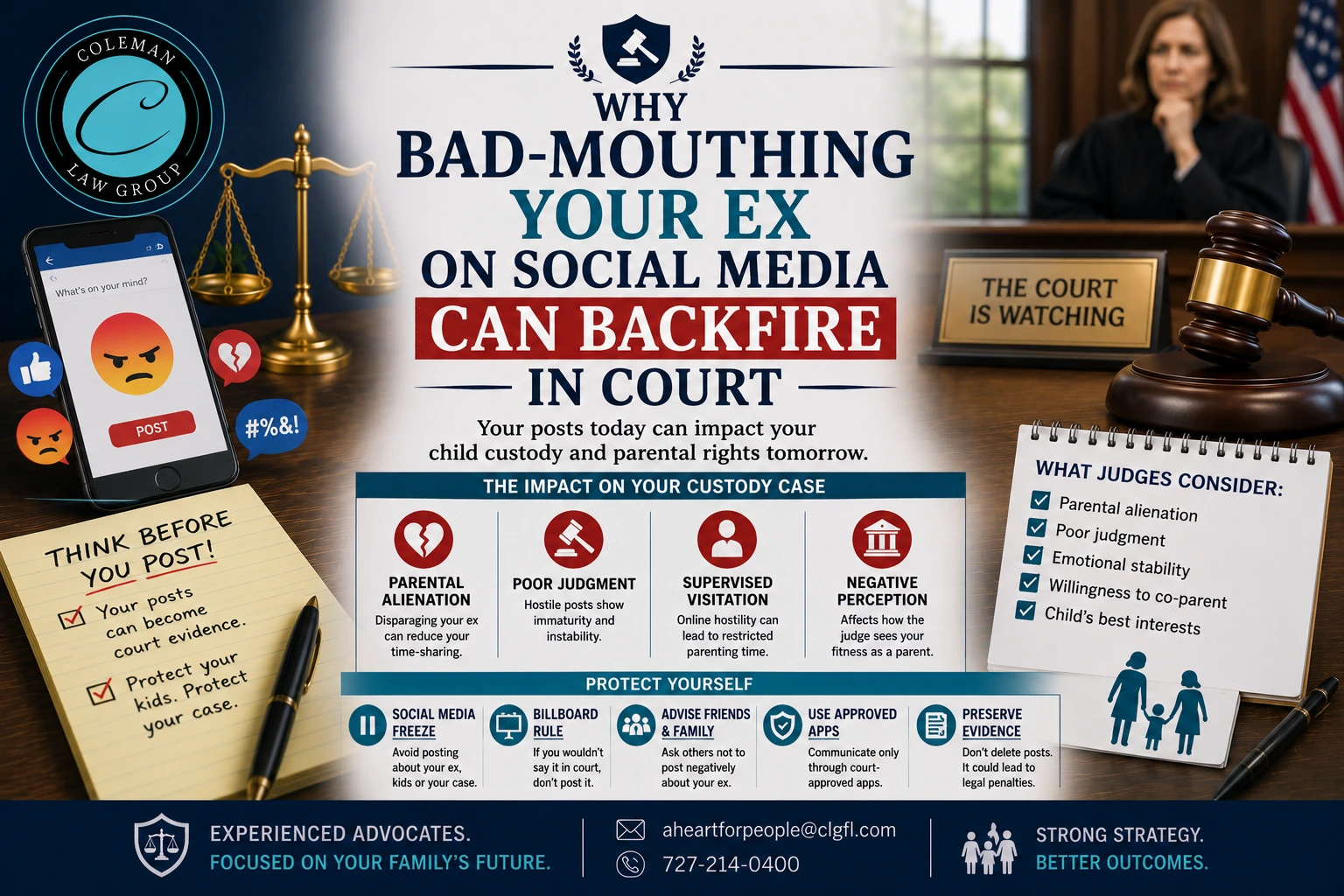
Relying on social media to air grievances during a contentious separation or custody battle is a strategic error. Any hostile post as part of bad-mouthing ex, or bitter remark, or public complaint serves as direct ammunition for opposing counsel. Family courts routinely review digital feeds, and a few seconds of venting online can completely unravel months of careful legal strategy regarding your kids or your property.
In modern family law, online rants are consistently used as social media evidence in Florida family court cases. A single public post can directly dismantle a custody case, weaken parental rights, and permanently alter a judge’s perception.
How “Social Media and Child Custody” Intersect in Florida
Florida Statute § 61.13 shapes every child custody case across the state, putting the child’s well-being front and center. To reach a fair ruling, family court judges look way beyond basic pay stubs or living arrangements, evaluating each parent’s true character, how they handle pressure, and whether they can actually cooperate.
- The demonstrated capacity of each parent to facilitate and encourage a close and continuing parent-child relationship with the other parent.
- The willingness of each parent to honor the time-sharing schedule without creating conflict.
- The moral fitness and emotional stability of each parent.
When a parent bad-mouthing ex on social media, they hand the opposing legal team clear, physical proof that they fail these criteria.
The Direct Impact of Social Media on Child Custody Cases
Venting online rarely stays contained. When digital rants are presented to a judge, the social media impact on child custody rulings can be immediate, devastating, and long-lasting.
Courts respond to public online hostility in very specific ways:
-
Evidence of Parental Alienation
Trash-talking your co-parent in public is a fast track to being accused of parental alienation in Florida. Family law judges treat that kind of bitterness as a serious threat to a child’s mental health, and they will readily slash your time-sharing to shield the kids from the toxicity.
-
Proof of Poor Judgment
Posting hostile rants, foul language, or intimidation online is a terrible mistake during custody litigation. The opposing legal team will jump on those careless posts to paint you as unstable and immature, proving to the court you shouldn’t hold primary time-sharing.
-
Mandated Supervised Time-Sharing
Nonstop digital warfare and online bullying give family courts plenty of reason to step in and restrict your time. Judges regularly respond to that kind of toxic behavior by forcing parents into supervised visitation or ordering them to pay out of pocket for co-parenting classes.
How Social Media Evidence Affects Divorce Cases in Florida Courts
Many parents assume that setting an account to “private” or hitting the delete button offers protection. Under Florida’s Evidence Code (Florida Statutes § 90.401 and § 90.902), online activity is readily accessible and admissible in court.
Digital footprints are routinely brought into the courtroom through standard legal channels:
- Screenshots From Mutual Contacts
Mutual friends, family members, or paid investigators regularly capture private posts, stories, and comment threads and hand them directly to opposing counsel for filing as court exhibits. - Formal Legal Discovery
Attorneys can demand private messages, deleted content, and account archives through legal subpoenas, formal discovery requests, and depositions. - Penalties for Deleting Posts
Deleting posts after litigation begins or when a court case is reasonably anticipated is considered destruction of evidence (spoliation). Judges can impose harsh legal sanctions for wiping content, including assuming the deleted material contained damaging admissions.
Best Practices: Protecting Yourself and Your Case
To prevent your digital life from wrecking your custody case, you have to lock down your accounts and clean up your online presence before it’s too late.
Following a few strict ground rules prevents digital mistakes from harming a case:
- Implement a Social Media Freeze
The safest strategy during an active family law dispute is to stop posting altogether. Staying off social platforms reduces the risk that the court will misconstrue an emotional post.
- Apply the “Billboard Rule”
Live by this rule: whatever you post – texts, comments, or even photos tagged with others – might end up huge on a courtroom display board for the judge to examine. If you’d regret having it read back to you on the witness stand, do not hit publish.
- Advise Friends and Family
Instruct relatives and close friends not to post details about your ex, your pending case, or your children. Outside posts can still be attributed to your influence or brought into court to demonstrate family hostility. - Use Approved Co-Parenting Apps
Take your communications off regular text and social feeds, and transition completely to official co-parenting applications like TalkingParents or OurFamilyWizard. Every message on these networks is permanently timestamped and easily accessed for official legal review.
Protect Your Custody Order with Experienced Legal Representation
One emotional Facebook post can undo all your hard work over months in a family law case. Whether you are defending against unfair online allegations or gathering evidence of disparagement by an ex, securing skilled legal counsel is essential to protecting your parental rights.
At the Coleman Law Group, we guide parents through complex child custody disputes and digital evidence matters to protect what matters most. Our legal team offers years of experience in family law, combining steady guidance with proficiency in handling sensitive digital evidence. Contact our legal team at aheartforpeople@clgfl.com or call 727-214-0400 to schedule your consultation.