


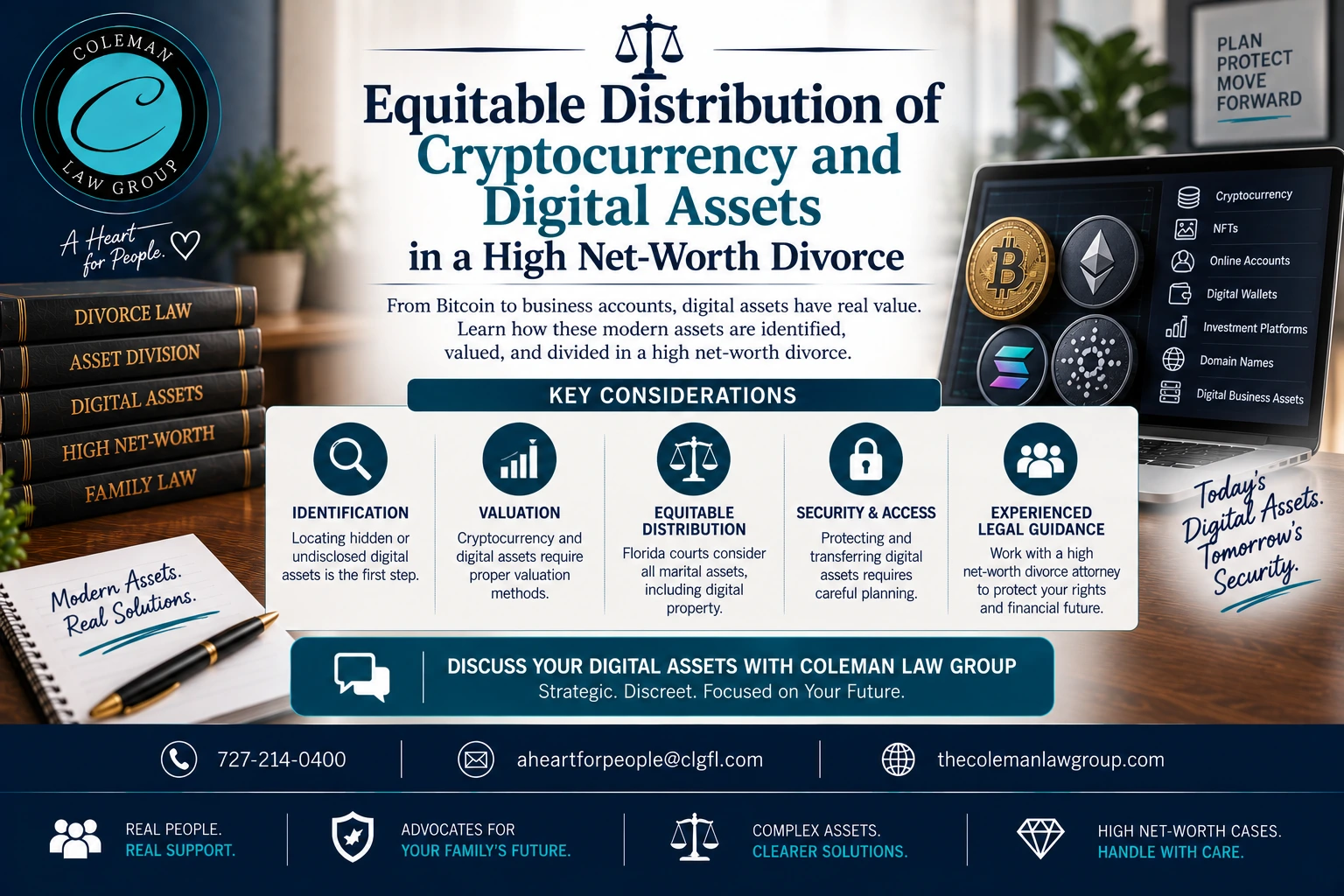
When a high-wealth marriage collapses, the financial audit usually sticks to traditional territory: property portfolios, company stocks, and retirement accounts. Today, though, high-net-worth divorces are just as likely to involve complex digital holdings that are brutally difficult to trace and appraise. If you find yourself in the middle of these tricky property fights, retaining a knowledgeable high-net-worth lawyer is essential to protect your future. Bringing digital assets into the equation completely changes the game, making it critical to understand how courts handle the distribution of virtual wealth to avoid catastrophic financial loss.
Traditional asset tracing methods often fall short when dealing with decentralized networks, private keys, and encrypted ledgers. Unlike a standard bank account with monthly paper statements, digital holdings can be easily obscured, transferred across international borders, or hidden on hardware wallets. Whether you are searching for a qualified divorce lawyer near me or managing an aggressive corporate asset division, protecting your financial interests requires recognizing how Florida law applies to virtual property. The state’s statutory framework requires a thorough, transparent accounting of all digital assets acquired during the marriage before any fair settlement can be reached.
What Counts as a Digital Asset in a Divorce?
Defining virtual property within a marital estate requires looking far beyond standard checking accounts and investment portfolios. In modern high-asset proceedings, digital holdings encompass a broad spectrum of intangible and blockchain-based properties that carry substantial financial weight.
Types of Virtual Holdings in Modern Estates
Digital wealth takes on numerous forms, with each variety introducing specific obstacles when it comes to tracking them down during a marriage dissolution:
- Cryptocurrencies: This includes Bitcoin, Ethereum, stablecoins, and secondary altcoins. These are kept on exchange accounts or offline wallets.
- Non-Fungible Tokens (NFTs) – These include digital artwork, virtual properties, and blockchain-secured collectibles.
- Digital Business Ventures – Holdings in decentralized autonomous organizations (DAOs), cryptocurrency staking pools, or digital commerce platforms.
How Florida Law Treats Digital Property
Under Florida statutes, every asset and debt acquired during the marriage is subject to equitable distribution. This means the judge aims for a fair split of the marital estate, even if it isn’t a strict fifty-fifty cut. Because state law classifies virtual currency as personal property, it must be fully disclosed, appraised, and split alongside real estate or business shares. Omitting the digital assets from mandatory financial disclosure forms can result in severe sanctions from the court.
The Need for Digital Asset Specialists
Hiding cryptocurrency in a high-stakes divorce often relies on the pseudonymous nature of public ledgers, where wallets are identified by code rather than a driver’s license. To combat this, specialized family law attorneys partner with forensic blockchain analysts to trace asset flows across the network, match exchange activity to real-world entities, and drag concealed digital wealth out into the open.
How Do Market Volatility and Hidden Wallets Impact Asset Valuation?
Valuing virtual holdings is inherently complex due to extreme market fluctuations and the pseudonymous nature of blockchain technology. Unlike real estate appraised by certified professionals, digital tokens can experience massive price swings within a single 24-hour period. This volatility creates intense disputes over the precise date used for valuation—whether to assess the holdings on the date of filing, separation, or the final trial.
The Risk of Asset Dissipation
The risk of hidden wealth is exceptionally high with virtual holdings. A spouse intent on concealing assets can easily transfer coins to an unhosted cold storage wallet, use privacy coins to obscure transaction paths, or employ decentralized mixing services to make funds virtually untraceable.
Emergency Legal Intervention
Uncovering these digital assets requires immediate legal intervention and formal discovery requests. Searching and connecting with an experienced divorce lawyer near me ensures that emergency freezing orders can be filed promptly. This process is done to prevent the transfer of marital digital assets while the case is pending.
How to Separate Marital and Non-Marital Digital Assets (Cryptocurrency)
One of the most fiercely contested issues in digital asset litigation involves tracing assets acquired before the wedding that significantly appreciated or were mixed with marital funds during the marriage.
Under the law, assets acquired by the spouse before marriage are considered non-marital property. However, if a spouse covers the following, the line between separate and marital wealth (Bitcoin or Ethereum) becomes heavily blurred:
a) actively traded those assets using marital income,
b) stored them in a joint digital wallet where funds were continuously pooled.
Tracing Appreciation and Commingled Funds
When digital holdings undergo constant conversion, staking, or yield farming throughout the marriage, courts look closely at whether the appreciation is attributable to active marital effort or passive market forces.
Auditing Digital Ledgers
Untangling these commingled crypto portfolios requires an exhaustive audit of digital ledger histories, exchange deposits, and fiat bank transfers. A skilled legal team must deploy specialized software to isolate the exact proportion of the digital estate that qualifies for equitable distribution in Florida, ensuring that non-marital digital holdings are protected while marital wealth is fairly divided.
Should Digital Assets Be Liquidated or Distributed In-Kind?
Once a court determines that cryptocurrency is subject to division, the method of distribution creates a new set of strategic hurdles. Judges and litigants must decide whether to award specific coins directly to one party or force the immediate liquidation of the digital portfolio into fiat currency to divide the cash proceeds.
Direct Wallet Transfers Versus Cash Out
In-Kind Distribution: Distributing specific tokens directly to a spouse allows them to retain upside market potential, but shifts future volatility risk onto the receiving party. If a volatile altcoin crashes post-divorce, that spouse bears the entire financial loss.
Immediate Liquidation
Selling off crypto for flat cash removes all price risk, but doing so during a bear market locks in permanent losses and invites hefty capital gains taxes.
Crafting a Balanced Distribution Plan
Navigating these choices requires expert negotiation to determine whether cash-out options or direct wallet transfers best serve your long-term financial stability without triggering unexpected penalties.
What Legal Strategies Uncover and Protect Hidden Digital Wealth?
Securing a fair division of virtual wealth demands a proactive, multi-layered legal strategy that combines forensic technology with strict procedural enforcement. Because digital holdings are easily moved, your legal team must utilize every available tool to guarantee full transparency.
Issuing Subpoenas to Cryptocurrency Exchanges
Most prominent digital asset trading platforms operate as regulated financial institutions under federal and state compliance rules. Your attorney can issue formal subpoenas to domestic exchanges—such as Coinbase or Kraken—to compel the production of historical transaction logs, account login histories, and fiat-to-crypto conversion records.
Conducting Forensic Blockchain Audits
Once funds leave central exchanges and head into private blockchain networks, basic court subpoenas lose their power. Forensic specialists deploy advanced blockchain tracking tools to trace money trails across public blockchain data, linking anonymous wallets to personal bank accounts or identifiable assets.
Securing Electronic Preservation Orders
The court can order electronic freezes that prevent either partner from modifying, deleting, or shifting digital wallets, private keys, or passwords. Ignoring these court orders results in heavy legal penalties, effectively discouraging anyone from trying to conceal their wealth.
What Are the Tax Consequences of Dividing Crypto in a Divorce?
Integrating virtual wealth into an equitable distribution plan introduces complex tax liabilities that many standard practitioners overlook. The IRS categorizes digital currencies as property rather than fiat currency, meaning that trading, converting, or transferring virtual assets as part of a divorce agreement can easily trigger capital gains liabilities.
Furthermore, if digital holdings are undervalued or improperly categorized during the initial division, one spouse may be saddled with a massive, unexpected tax burden long after the final judgment is entered. Balancing these tax implications requires careful coordination among your legal counsel, forensic accountants, and tax specialists to ensure your final cryptocurrency divorce settlement in Florida accounts for hidden tax liabilities.
Strategic Clarity: Shaping Your Post-Divorce Reality
Navigating the complexities of digital asset division demands a lawyer who masters both Florida family law and the technical mechanics of the blockchain. If you are facing a high-asset split involving tricky virtual holdings, moving quickly to protect your financial standing is essential.
Protecting your hard-earned wealth from concealment or undervaluation demands experienced, meticulous legal advocacy. Contact the Coleman Law Group today at 727-214-0400 or email us at aheartforpeople@clgfl.com to schedule your confidential consultation and take the first decisive step toward securing your financial future with a qualified high-net-worth lawyer and a trusted divorce lawyer by your side.