


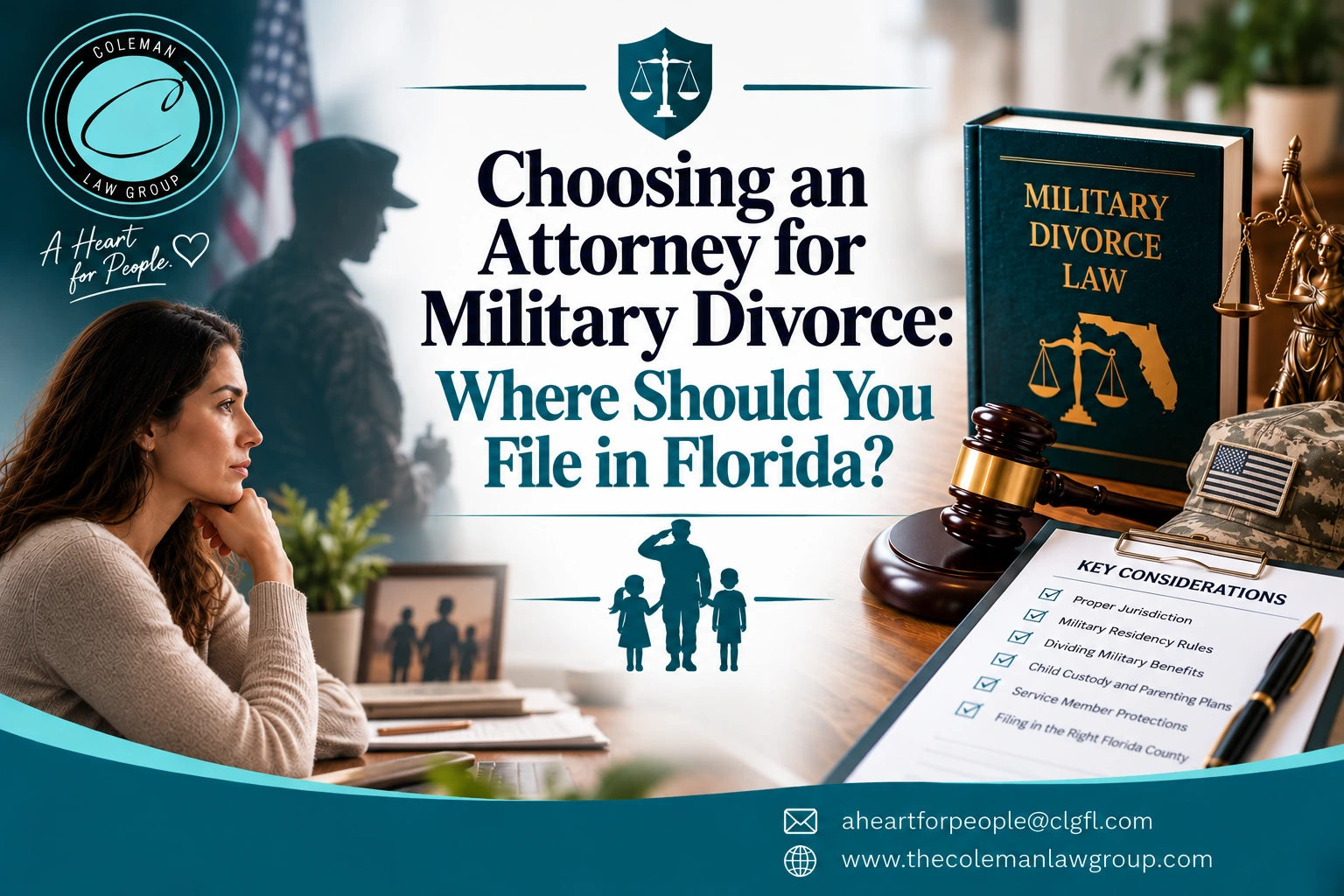
Divorce is hard. When you or your spouse serves in the military, it gets harder. Military life comes with special rules, frequent moves, and federal laws. If you are thinking of undergoing a divorce process in Florida, you must be thinking of one big question: “Where should you actually file a military divorce petition?“
Finding the right place to file and work with a skilled military divorce attorney will make a huge difference in your case. Here is what you need to know.
Why is a Military Divorce Petition Different?
A military divorce is not like a civilian divorce. Standard divorces mostly follow state law. Military divorces must comply with both Florida state law and federal military law.
Here are a few ways military divorces are unique:
- Splitting military pay: Federal law controls how military pension pay gets split between spouses.
- Servicemember protection: Under federal law, service members receive protection against loss of their cases during deployment.
- Parenting plan: Deployment, training, and movement can complicate the process of creating a parenting plan.
- Child support: Military housing allowances and extra pay count toward income calculations.
Hiring a regular family lawyer might not be enough. You need to search for experienced military divorce lawyers near me who know both military rules and local Florida courts.
Where Can You File a Case in Florida?
Jurisdiction means which court has the right to handle your case. Civilian couples usually file where they live. Military couples often have choices. To file in Florida, at least one spouse must live in the state for six months before filing.
Military families can meet this rule in three main ways:
-
Where the Service Member is Stationed:
If the active duty spouse is assigned to a military base in Florida, you can usually file here. Florida does not need to be your official home state.
-
Where the Service Member Claims Legal Residence:
Service members keep a permanent home state even when they move around. If the service member claims Florida as their official home state, you can file here at any time.
-
Where the Civilian Spouse Lives:
The civilian spouse can file in a local Florida court if they have been living in Florida for the last six months.
How to Pick the Best State to File
Military couples often have options to file in different states. You might choose between the state where you got married or your home state.
Where you file matters because state rules are different for key items:
- Property division: Florida courts split property fairly, but not always 50/50.
- Alimony: Florida has strict state rules for spousal support based on the length of the marriage.
- Pension distribution: Federal law allows states to divide military pensions, but state rules determine how to do so.
Speak with a Florida military divorce attorney before you file. They will tell you which state offers the best outcome for your family.
Protection During Deployment
Deployed personnel often worry about being served with divorce petition papers. Federal law protects service members from unfair court actions when they are actively serving their duties.
An active-duty service member can pause court proceedings under federal rules if:
- The first delay lasts for at least 90 days.
- Courts can add more time if military duty prevents you from joining the case.
- Service members can waive this to expedite the divorce process.
A well-versed attorney will know how to manage this effectively without creating more delays.
Military Pension and Benefits Division
The military benefits division is relatively straightforward, although certain regulations must be followed.
The 10/10 Rule
There is a misunderstanding regarding the 10/10 rule, under which the military will pay the ex-spouse directly, provided the marriage spans 10 years within the 10 years of active military service.
In case you were not married for 10 years, the judge can still divide the pension. However, the retired member must pay the ex-spouse directly.
Thrift Savings Plan and Healthcare
- TSP Accounts: Military retirement savings accounts can be split using special court orders.
- Tricare: Former spouses keep healthcare only if the marriage lasted 20 years during 20 years of military service.
Making errors here costs a lot of money. Excellent legal counsel will prevent any costly mistakes.
How To Select the Best Lawyer for Military Divorce Petition
Selecting the best lawyer is one of the most crucial steps in a military divorce. General family lawyers may not be aware of certain nuances in federal law that can prove very costly in the future.
When looking for a military divorce lawyer, look for such qualities as:
- Experience With Military Law: Find out how many military cases he or she solves every year.
- Familiarity with Military Payments: The attorney should be aware of how military pensions and TSP accounts are divided. They must know how to write orders that the military accepts.
- Understanding Military Life: A lawyer who knows ranks, pay grades, and deployments saves you time. They understand the real pressure you face daily.
- Effective Communication: Select a team that replies promptly. You require prompt communication, even if you are in different time zones or on deployment.
Important Questions to Ask in Your Initial Telephone Conversation
When speaking to a Florida military divorce lawyer, make sure to ask some straightforward questions:
- Do you have experience handling divorce cases from my particular military service branch?
- What is your approach to the division of military retirement under Florida law?
- How will we communicate once you are on deployment or temporary assignment?
Clear answers to these questions will enable you to know whether or not the lawyer has the expertise to handle your case.
Secure Legal Services with Coleman Law Group
Getting divorced in Florida as part of the military service necessitates considerable expertise. Standard family law approaches fall short when federal military rules come into play. Simple mistakes during filing can harm your finances, military benefits, and custody rights for years to come.
The process is made a whole lot easier when working with the right lawyer for military divorce. It is vital that the legal team can help you navigate Florida laws as well as the intricacies of serving in the armed forces.
Coleman Law Group recognizes the complexities of being a veteran, a member of the armed forces, or even a spouse of someone serving in the military. Whether it’s dealing with the division of military pension and allowances or arranging child custody during deployment, we have your back.
We recognize the sacrifices you have made for this great country. Now it’s time for us to work for you. Call Coleman Law Group today at 727-214-0400 or aheartforpeople@clgfl.com for your confidential consultation with a qualified Florida military divorce lawyer.