


Child custody agreements are formulated with the best interests of the child in mind. However, family circumstances may change. The parent may find a better job in another state and thus needs to relocate for work.
They may even want to be closer to family for personal reasons. Sometimes, a parent may need to relocate for housing reasons.
In cases where a parent plans to move and thus change the current custody agreement, many legal complications arise. The move affects the parent plans & visitation.
In view of such challenges, relocation results in a custody modification. It is worth mentioning that the child custody relocation does not necessarily imply a change in the custody arrangement.
How Does Relocation Impact Child Custody?
Here are a few examples of situations that arise to necessitate a change to the existing parenting plan & visitation schedule:
- A parent may move to a location that is several hours away from the child’s home.
- The child may have to go to a new school.
- The visits during weekdays become impractical.
- Transportation may become more difficult.
- The child may have less frequent contact with the other parent.
It is important for a parent who wishes to relocate not to take it for granted that they can move along with the child and make changes to the current arrangements.
The circumstances that may cause a parent to file a custody modification due to relocation can vary from state to state and may also depend upon the current custody order.
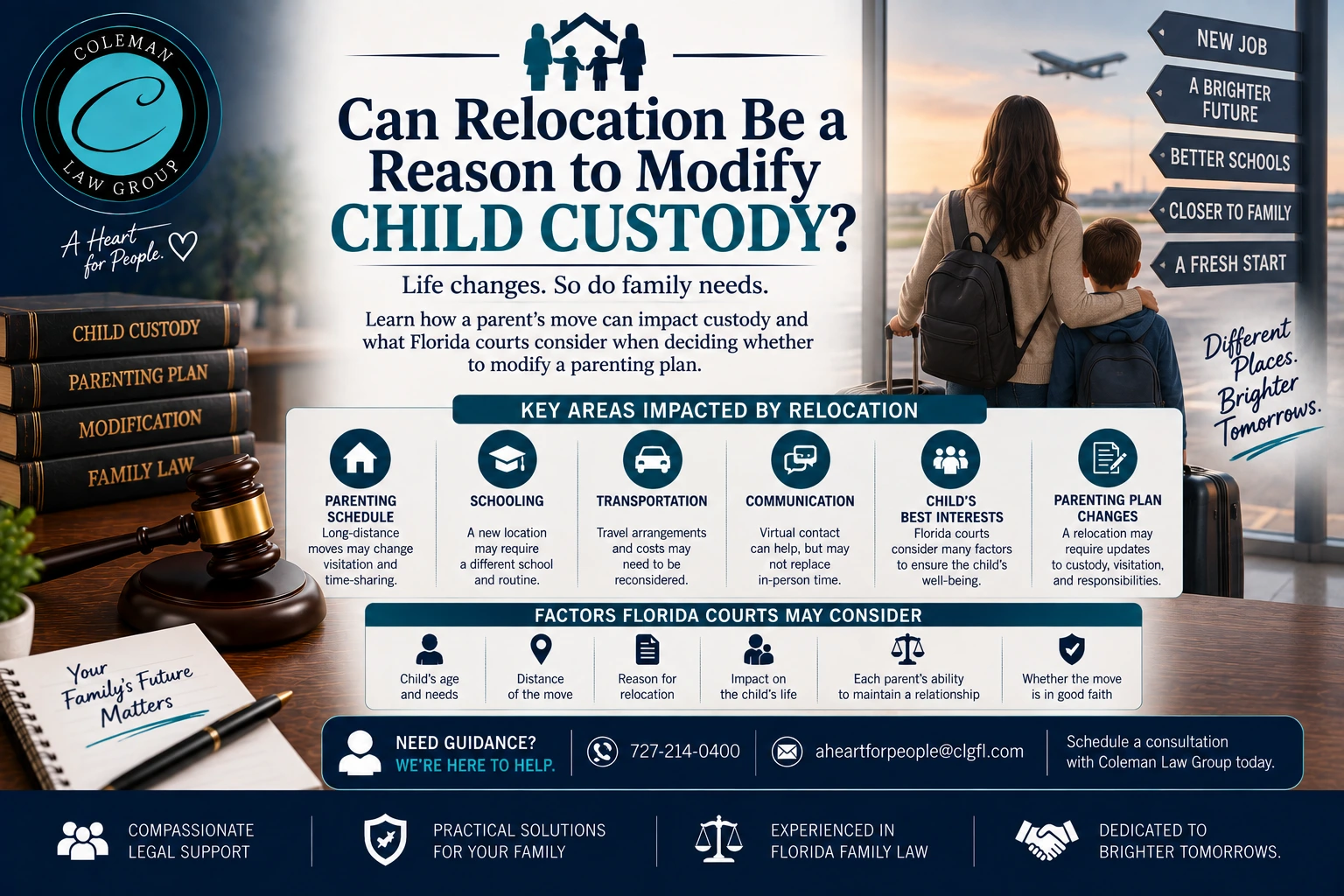
1. Changes to the Parenting Schedule
A parenting plan may provide for regular weekday visits. The long-distance move can render such visits impossible. The court can look at a schedule that allows the other parent to have extended visitation during vacations and holidays.
2. Changes to Schooling
A move may require the child to attend a new school. This can affect education and daily routines. The court may consider the child’s current school. It may also consider the quality and location of the proposed school.
3. Changes to Transportation
Long-distance parenting arrangements often require additional transportation. The court may consider who will handle transportation and how travel costs should be divided.
4. Changes to Communication
A relocation may reduce face-to-face contact between the child and the other parent. Technology may help maintain regular communication. Video calls and phone calls can support the relationship. They may not fully replace in-person parenting time.
Some cases may involve a significant change in circumstances. The court may then consider whether modifying custody or visitation is in the child’s best interests.
What is a parenting plan relocation?
A parenting plan relocation may require changes to how parents share time and responsibilities. A parenting plan usually addresses important issues such as:
- Where the child will live
- When will each parent have parenting time
- School responsibilities
- Holiday schedules
- Transportation
- Communication
A relocation of a parent can affect many of these areas at once.
Suppose a child who previously spent every other weekend with one parent may be unable to maintain that schedule after moving across several states. The parents may need to create a new arrangement.
The goal is not always to give one parent more custody. The court may modify the schedule while keeping the basic custody arrangement in place.
What Factors Can a Florida Court Consider?
The court may consider several factors while deciding a custody modification due to relocation. A child’s relationship with both parents can be important. The court may also look at the reason for the proposed move.
Other factors can include:
- The child’s age and needs
- The distance of the proposed move
- The reason for the relocation
- The impact on the child’s daily life
- The existing parenting schedule
- The ability of each parent to maintain a relationship with the child
- Transportation arrangements
- Whether the move is being made in good faith
- Whether the relocation is intended to interfere with the other parent’s relationship with the child
What Happens When the Other Parent Disagrees With Relocation?
In some instances, there will be disagreements between the parents over the move. They think the move would negatively affect their relationship with the child. In such cases, there is an option to challenge the move legally.
There might be a hearing to review the circumstances. There are equal opportunities for both sides to give evidence.
The parent wishing to relocate must provide the rationale behind the move. On the other hand, the other parent provides an account of how the relocation will affect their relationship with the child. Here, the need for a legal strategy comes into play.
Is It Possible to Relocate Without a Court’s Decision?
Parents must exercise great caution when relocating their child under an existing custody order. A custody order may contain specific relocation requirements. State laws can also require certain notices and procedures.
Failing to follow those rules when moving will result in serious legal issues. It may also impact future decisions on custody.
It is best to consult a custody modification attorney before moving far away. One must also review the current custody order to determine what is required before moving.
What Evidence Can Be Used in a Relocation Case?
Evidence can become extremely important during the process of modifying the custody. Parents may need documents explaining why they have moved away. They include:
- Employment offers
- Housing information
- School information
- Medical or family-related documentation when relevant
- Proposed transportation plans
- A proposed parenting schedule
- Communication records
- Information about the child’s current routine
This evidence would help the court see how the relocation might impact the child.
A parent must focus on facts that pertain to the child’s best interests. The individual differences between the parents may not be as important as information regarding the effect on the child.
When the parents agreed to the new relocation and visitation plan.
An agreement could save both parents from a long custody battle. They may work out a new visitation plan based on the new distance. For instance, they could agree to:
- Longer summer visits
- Extended holiday parenting time
- Alternating school breaks
- Video calls during the week
- Shared transportation responsibilities
- Changes to pick-up and drop-off arrangements
An agreement should be properly documented and submitted to the court when required. An informal agreement may not provide the same protection as a formal court order.
Why Legal Guidance Matters
Relocation cases can become complicated quickly. A parent may believe that moving is necessary. The other parent may believe that the move will damage their relationship with the child. Both sides may have valid concerns.
A child custody modification lawyer will review the existing custody arrangement and discuss possible options. Moreover, an attorney can assist in preparing a parenting plan proposal and in bringing up the facts regarding the requested modification. Parents shouldn’t wait until a relocation occurs to learn their legal responsibilities.
Taking your child with you to a new place may have legal implications regarding custody and visitation rights, as well as family relations. If you are planning to move away or the other parent plans to move away with your child, then you must know your rights and obligations. Coleman Law Group can help you with that.
If you need help with child custody modification or a change in parenting plan due to relocation, contact Coleman Law Group today at 727-214-0400 or write to aheartforpeople@clgfl.com to discuss your situation with an experienced family law attorney.