


Life can change after a family court order is entered. A parenting plan may no longer work. A parent may move to another city. A child’s needs may change. Income or employment may also change. In some situations, these changes may support a request to modify an existing court order.
Filing a petition for modification in Florida is the first step. It does not automatically change your current order. The court must review the request and follow the required legal process before making a new decision.
Understanding the family court modification process can help you know what to expect. It can also help you prepare for each stage of your case.
What is a Petition for Modification?
A petition for modification asks the court to change an existing family law order. The order may involve:
- Child custody or time-sharing
- Child support
- Parenting plans
- Alimony
A person cannot usually ask the court to modify the order because their circumstances have changed and they are unable to cope. There generally needs to be a legally recognized reason for the requested change.
The following circumstances lead to the modification of the existing order:
- A parent’s work schedule has changed.
- A child’s needs have changed.
- One parent has moved.
- There has been a significant change in financial circumstances.
- The current parenting plan is no longer practical.
This is one reason why consulting a modification lawyer can be very helpful before submitting your petition.
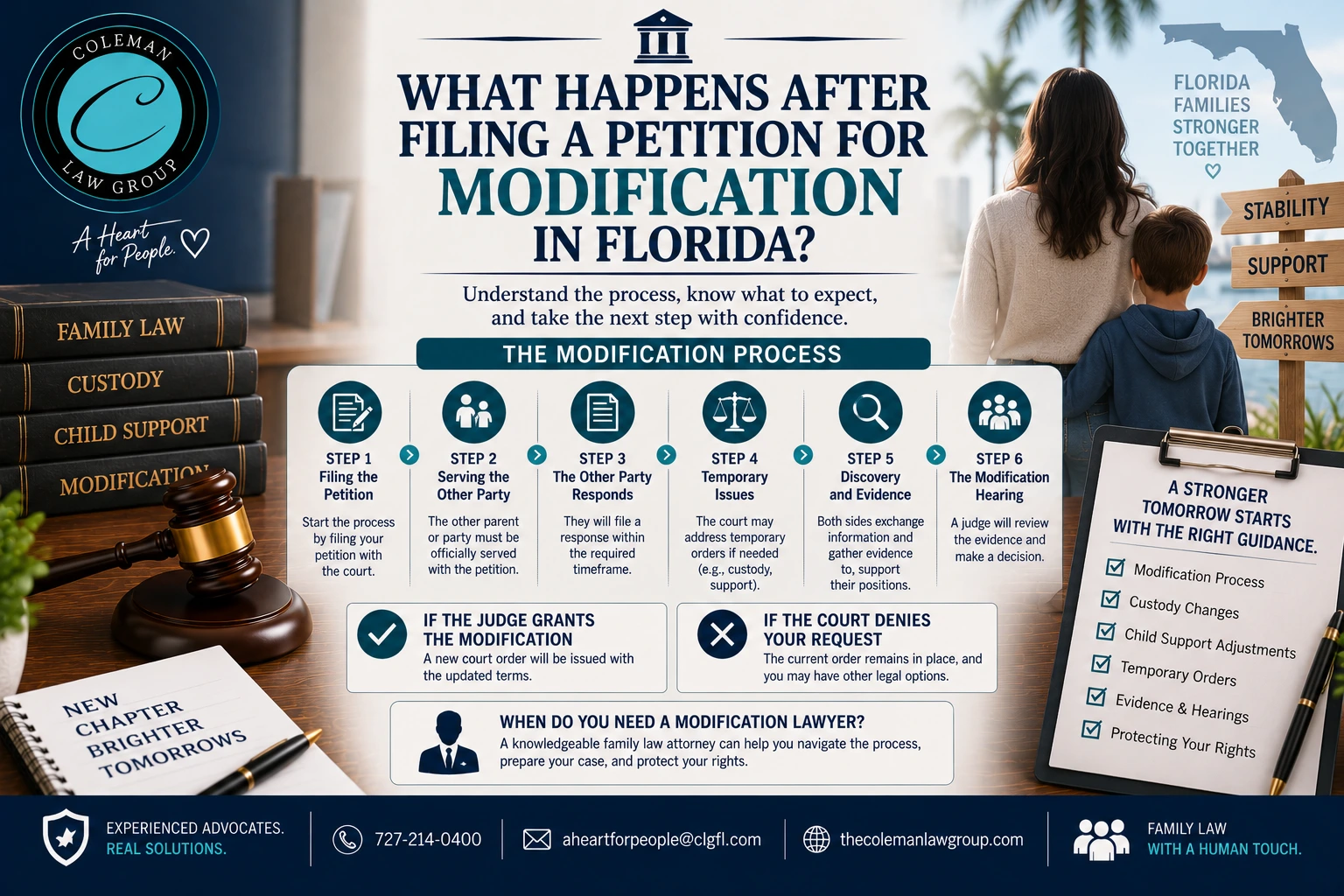
Here are the steps one needs to cover as part of knowing what will happen after filing a petition for modification in Florida:
Step 1: Filing the Petition
The first step involves the petitioner submitting the correct paperwork to the court. The petition explains:
- In what order do you want to change
- Why do you believe a modification is necessary
- The facts supporting your request
- What changes are you asking the court to make
The petition should be clear and supported by relevant facts. Simply stating that circumstances have changed may not be enough.
The court filing must also comply with Florida procedural requirements. Mistakes in the paperwork can cause delays. Also, the next steps will depend on the circumstances of the case after the petition is filed.
Step 2: Serving the Other Parent or Party
After filing a petition for modification, the other party generally needs to receive formal notice of the case. This is known as service of process.
The respondent then has an opportunity to respond to the petition. The response may agree with the requested changes. It may oppose them. The respondent may also raise different issues for the court to consider.
A case cannot proceed without following the required notice procedures.
Step 3: The Other Party Responds
Respondents can file their response with the court. This response can cover all points mentioned in the petition. The respondent can state the reasons why they think this modification should or should not be made.
In some cases, the respondent files their counterpetition with the court. It means the respondent requests certain changes to the current order.
Both parties are supposed to analyze the situation at this point.
It is crucial to avoid making any wrong assumptions about what the other party will ask. The response will play a role in the further development of the case.
Step 4: Certain Temporary Issues May Be Dealt
Some cases involve issues that cannot wait until the final hearing. For example, a parent may request temporary relief involving:
- Time-sharing
- Child support
- Parenting arrangements
The court may schedule a hearing to address certain temporary issues. A temporary decision does not necessarily become the final decision in the case. The court may later review the evidence and make a final ruling.
Step 5: Discovery and Evidence
The next stage of the family court modification process may involve gathering information and evidence. Both sides need to submit documents that support their positions.
Depending on the case, evidence may include:
- Pay stubs
- Tax records
- Employment records
- School records
- Medical records are legally relevant
- Parenting schedules
- Messages between the parents
- Travel records
- Other documents related to the requested modification
The goal is to allow both sides to obtain relevant information before the case reaches trial or a final hearing. Good preparation matters. Evidence should relate directly to the legal issues before the court.
Step 6: The Modification Hearing
This is the last step, in which the court schedules a modification hearing. The hearing allows each side to present its position.
The judge may review:
- The existing court order
- The petition and response
- Evidence presented by the parties
- Witness testimony
- Relevant documents
- The circumstances supporting the requested change
The person requesting the modification generally needs to provide evidence that meets the applicable legal requirements.
This is more than simply telling the judge that life has become difficult. The evidence should show why the existing order should be changed under Florida law.
What If the Judge Grants the Modification?
If the court approves the requested changes, a new order will explain what has changed.
For example, a modified parenting plan may establish:
- New time-sharing schedules
- Updated holiday schedules
- New exchange arrangements
- Changes involving school responsibilities
- Other parenting requirements
In case the alimony or child support is changed, there will be an order showing the change in the amount of money that you should pay.
What if the Court Denies Your Request?
The court may deny your request if you do not satisfy the requirement for alteration of the order. The court may also deny some requested changes while approving others.
A denial does not necessarily mean that circumstances can never change. A future modification may be possible if new circumstances arise and the applicable legal requirements are satisfied.
Making requests without legal justification may lead to further complications and expenses.
When Do You Need a Modification Lawyer?
A modification lawyer can help you understand whether your circumstances may support a request for a change. An attorney can help with:
- Reviewing your current order
- Identifying the issues that may support modification
- Preparing the petition
- Gathering relevant evidence
- Responding to the other party
- Preparing for mediation
- Representing you at hearings
- Explaining your legal options
Legal counsel will assist you in avoiding procedural pitfalls and putting forward your case in an organized manner.
How Does the Coleman Law Group Help?
The petition for modification may include service of process, the defendant’s answer to the motion for modification, discovery, and a hearing in the state of Florida. After reviewing the information provided, the court will be able to make its decision and determine whether the proposed modifications are legal.
If there have been changes in your family life and the existing order is no longer suitable, seeking professional legal help will help you take the right next step.
Seeking Florida family law modification assistance? Call Coleman Law Group at 727-214-0400 or write to aheartforpeople@clgfl.com to understand the next steps.