

Coping with the bodily harm and psychological stress after a sudden crash requires ongoing medical treatment and a solid window to recuperate. Adding insurance carriers and legal hurdles into the mix makes the whole ordeal feel completely exhausting. Recent legislative overhauls have radically rewritten how fault is determined in state injury claims. If you are working to rebuild your life after a wreck, partnering with a skilled personal injury lawyer in Florida makes all the difference in safeguarding your economic stability.
Understanding how blame percentages affect a legal settlement requires close analysis. Adjusters scrutinize every single detail of an incident to deflect responsibility from their clients, cutting financial liability down or trashing claims outright. Knowing where you stand legally right now gives you the upper hand when dealing with contested fault, helping you secure proper compensation.
How Pure Comparative Negligence Worked Before House Bill 837
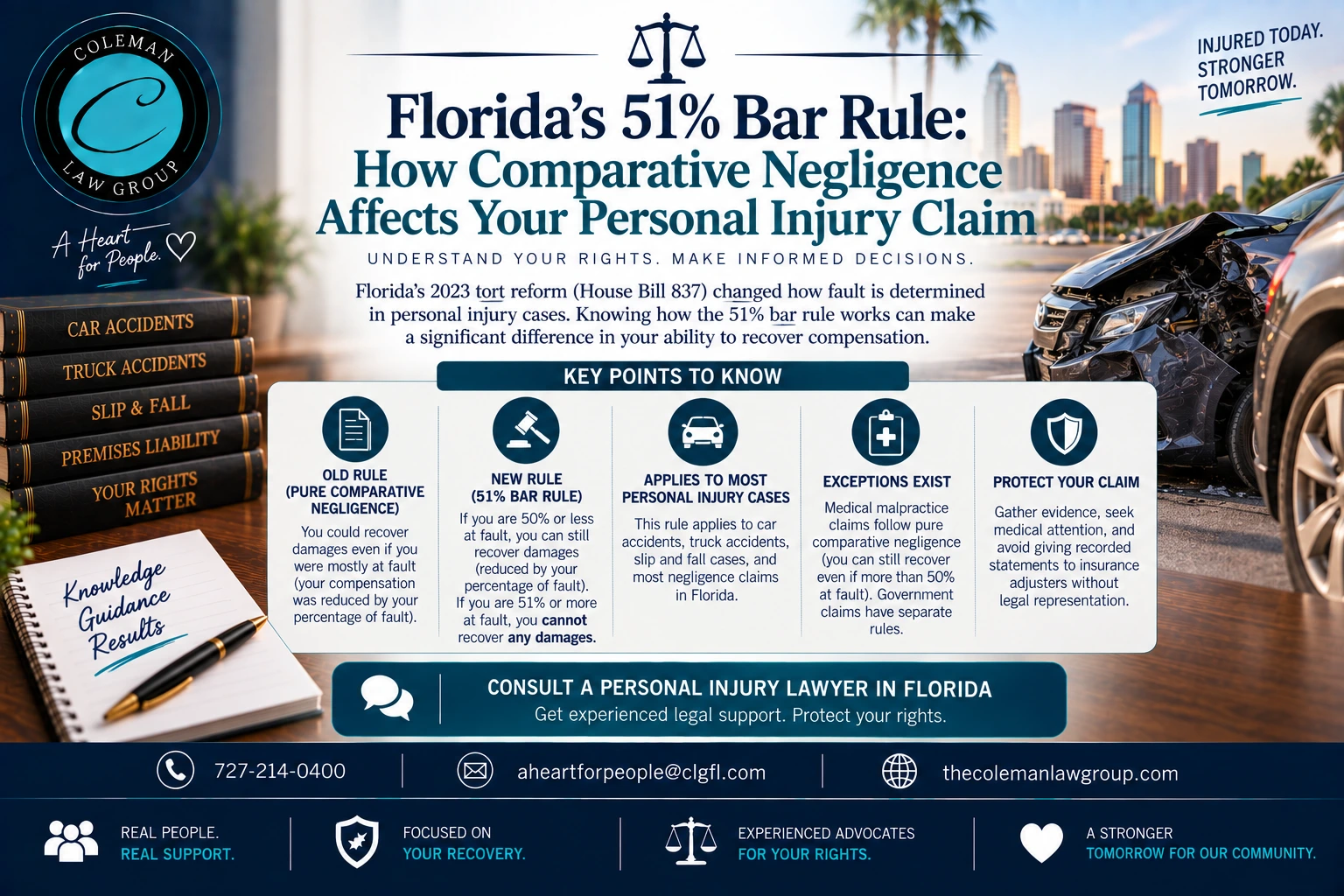
Before the legislative changes took effect, Florida operated under a pure comparative negligence model. Under that historical framework, an injured person could pursue financial compensation even if they held the vast majority of the blame for an accident.
When a judge or jury placed the majority of the blame on an injured person, their overall financial recovery was reduced by that exact share of responsibility. For instance, if a plaintiff sustained one hundred thousand dollars in total losses yet carried ninety percent of the fault, they could still walk away with the remaining ten percent. While that model prevented catastrophic losses from minor or shared mistakes, commercial interests and insurance advocates eventually demanded major legislative shifts to rewrite the state’s legal landscape.
The Mechanics of the Former Proportional System
Under the old system, courts calculated recovery using a direct mathematical formula. Total damages were multiplied by the claimant’s remaining percentage of innocence. Because there was no statutory cutoff, even high-fault assignments allowed a partial payout; this structure prioritized distributing partial losses among all negligent parties rather than barring recovery entirely.
Why Lawmakers Pursued Comprehensive Tort Reform
Supporters of civil justice reform pointed out that pure comparative rules triggered an influx of lawsuits and inflated insurance rates. Lawmakers acted on the argument that individuals primarily responsible for their own injuries should bear the costs themselves rather than penalize others. Those coordinated lobbying campaigns resulted in Florida’s comparative negligence House Bill 837, which replaced the old standard with a stricter modified framework.
What is the 51% Bar Rule Under Florida Tort Reform 2023?
The 2023 Florida tort reform brought a modified comparative negligence standard to state civil courts. Under current statutes, your ability to recover financial damages depends entirely on whether your assigned share of fault crosses a specific statutory threshold.
Should a court determine you hold fifty percent or less of the blame, you remain eligible to collect damages, with your payout scaled back by your specific percentage of fault. On the flip side, if liability tips past the fifty percent threshold to fifty-one percent or higher, you lose all ability to recover a single dime. This creates an all-or-nothing threshold where every single percentage point of assigned fault directly impacts your case outcome. Partnering with a knowledgeable personal injury attorney near me ensures that liability is thoroughly investigated from the outset.
The Financial Impact of a Single Percentage Point
The difference between a fifty percent fault assignment and a fifty-one percent fault assignment creates a severe legal cliff. At 50% fault, a claimant still receives half of their assessed damages. At fifty-one percent fault, the recovery drops immediately to zero.
Insurance companies are well aware of how the new rules operate and will actively scheme to maneuver accident victims across that dangerous liability line. Protecting your claim from these manipulative strategies requires immediate evidence collection, eyewitness testimony, and expert testimony. Having an experienced personal injury lawyer that Florida courts respect on your side prevents insurance companies from unfairly inflating your share of responsibility.
How Fault Percentages Apply Across Different Case Types
Florida’s modified comparative negligence HB 837 applies to the vast majority of civil negligence actions throughout the state, including motor vehicle collisions, commercial truck crashes, and premises liability claims:
Car Accidents and Highway Collisions
When collisions occur on congested thoroughfares, insurance adjusters pore over traffic feeds, braking marks, and engine control module data to determine responsibility. Should a motorist be moving slightly over the speed limit? At the same time, another neglects the right of way, the resulting fault split determines if collecting damages is legally permitted under House Bill 837’s framework.
Slip and Fall Premises Liability Claims
Landlords and business operators often push the defense that a fallen visitor was careless or disregarded the obvious posted warnings. With the revised comparative fault system in play, if property defendants persuade a jury that you carry more than half the responsibility for an accident on their premises, you walk away completely empty-handed—unable to recover a single dollar for hospital bills or lost wages.
Are There Exceptions to the Modified Negligence Rule?
While the 51 percent bar applies broadly to general tort and personal injury claims, the legislature carved out specific areas where older legal standards still govern. Medical malpractice actions represent the most notable exception under state law.
Why Medical Malpractice Claims Are Handled Differently
Claims arising from professional medical negligence or wrongful death caused by healthcare providers continue to follow pure comparative fault principles. If a patient bears more than 50% of the blame in a clinical setting, their recovery is reduced proportionally rather than barred entirely. Determining whether an exception applies to your unique situation requires a detailed review of the facts with a qualified personal injury attorney near me.
Sovereign Immunity and Government Claims
Claims involving government entities—such as city trucks, state agencies, or county-owned buildings—are governed by entirely separate statutes and procedural roadblocks. Sovereign immunity caps how much money you can actually collect and imposes unforgiving deadlines for filing initial notices, creating a legal maze far more complex than a typical private accident claim.
How to Protect Your Claim From Unfair Blame
Because insurance carriers attempt to utilize the modified negligence rule to deny payouts, protecting the integrity of your claim starts immediately after an accident occurs. Taking deliberate steps preserves vital evidence before it disappears.
Essential Steps to Take Immediately After an Injury:
- Contact the local police or the property’s management team immediately to generate an official, time-stamped record of the event.
- Snap pictures of the crash site, vehicular damage, and any dangerous property conditions before anyone alters, fixes, or tidies up the area.
- Seek immediate medical attention to document your injuries and link them directly to the event.
- Avoid giving recorded statements to opposing insurance adjusters without legal representation present.
Following these guidelines minimizes the risk of saying something that an insurance company can twist to increase your assigned fault percentage.
Why Professional Legal Guidance Matters
The legal landscape in Florida demands precision, speed, and thorough preparation. With shortened filing deadlines and strict fault cutoffs, attempting to handle an insurance claim on your own exposes you to significant financial risk. Consulting a seasoned personal injury lawyer in Florida gives you a distinct advantage when dealing with aggressive insurance adjusters.
Securing dedicated legal support ensures your case is built to keep your liability well below the statutory threshold. Our team at Coleman Law Group recognizes the heavy physical and financial toll a sudden accident takes on your household. We meticulously build your case, counter aggressive attempts to pin the blame on you, and fight for every dollar of compensation owed. With our legal team, you get dedicated support built around your specific situation. Contact us at 727-214-0400 or email us at aheartforpeople@clgfl.com to schedule your confidential consultation and let us help you protect your rights.