


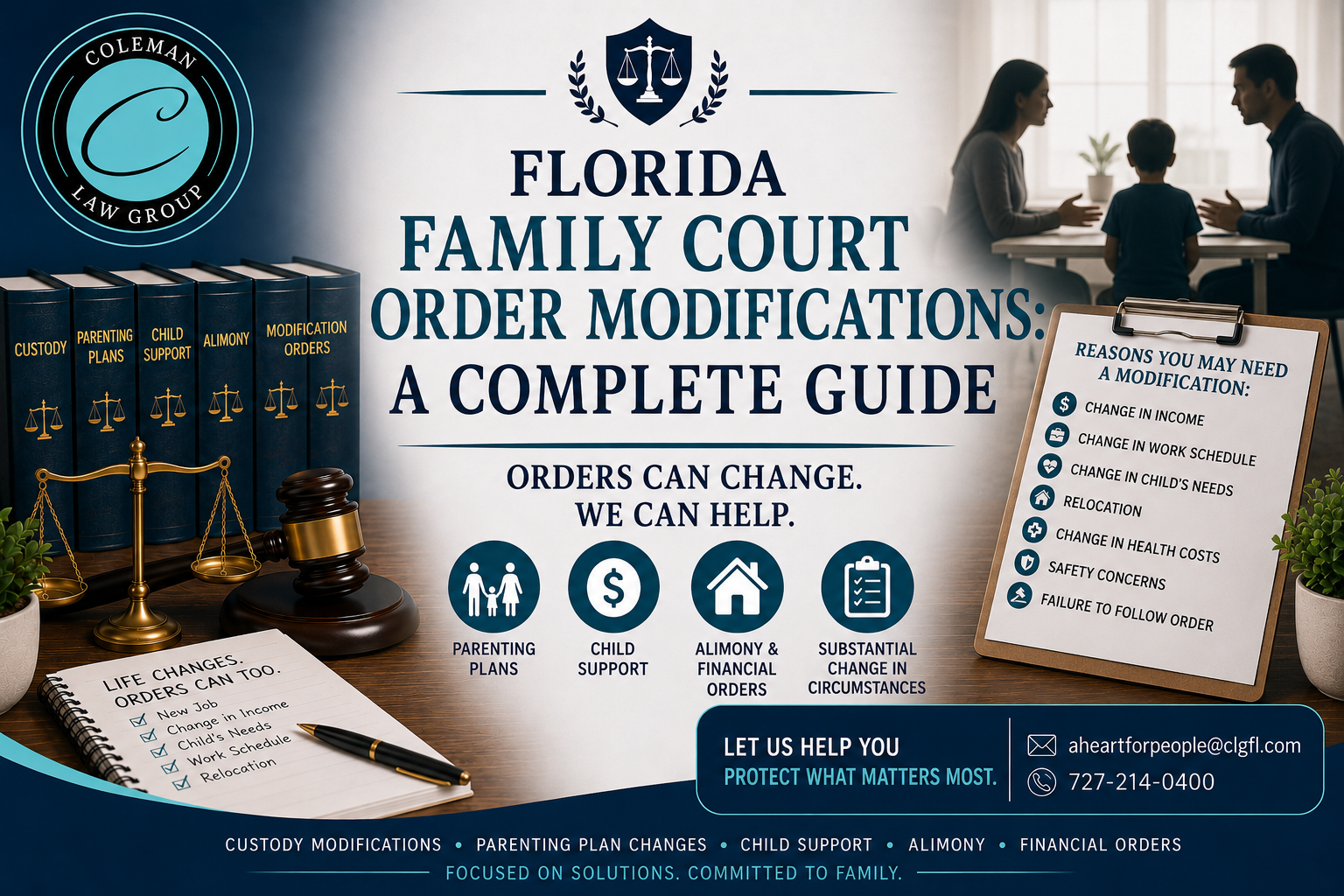
Family circumstances tend to change over time. A court order that worked well in the past may no longer fit your current situation due to changes in income or changes in work schedules.
The State of Florida allows individuals to petition the courts for modifications to particular family laws. A modification petition is an important procedure in family law.
Modifications are not automatic. One must meet specific legal qualifications to seek a modification of any order.
This guide explains how family court order modifications work in Florida. It also explains when you may need a modification lawyer and what you should know before asking the court for a change.
What is a modification of a Family Court Order?
A family court modification is a legal order issued by a judge. It may cover several family law matters.
These can include:
- Child custody
- Parenting plans
- Child support
- Alimony
- Other financial matters
Modification refers to the request to the court to alter an order already made. The court will not alter an order based on someone’s desire for different terms. The requirements may vary depending on the order to be modified in different cases.
When Can You Ask to Modify a Florida Family Court Order?
Florida courts generally require a meaningful change before modifying certain family law orders.
For custody and parenting matters, the change usually must be substantial and material. It must also be one that was not reasonably expected when the original order was entered.
This is often referred to as a substantial change in circumstances. The court will look at the facts of the case. It will also consider whether the requested change is in the best interests of the child.
A simple disagreement with the existing order may not be enough. The same general idea does not apply to every family law issue. Child support and alimony have their own rules.
This is one reason legal advice can be useful before filing a modification request.
How to Modify a Custody Order in Florida
Parents may sometimes need to modify the terms of a custody order after the original order is entered.
Florida generally uses the terms parental responsibility and time-sharing when discussing these matters. A parent seeking a change must show that the legal requirements for modification are met.
The court may consider factors such as:
- Changes in the child’s needs
- Changes in a parent’s circumstances
- Changes in the family’s living situation
- The child’s safety and well-being
- The child’s best interests
The court will consider the facts presented by both parents.
A parent should not assume that a requested change will be granted simply because circumstances have become difficult.
What is a Substantial Change in Circumstances?
Substantial change in circumstances is generally a change that is more than a minor inconvenience. The court considers whether circumstances have changed meaningfully since the original order. The timing also matters.
A change already known or expected when the original order was entered may not support a modification to the same extent as a new and significant change.
The parent requesting the modification must present evidence supporting the request. This may include relevant records and other information that helps show what has changed. The court then decides whether the legal standard has been met.
Parenting Plan Modification in Florida
A parenting plan sets out how parents will share responsibilities and time with their children.
It can address matters such as:
- Time-sharing schedules
- School arrangements
- Transportation
- Communication
- Holidays
- Health care
A parenting plan modification may be necessary when the existing plan no longer works due to changed circumstances.
However, a parent cannot simply change the parenting plan on their own. If the other parent does not agree to the change, then court approval may be required. The court will focus on the child’s best interests. It will also review the facts and evidence presented by the parents.
Parents should continue following the existing order unless a new order changes it. Ignoring the current order can create additional legal problems.
Can Child Support Be Modified?
Child support can also be modified under certain circumstances. Florida child support is based on factors that can change over time.
These can include:
- A change in income
- A change in employment
- Changes in the child’s needs
- Changes in health insurance costs
- Changes in the amount of time a child spends with each parent
A parent should not stop making payments simply because they believe support should be lower. The existing order generally remains in effect until the court modifies it.
Anyone considering a child support modification should review their situation before taking action.
Alimony Modification in Florida
Alimony is another area where a modification may be possible.
The rules can depend on the type of alimony involved and the terms of the original order. Changes in income or other significant circumstances may affect an alimony obligation.
Florida law has also changed over time. This makes it important to look at the law that applies to the specific case. If you are considering a change to an alimony order, then an alimony modification lawyer can help you understand whether a modification may be available.
The lawyer can also review the existing order and the circumstances that have changed.
How Does the Modification Process Work?
The process can vary based on the type of modification. In general, the process may involve several steps.
Step 1 – Review the Existing Order
The first step is to review the current court order. The order explains the terms that are currently in effect. It is important to understand exactly what the order says before requesting a change.
Step 2 – Identify the Change
Next, you need to identify what has changed since the original order. The change should be relevant to the issue you want the court to modify.
Step 3 – Gather Supporting Documents
Documents can help support your position. Depending on the case, these may include:
- Financial records
- Employment records
- School records
- Medical records
- Existing court documents
The documents needed will depend on the type of modification.
Step 4 – File the Required Documents
A modification request must be filed with the appropriate Florida court. The filing should clearly explain the requested change. It should also provide the facts that support the request.
Step 5 – Notify the Other Party
The other parent or former spouse generally must receive proper notice of the case. They may have the opportunity to respond to the request.
Step 6 – Attend Court Proceedings
The court may schedule hearings or other proceedings. Both sides may have the opportunity to present their positions. The judge will then decide whether the legal requirements for modification have been met.
What Does the Court Consider?
The court considers the specific facts of the case. For child-related matters, the child’s best interests are an important part of the decision. The court may consider the child’s relationship with each parent. It may also review the parents’ ability to meet the child’s needs.
For financial matters, the court may review income and other relevant financial information. The court does not base its decision only on what one party wants. Evidence matters.
This is why preparing a modification request carefully is important.
Why Work With a Modification Lawyer?
Family law cases can become complicated quickly. A modification lawyer can review your existing order and explain your legal options. A lawyer can also help you understand what evidence may support your request.
This can be especially important when the other party disagrees with the modification. Your lawyer can help with:
- Reviewing the existing court order
- Understanding the legal requirements
- Preparing modification documents
- Organizing supporting evidence
- Responding to the other party
- Preparing for hearings
- Presenting your position to the court
Legal representation does not guarantee that a modification will be granted. The court makes the final decision.
How Coleman Law Group Can Help
Changing a Florida family court order can be a serious legal matter. You may be dealing with changes in your family life. You may also be dealing with financial changes that make your current order difficult to follow.
The right legal approach depends on the type of order involved and the circumstances that have changed. Coleman Law Group can help you understand the modification process and the legal options available to you.
Working with a modification lawyer can help you prepare your request and understand the legal process.
Coleman Law Group can help you understand your options and take the appropriate next step in case you are considering a parenting plan modification or need an alimony modification lawyer. Contact Coleman Law Group today at 727-214-0400 or aheartforpeople@clgfl.com to schedule a consultation.