


Family court orders are not always permanent. Life can change after a judge issues an order. A parent may lose a job. A child’s needs may change. A parent may move to another city or state. A major change in circumstances can sometimes support a request to change an existing court order.
The time needed to change an order depends on several factors. Some cases may be resolved in a few months. Others may take significantly longer, especially when the parents do not agree or if the case must go to court.
Knowing the process of modifying a family court order will give you an idea of what to expect. This will enable you to gather all necessary documents on time.
What is a Family Court Modification?
A family court modification is a legal request to change an existing family court order that involves:.
- Child support
- Child custody
- Time sharing
- Parenting plans
- Alimony
- Other family law matters
A person cannot usually ask the court to change an order simply because they do not like the current arrangement. There must generally be a valid legal reason for the requested change.
The rules can vary based on the type of order and the facts of the case. Florida family law cases also have specific requirements that must be followed.
What is the timeline for the Family Court Modification Process?
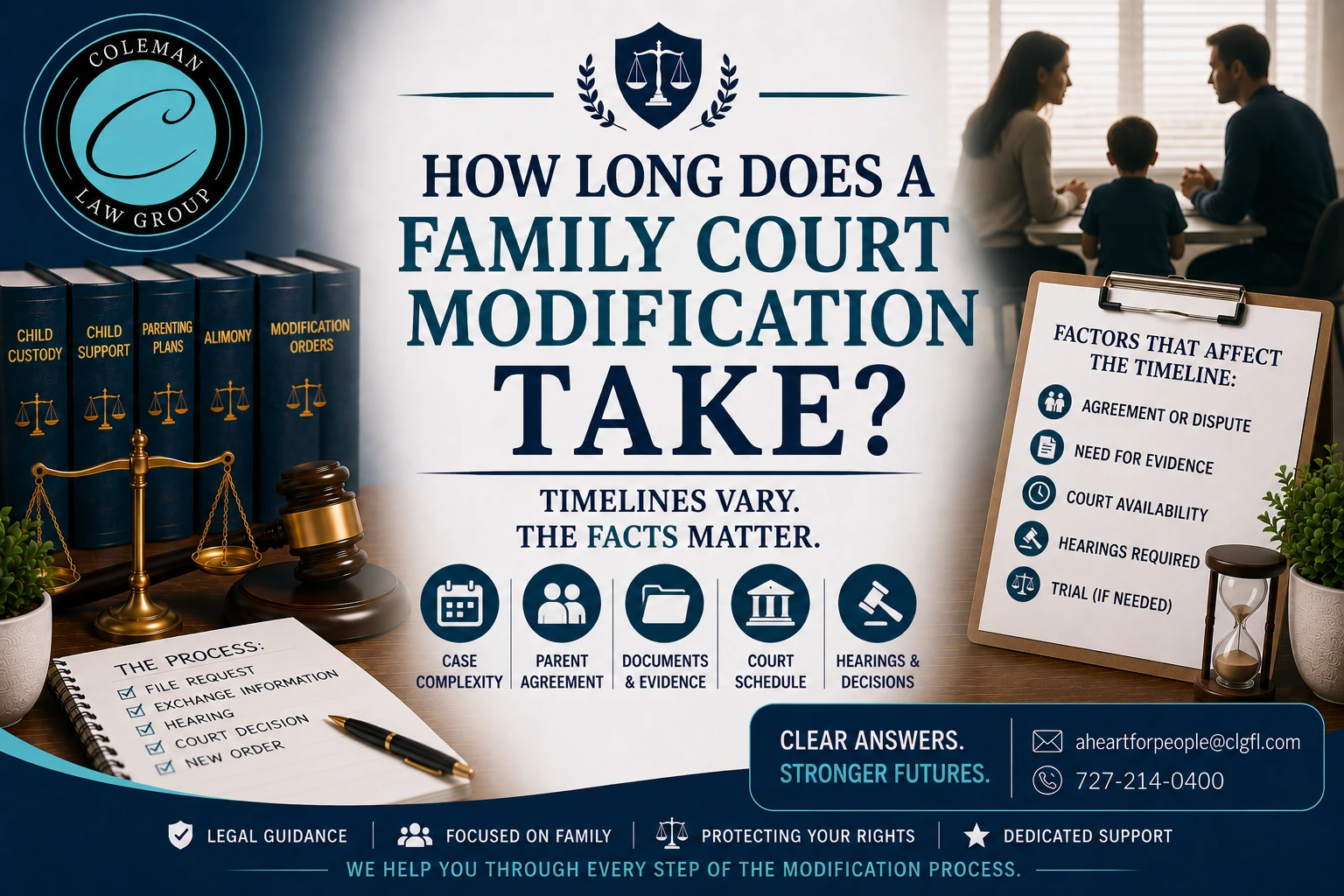
There is no defined timeline for the modification process. A simple modification may take a few months. A contested case can take much longer. The timeline can depend on:
- Whether both parties agree
- How complicated is the case?
- Are financial records needed?
- Whether a child’s best interests are disputed
- The court’s schedule
- Whether a hearing is required
- Whether the case goes to trial
If both parties agree to the change, then the process can be much faster. The parties may be able to submit an agreement to the court. A judge may then review the request and enter a new order.
A disputed modification is different. One parent may object to the requested change. This can lead to hearings and additional filings. It can also require more evidence.
How Long Does Child Support Modification Take?
Many people ask how long a child support modification takes because their financial situation has changed.
For example:
- A parent may lose a job
- Income may increase significantly
- A parent may become disabled
- Health insurance costs may change
- Childcare costs may change
- The child’s financial needs may change
- The amount of parenting time may change
The court will need enough information to determine whether a modification is legally appropriate.
Financial documents can be important in these cases. The court may need information about income and expenses. This can include pay stubs and tax records.
There is no guaranteed number of weeks or months for a child support modification. The exact timeline depends on the case and the court.
Custody Modification Timeline in Florida
The custody modification timeline parents face in Florida can vary greatly.
Florida generally uses the term parental responsibility. The person seeking to alter an existing parenting arrangement may be required to prove the need for the change.
The court’s main concern is the best interests of the child. The person can file for a change due to a material alteration in circumstances. Examples can include:
- A parent moving
- A change in the child’s needs
- Concerns about the child’s safety
- Major changes in a parent’s circumstances
- Problems with the existing parenting plan
- A significant change in the child’s daily life
A custody dispute can take longer than an agreed modification. This is especially true when both parents present different versions of what happened.
The judge may need to review documents and hear testimony. In some cases, there may also be other evidence. This can add months to the process.
What Happens During a Modification Case?
The exact steps depend on the type of modification. However, many cases follow a similar process.
Step 1. Determine Whether a Modification Is Possible
The first step is to look at the existing court order. The facts of the case also need to be reviewed. The question is whether there is a valid legal basis to request a change.
Step 2. File the Request
The parent seeking the change must file the appropriate paperwork with the court. The documents should explain what change is being requested. They should also explain why the change is needed. Incomplete paperwork can create delays.
Step 3. Serve the Other Parent
The other party generally needs to receive legal notice of the case. They may have an opportunity to respond. If they agree with the request, then the case may move forward more quickly.
Step 4. Exchange Information
Some cases require both sides to provide the documents.
This can include:
- Financial records
- Employment information
- School records
- Medical records
- Parenting information
- Other evidence related to the requested change
Step 5. Attend a Hearing
The court may schedule a hearing.
The judge can review the request and listen to both sides. If the case is contested, then more than one hearing may be needed.
Step 6. Receive a New Court Order
If the judge approves the modification, then a new order will be entered. The new order will explain the terms that will apply.
Why Does a Modification Case Take So Long?
Several issues can slow down a family court case.
- The Parents Do Not Agree
An agreement can make a case much easier. When parents disagree, the court may need to decide the issue. This can require additional hearings and evidence. - The Case is Complicated
Some cases involve multiple issues.
For example, a parent may ask to change both child support and time sharing. Each issue may require different evidence. - More Evidence is Needed
A judge needs enough information to make a decision. The case may take longer if important documents are missing. - Court Schedules
Family courts handle many cases at the same time. A hearing date may not be available immediately. This can affect the overall timeline. - The Case Goes to Trial
A trial can add significant time to a modification case. Both parties can bring forward evidence and witnesses. The judge then decides after considering the evidence and relevant laws.
When Should You Consider Modifying a Family Court Order?
A family court order may no longer work when circumstances have changed significantly.
For example, a parenting schedule may no longer fit the child’s school schedule. A parent’s income may have changed. A child may have new medical or educational needs.
It may be worth speaking with a family law attorney in such situations. An attorney can review the existing order. They can explain whether your situation may support a modification. They can also help you understand what the process may involve.
How can a modification attorney help?
Family law modification cases can become stressful when the parties disagree. A family law attorney at Coleman Law Group can help you understand your options. They can prepare and file the necessary documents. They can also help gather evidence and present your position to the court.
The family court modification timeline is not fixed, as it depends on the type of case (contested or mutual). Contested cases may take considerably longer, depending on whether the parties agree.
Our attorney will first review the existing family court order and assess the legal requirements for modifying it. Acting early can also help if your circumstances have changed.
Contact Coleman Law Group today at 727-214-0400 or aheartforpeople@clgfl.com to schedule a consultation.