

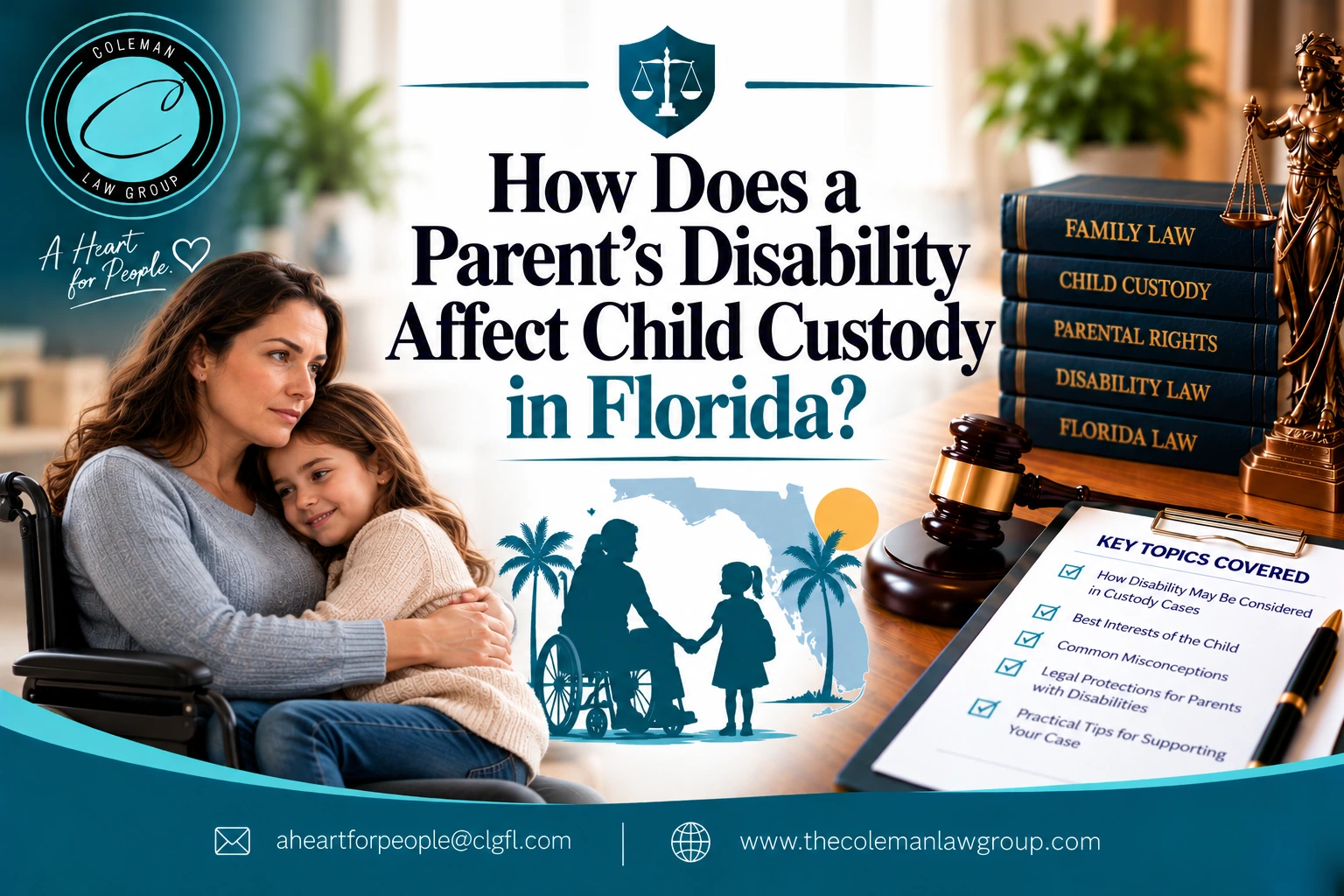
The anxiety can feel all-consuming when you’re going through a divorce or child custody dispute. Add to that the struggle of having a physical limitation, disability, chronic illness, or mental health condition, and it becomes an almost terrifying situation to be in. You might find yourself restless. You may have questions about whether you may be deemed unfit for custody. You start to wonder whether the legal system offers grace for people like you.
You’re not alone. Those fears make complete sense, but Florida law gives you more protection than you might think. A physical limitation alone cannot legally disqualify you from custody. Judges look at how you raise your child in reality, not a list of symptoms in a clinic file. Having a Florida child custody lawyer by your side keeps the other side from twisting your health records, putting the court’s attention right where it belongs: on your daily presence, your parenting track record, and your child’s well-being.
Understanding Florida’s Legal Framework for Child Custody
If you walk into a Florida courtroom expecting to argue over custody or visitation, you will find the statutes have changed those definitions entirely. Everything now falls under time-sharing or parental responsibility. Think of time-sharing as the routine: bedtimes, pickup duty, and trading off holidays throughout the year. Parental responsibility covers your legal rights. If the kids need braces, change schools, or start mental health counseling, you have to be at the table making those calls.
Every custody decision comes down to what Florida courts call the child’s best interests. Florida Statutes section 61.13 outlines specific factors that judges must consider when evaluating such decisions. They don’t really expect you to be a hero, nor do they expect your life to be spotless all the time. What they actually want to see is that your child will be safe, thoroughly supported, and deeply loved within your care.
|
Statutory Focus Area |
How Florida Courts Evaluate It |
What Matters Most |
| Physical & Mental Health | Examines the overall health of all participants, including parents. | Whether a condition impairs the physical or emotional capacity to care for the child. |
| Parenting Tasks | Evaluates who historically fed, bathed, comforted, and managed the child’s routine. | Demonstrated, ongoing involvement in the child’s everyday life. |
| Home Stability | Whether each home is safe, how the daily routine runs, and what the surroundings are like. | The child can settle into school, home, and the neighborhood without a rough transition. |
| Co-Parenting Support | Whether each parent helps the child stay close to the other parent. | Parents who talk without fighting and put the child’s feelings first. |
Dispelling the Myths Around Disability and Custody
Plenty of people worry that a disability will be used against them in a custody fight. Your ex might bring up your physical limits, bad flare-ups, or old therapy visits to argue you can’t care for the kids. But Florida law and the Americans with Disabilities Act forbid judges from cutting parents out of their children’s lives based on medical conditions alone.
What judges examine is functionality, not your medical label. Using a cane or a wheelchair does not deem you incapable. It only goes to show that you know which tools can help you become an efficient caretaker and parent to the kids. Showing a judge that you have your condition completely under control stops the other side from making cheap points off your medical history.
Here is how modern Florida family courts evaluate real-world scenarios compared to outdated assumptions:
| Common Misconception | What the Court Looks At |
| “If you use a wheelchair or other mobility aid, you can’t supervise a child safely.” | Whether your home and adaptive equipment make a safe place for your child. |
| “Flare-ups or fatigue mean you can’t keep a steady parenting schedule.” | Who helps you, what your backup plans are, and how involved you have been so far. |
| “Going to therapy or getting mental health treatment means you’re unfit.” | Staying in treatment shows that you take responsibility for your health and your child’s well-being. |
What to Collect Before Your Custody Case
You don’t need a huge file of documents. An ordinary week already tells and offers most of what you need. Judges tend to observe a parent’s routine, so make sure to have a keepsake of records that demonstrate proof of your parenting obligations.
School and Activity Records
Hang onto the paperwork, from field trip notices, emails with teachers, and sports schedules. These indisputably show that you’re present and involved in your child’s life.
Medical Appointments and Receipts
Keep a folder with all your child’s health documents. It’s proof you’re staying on top of things.
A Simple Daily Log
Jot down quick daily notes on who cooked dinner, sat down for homework, ran bedtime, and handled the morning rush. Two or three lines each evening are plenty to build a steady record. After a few months, the log shows how involved you are.
Why Your Support Network Matters
Asking for help is part of responsible parenting. It’s normal for families to rely on other people. Maybe your brother does school pickup on Tuesdays, or a neighbor can step in when something comes up. Florida family courts put a lot of weight on stability. A well-organized, dependable backup system shows the court that your child’s home is secure.
Evidence to Bring to a Florida Family Law Attorney
Pull together hard documents before seeing a family law attorney, so you have real proof to back up your case. The table below shows what each type can tell a court.
| Type of Evidence | What It Shows the Court |
| Notes from your doctor | That you follow your treatment plan and can handle daily things like cooking, driving, and getting a child to school. |
| A written time-sharing schedule | You’ve planned around appointments and rest days. For example, shorter visits on weekdays and longer ones on weekends. |
| Photos of changes to your home | Ramps, grab bars, a lower kitchen shelf. It shows a house set up for a child to live in. |
Proactive Steps You Can Take
You don’t have to wait for a court date to start protecting yourself. A few early steps can change how a dispute plays out.
Step 1 – Write Down Your Routines
Record your regular routines, especially the moments you share with your child. It looks like gluing poster board for a science fair, sharing an afternoon snack outside, or tucking them in at nine o’clock.
Step 2 – Set Up a Backup Plan
Call your emergency contacts early if your health flares up so someone is ready to take over the kids’ schedule without a hitch.
Step 3 – Stay on Top of Your Health Care
Show up to your medical checkups and take prescriptions exactly as written. Staying on top of your own healthcare shows the judge you have the discipline and capacity to raise your kid.
Step 4 – Speak With an Attorney Early
If your co-parent is using your health against you, you don’t have to handle it alone. An experienced attorney can explain what Florida law actually requires and what is just pressure.
Protect Your Custody Rights
It is frustrating to have your parenting questioned because of a medical condition, especially when you have built a stable, loving home.
At the Coleman Law Group, we handle sensitive child custody disputes under Florida law. If your health or disability is becoming a sticking point in your time-sharing arrangement, we can review your options and outline the next steps. To book a confidential consultation, call 727-214-0400 or email aheartforpeople@clgfl.com