

Living with a green card is fine, until it isn’t. You can build a whole life here in Florida: buy a house, raise kids, pay taxes, but that tiny bit of uncertainty never really goes away. Maybe it’s the fear of a sudden rule change, or maybe it’s just the hassle of standing in the ‘resident’ line at the airport every time you fly. You want the total freedom of a U.S. passport, but the paperwork is the one thing that keeps catching you off guard.
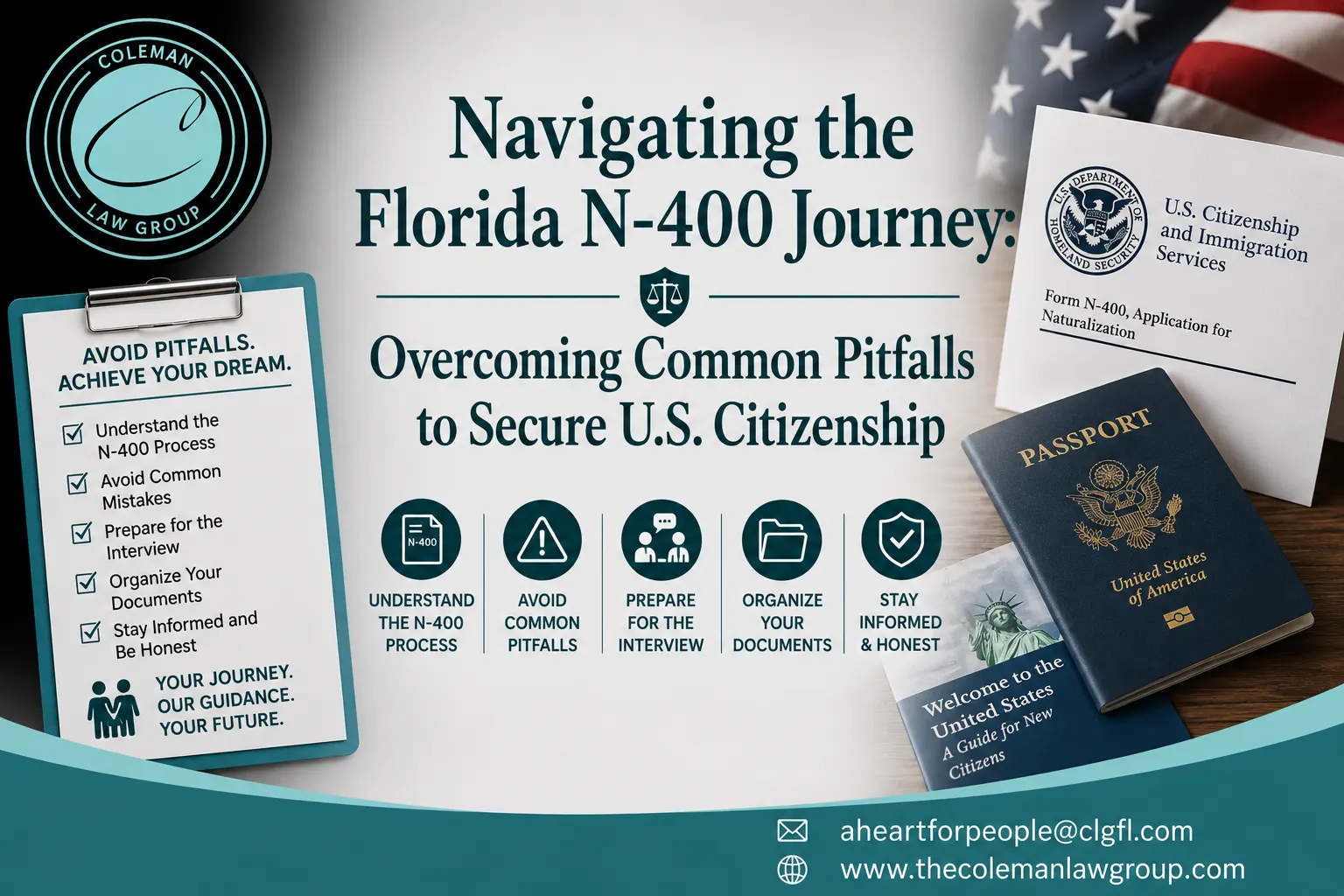
The biggest mistake is assuming the Form N-400 is just a simple background check. It isn’t. It is an open invitation for a federal agent to dig through everything you have done since you first arrived in the country. They aren’t just verifying your current address; they are looking for reasons to say no. A forgotten traffic ticket, a messy tax year, or an extended trip back home can trigger an immediate freeze on your case. That is exactly why having a sharp citizenship lawyer look over your shoulder matters. It stops a basic clerical error from turning into a life-altering headache.
What to Expect with Waiting Times in the Sunshine State
The absolute most frustrating part of this whole process is waiting. Everyone wants a clear date on the calendar for when they will finally take their oath, but the reality of USCIS N-400 processing time for Florida applicants is all over the place.
If you look online, you might see a generic estimate of seven or eight months. But if your paperwork is routed through the Tampa field office, you are stepping into one of the busiest districts in the entire country. The massive population booms down here mean the local system is constantly experiencing backups. You could easily be looking at 11 months or more before getting a face-to-face interview. If that kind of delay doesn’t work for your life, you need to be careful. You’ll want the best immigration lawyer in Florida to help you prepare your file, not just to speed things up, but to make sure you don’t run into any avoidable snags that could trap your case for months.
-
The Initial Paperwork and Fingerprint Phase
Your timeline officially begins the moment the agency processes your fee and logs your application. You’ll receive a receipt notice in the mail within a couple of weeks. After that, things often go quiet for a while as the background checks run their course.
The system has to run your name and fingerprints through federal databases for a mandatory background check. Sometimes they can reuse the biometric data from your old green card files, which saves you a trip to a local service center, but it does not actually speed up the background review itself. That phase is completely silent, and you will not see a single status update for months while they sift through your records.
During this stage, it is often wise to consult a qualified citizenship attorney, who can conduct a preemptive audit of your file to ensure that your background details are fully aligned before the official review begins.
-
The Interview Queue and the Danger of Paperwork Halts
The real bottleneck happens after the background check clears, and your file sits in line waiting for an interview slot. This is where a sloppy application completely ruins your timeline.
If an officer finds a blank space, a missing document, or a confusing gap in the dates, they will not fix it for you. They will mail you a formal request for evidence. That single piece of mail freezes your case instantly, drops you right back to the bottom of the pile, and adds months of pure stress to your wait time. Getting the application completely spotless from day one is the only real control you have over how fast you get through the system.
Why Form N-400 Applications Get Denied
When the United States Citizenship and Immigration Services (USCIS) issues you a denial notice for a naturalization application, it usually isn’t an arbitrary decision. The authority is generally pointing to a clear, unmet legal standard.
Knowing exactly where these applications break down allows you to screen files effectively or map out a focused strategy for an administrative appeal.
The Time Traps: Continuous Residence vs. Physical Presence
Many permanent residents assume that keeping individual trips under six months is all it takes to stay safe. Unfortunately, that is exactly how people walk right into a major paperwork trap.
While short trips protect your continuous residence, they still actively drain your physical presence day count. If you take multiple brief vacations or family visits across the border, those combined days out of the country add up fast. If your overall tally drops even a single day below the government’s strict math limits, your application faces an automatic denial.
The Key Differences
Think of continuous residence as proving where you actually live. The government wants to confirm that your primary residence is here in the United States, not elsewhere. It is a major issue if you take off for a single trip lasting anywhere from six months to a full year. That long absence tells an immigration officer that you might have checked out and abandoned your U.S. ties. And if you stay away for a solid 365 days straight? Your timeline breaks entirely, no questions asked.
Physical presence is completely different because it doesn’t care about where you live or where your family lives. The officer literally counts every single day you were physically in the country. If you are on the standard five-year track, you have to hit a bare minimum of 913 days. For people married to U.S. citizens, that mandatory minimum drops to 548 days. If your cumulative travel leaves you even one day short of those numbers, they will deny the file, keep your fee, and tell you to try again later.
-
The Hidden Financial and Character Pitfalls
The government checks your financial integrity and civic duties just as closely as they check your travel records. Many people do not realize that the immigration service works closely with other federal agencies to flag potential issues. They use the reasons an N-400 application gets denied to filter out anyone who has skipped out on basic civic duties.
-
The Tax Filing Trap
Failing to handle your taxes properly is an absolute magnet for a quick denial notice. When you go into that interview room, the officer expects to see clean, certified IRS tax transcripts covering your entire statutory period. If you filed late, forgot a year, or marked yourself down as a “non-resident” to get a cheaper tax break, your application is going to hit a wall. The government looks at tax compliance as a direct measurement of your character. If you do owe money to the IRS, you can save your application, but you have to show an official, signed payment plan and proof that you are actively paying down that debt on time.
-
The Selective Service Oversight
This rule catches many young people completely off guard. If you lived in the United States at any point between the ages of 18 and 26, even if you were undocumented at that time, you were legally required to register for the Selective Service system.
If you are applying for citizenship before you turn 31, and you skipped this step, USCIS will assume you willfully broke the law. To fix this, you have to request an official status information letter from the government and somehow prove that you did not intentionally avoid the draft registry. Once you cross your 31st birthday, this issue stops hurting your case because it falls outside the mandatory five-year moral character window. But before that age, it is a frequent source of sudden rejections.
Hidden Good Moral Character: Major Red Flags
The legal definition of “good moral character” gives individual officers significant subjective power during their interviews. Don’t assume only felonies matter. Officers reject people daily for minor slip-ups, such as unpaid taxes, missed child support payments, or messy paperwork.
For example, missing a child support payment without a valid legal reason is an immediate disqualifier that officers view as a major character flaw. The same goes for minor, old police interactions. Even if a local Florida charge was completely dismissed, or an old arrest happened a decade ago, you must bring the certified court dispositions to your interview. Trying to hide a minor incident because you think it fell off your record is always treated way worse than the incident itself. Getting caught in a lie under oath is an unforgivable character failure.
Navigating the In-Person Exam: From Lobby to Testing Desk
Passing your background check and maintaining pristine financial records only gets your file halfway through the system. The true final test takes place face-to-face at a local field office. This appointment is essentially a rapid-fire live evaluation divided into three specific sections: language proficiency, a civics quiz, and a thorough verification of your original paperwork. The process unfolds in a distinct physical sequence the moment you clear courthouse security.
Knowing how to pass citizenship interview modules successfully comes down to understanding the exact mechanical steps the officer will take you through once your number is called.
Here are the steps:
Step 1: The Verbal English Screening
Your official language evaluation actually starts before you ever see a testing tablet. The second the immigration officer opens the heavy door to the waiting area and calls out your name, your verbal evaluation is live.
As you follow them down the hallway to their desk, they will purposefully chat with you or issue quick directions. They want to observe how naturally you comprehend and respond to basic instructions, such as “please keep your documentation out” or “remain standing while I administer the oath.” Handling these initial prompts smoothly establishes immediate language competency right out of the gate.
Step 2: The Reading and Writing Test
Once you are seated and sworn in under penalty of perjury, the officer will pivot a digital tablet in your direction to complete the literacy modules.
The reading portion is straightforward: the screen displays a short sentence focused on general American history or geography, and you have to read it out loud without changing words or completely halting your cadence. You get three separate chances to get one sentence right.
The moment you successfully clear a sentence, the officer locks the module and moves you directly into the dictation segment. Here, the officer will read a sentence aloud, and you must use a digital stylus to write the phrase on the screen. Minor spelling slips or uncapitalized letters are totally fine, as long as the underlying words are clear and match what the officer spoke, you earn a passing score.
Step 3: The Civics History Quiz
The government history test is conducted completely out loud, with a computer backend tracking your accuracy in real time. Under the updated testing guidelines, the officer draws from a wide selection of over one hundred official civic facts.
The officer will ask you up to twenty questions, and you must answer exactly twelve correctly to pass. Because the software tracks your progress dynamically, the precise second you land your twelfth correct answer, the testing screen shuts down so the interview can move into its final phase. Conversely, racking up 9 incorrect answers triggers an immediate software termination and an overall application denial.
Step 4: The Form N-400 Paperwork Review
The longest, most rigorous portion of the entire day is the comprehensive review of your original immigration paperwork. The officer will literally open your file and walk through your written statements word for word to check for any sudden contradictions.
They will quiz you on your exact physical addresses, demand verification of specific international travel dates, and ask you to explain the complex legal terms in the security background questionnaires. Stumbling over your own history or changing your story during this review creates immediate red flags.
Navigating this intense scrutiny is exactly why working with an experienced citizenship lawyer is so critical. Having an attorney for citizenship sitting directly next to you ensures that conversational misunderstandings are corrected instantly before the officer logs them as material misrepresentations. If you want the peace of mind that comes with professional representation, hiring the best immigration lawyer in Florida is a must. The lawyer at Coleman Law Group ensures your rights are protected throughout the entire live interrogation.
Turning Pitfalls into a Filing Strategy
Small slip-ups on your travel logs or old tax transcripts can stall your path to citizenship without warning. During your review, immigration officers look closely at your entire history, meaning a simple paperwork mismatch can easily look like you are hiding something on purpose. Finding and fixing these issues before you submit your file lets you handle them on your own terms. Taking care of these details ahead of time removes the guesswork from your application, letting you walk into your local field office ready for any questions that come your way.
Our legal team at the Coleman Law Group actively reviews your records in advance to identify and resolve hidden issues before they result in an official denial. We handle the paperwork errors and sit right next to you during the live interview, taking care of the legal details so you can focus on your life. If you want to check your options or get started on your green card application process, call our office directly at 727-214-0400 or send an email through our secure website contact portal today.