


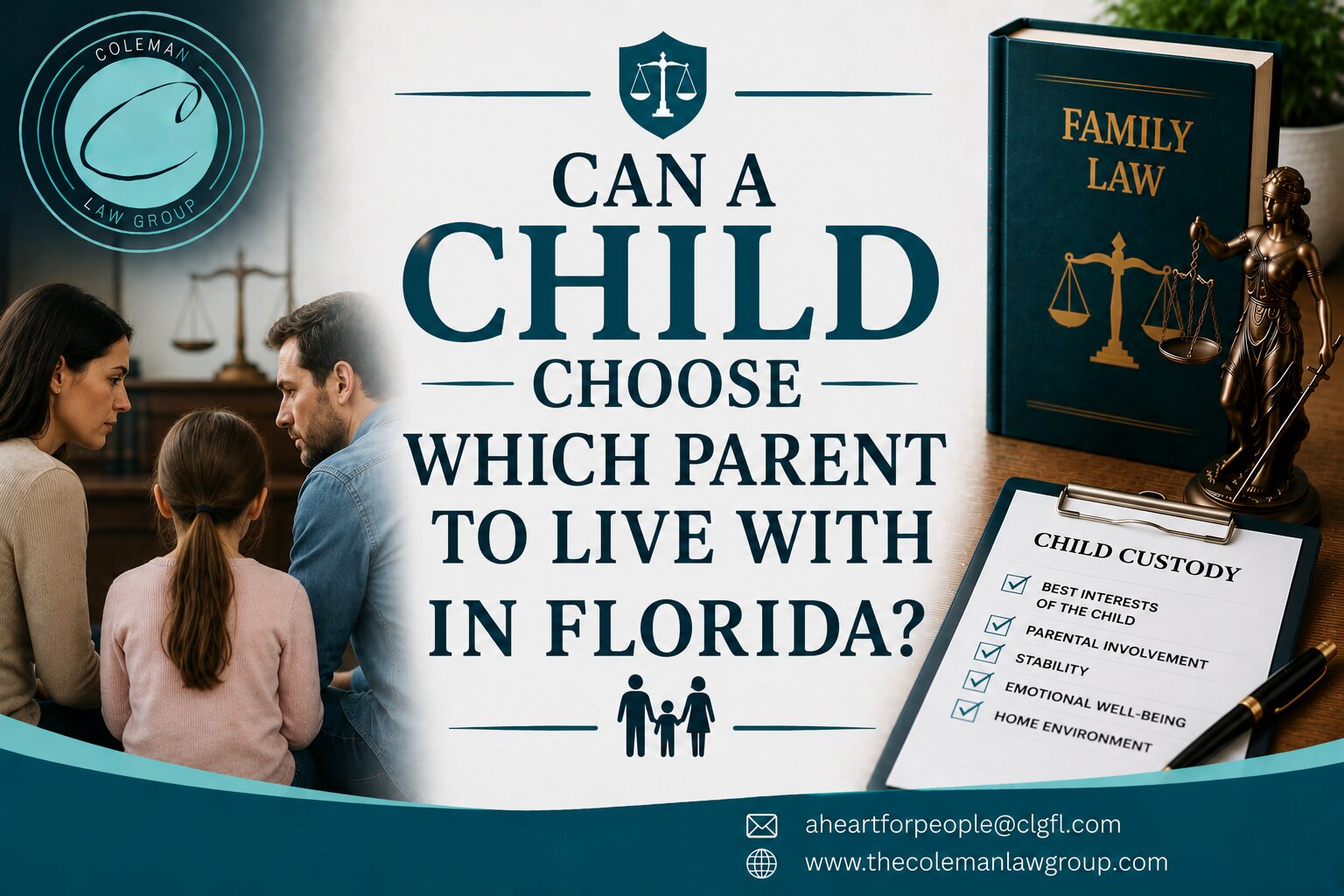
One of the most difficult decisions parents have to make when separating or getting divorced is where their child will live. Many parents and others believe that children can make their own decisions at a certain age. The kids may also believe they have the right to make choices. But this doesn’t shut the case.
There are several factors that Florida courts will consider when determining custody matters. These mainly include the child’s wishes. But it does not mean that a judge would make a judgment just on a child’s desires. In each instance, the minor’s best interests are important and always taken into account.
Knowing the importance of a child’s desires can help you act more effectively in a Florida custody case and better understand what is happening in your situation.
Understanding Child Custody Law in Florida
Child custody in Florida is a complex matter. There is no traditional concept of “child custody” in Florida, as there is in most U.S. states. The Florida courts focus on parental responsibility and timesharing.
Parental responsibility is to make all important decisions of parental upbringing. These decisions include health care, religious upbringing, and educational decisions concerning the child. Timesharing is the arrangement for the custody of a child’s time.
Judges consider several factors while deciding the nature of parental responsibility. The children’s preferences will be considered as one such factor. But just because a child wants to live with one parent rather than the other doesn’t mean the court will accept that decision.
In Florida, can a child have the right to choose a parent?
Children do not automatically have the right to decide which parent they would like to live with. Florida laws are restricted to some limitations.
The judge may consider the child’s preference as one factor. This choice will be considered only when ordering parental responsibilities. The court will consider whether the child is mature enough and capable of making such decisions. Some reasons for such preferences will weigh more than others. The judge will give much greater priority to a parent who can provide a more stable home environment for the child.
Sometimes courts overlook a child’s preferences. This is not to upset the child but to provide a better arrangement for their future.
Do Florida Laws Have an Age Preference for Children?
One of the most common concerns raised by parents is determining an age at which a child should be permitted to make decisions about their residence.
The age at which a child can choose a parent to live with will depend on the child’s overall maturity. However, some states have specific guidelines regarding age. Minors are allowed to express their opinions openly in court.
Age plays a crucial role when a judge considers a child’s choice and determines its validity. Older children tend to have better skills in analyzing situations and expressing their preferences about their parents.
Meanwhile, there is no real correlation between age and making such a decision.
How Florida Courts Decide When a Child’s Opinion is Important
Not all the preferences are created equal in court proceedings. There are several factors courts consider when determining whether a child can express an opinion about their living situation. For instance:
-
The State of Maturity
Whether the child is emotionally ready to make decisions without being carried away by feelings.
-
Ability to Argue
Can a child explain that their choice matters more, even if they cannot clearly explain the reasons for that choice?
-
Understanding their Choice
Generally, courts will assess how much a child knows about the possible effects of their choice.
-
Consistency of the Child’s Preference
If the child’s preference changes over time, it is less likely to be as meaningful as a consistent one.
-
Their Parents’ influence
Courts are keen on determining whether a parent is trying to manipulate a child’s decision by pressuring or enticing them.
Why a Child’s Preference is Not the Only Factor
Florida family courts recognize that children’s decisions aren’t always the only factor. For instance, the child could want to stay with the parent who:
- Does not adhere to many rules in the home
- Allows them to have access to electronic devices at their choice
- Provides them with a lot of freedom
- Has little interest in learning
- Does not correct them regularly
These may appear beneficial to the child, but could be harmful to their proper development. It’s the court’s duty to monitor these short-term needs and focus on what’s best for the child in the long term.
The Best Interests of the Child Standards
When deciding child custody and child time-sharing, judges in Florida do so under the “best interests of the child” standard. These are the legal standards used by courts to decide what arrangement will support a child’s overall well-being.
Courts will consider more than one factor and the overall family situation. Some of the factors that are considered:
-
Stability of Parents
Consistency and stability of parents are desirable qualities that judges look for in children.
-
Relationship between a child and a parent
The court assesses the relationship between a child and a parent. They carefully evaluate the role each parent has played in the child’s life.
-
Educational Needs
The court may consider the child’s academic performance and other educational needs. They look at practical logistics and parental cooperation.
-
Physical and Emotional Health
Judges consider the child’s particular needs. These include their physical and mental health.
-
History of Abuse
Custody decisions can have a significant effect if there is any evidence of domestic violence, substance abuse, or neglect.
-
Community and Family Connections
The court might consider the child’s activities at school and in the community. This is a much bigger assessment than a child’s preference.
How Courts Hear a Child’s Voice Without Putting Them in the Middle of Conflict
Many parents are concerned that their children will be compelled to testify in court and will be forced to choose between them. Well, this isn’t always the case, and it depends on the situation.
It is generally advisable to avoid having their children become directly involved in conflicts between parents.
- A guardian will be appointed to investigate the child’s situation and provide recommendations to the court.
- Child interviews and professional observations by psychologists and custody evaluators are possible.
- A judge may meet privately with the child to conduct a hearing in chambers rather than in open court.
These methods help the court understand a child’s perspective. This helps in reducing emotional strain.
Can a Teenager Decide Where to Live?
Florida takes a different approach than many other states when it comes to children expressing custody preferences. Also, the Florida law does not establish a minimum age for a child to express a custody preference.
In Florida, judges tend to care less about a particular age and more about demonstrated maturity. A teenager who shows responsibility and an ability to convey their needs will have their preference taken more seriously than one who appears to be seeking the path of least resistance.
A judge must always decide the matter finally on hearing. They understand teenagers’ maturity level and never force them into an arrangement that they greatly dislike.
What Happens When Parents Agree With the Choice of Their Child?
When parents decide on a parenting plan, they can consider their children’s preferences.
If both parents agree that the child should stay mainly with one parent, the agreement can be incorporated into a parenting plan. If the agreement needs to be signed by a judge, the judge will examine it to determine whether it is in the child’s best interests.
Moreover, the court must approve the activities that do not compromise the child’s rights, which cannot be waived, and the child’s well-being cannot be compromised by agreeing to them.
Can a Child Move to an Existing Parenting Plan?
Sometimes children age and acquire new needs and/or wants. In such cases, parents may wonder whether the preference is grounds to change an existing parenting plan.
Typically, a child’s preference is not sufficient to change a court order.
In Florida, a court is likely to only make a significant and material change to a parenting plan when there has been a significant and material change in circumstances.
Where there are other major changes, however, a child’s preference may come into play, such as:
- The relocation of a parent.
- Changes in school performance
- Health concerns
- Family conflicts
This is because of shifts in home stability.
The Mistakes that Parents Should Avoid
Parents can make mistakes once they get involved in a custody case. This can harm their case.
-
Pressuring the Child:
When you encourage a child to take sides, they may cause emotional harm to themselves and to the credibility of their parents in court.
-
Talking negatively:
Florida courts have a policy that the parent should foster a healthy relationship between the child and the other parent whenever possible.
-
Using the Child as a Messenger:
Children should not be involved in adult conflicts or used to convey legal problems.
-
Not considering the child’s feelings:
The child is not the one who has to make the final decision. A child’s feelings and concerns are still valid and should be taken into consideration.
-
Promises of outcomes for custody:
Adults need to be careful not to suggest to children that they can choose their place in the house, as this can raise expectations that are not met when the children actually move in.
When Child Custody is at Risk: Coleman Law Group Can Help
A child custody case is never easy and can be very complicated. Issues related to parenting plans, time-sharing, and parental responsibility are of particular legal concern.
The knowledgeable attorneys at Coleman Law Group assist families with sensitive areas of family law in Florida. They have attorneys who understand how courts approach child custody cases and always help parents build a strong case based on the child’s well-being.
If you want to create a new parenting plan, modify an existing one, or resolve a time-sharing dispute, our family law attorneys can provide you with information about your options and work to ensure you receive a fair resolution.
Each family is different, and their custody agreements can affect a family for many years. With the assistance of an informed legal attorney, you can help protect your parental rights while also focusing your energies on your child’s best interests.
Conclusion
The child will not decide directly which parent to live with. A child’s preference can help weigh into a custody determination in Florida. Judges in Florida value the child’s input and consider the child’s maturity, logic, and circumstances before weighing it.
There is no age-based preference in child custody that automatically allows children to make decisions. Courts look at each situation and decide in the child’s best interest. They typically weigh the child’s physical and emotional needs.
If you are also dealing with a custody dispute in Florida and have questions about how a child’s wishes may affect your case, it’s wise to speak with a seasoned family law attorney. In this way, you can understand your rights without having to guess. Coleman Law Group helps families across Florida with custody and parenting matters. They help parents find solutions for their kids and their future.