

Child custody arrangements are not always permanent. A parent may need to ask the court to change an existing custody order when the child’s situation changes. The court does not make this decision based only on what one parent wants. There must be a valid reason for the change.
If you are considering a child custody modification in Florida, understand what evidence can help you prepare a strong case. Strong evidence can show the court why the current arrangement is no longer in the child’s best interests.
This guide explains the type of evidence for child custody modification that may help support your case.
Why Would a Parent Ask for a Custody Modification?
A custody order can be modified when there has been a significant change in circumstances. The change must usually be serious enough to warrant a review of the current parenting arrangement.
Some common reasons include:
- A parent has moved to another city or state.
- The child’s needs have changed.
- A parent is no longer able to provide proper care.
- The child is exposed to domestic violence.
- A parent repeatedly violates the existing parenting plan.
- The child has developed medical or emotional needs.
What is considered evidence in a child custody modification case?
The type of proof for custody modification will depend on the reason for your request. Different situations require different types of evidence.
Here are some common forms of evidence that may help.
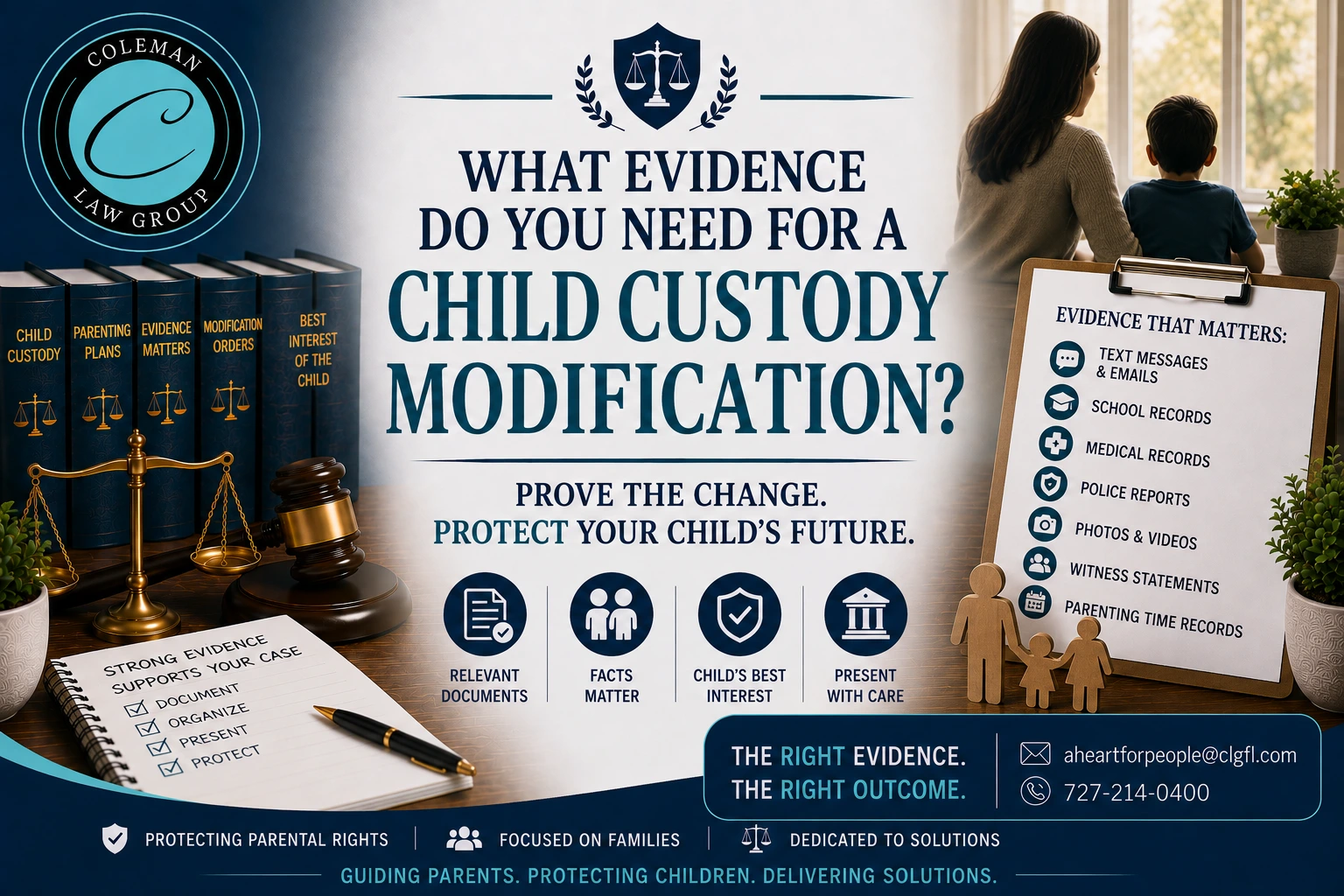
1. Text Messages and Emails
Written communication can provide useful evidence.
Save messages between you and the other parent if they relate to the custody issue. Always report if:
- A parent refuses to follow the parenting schedule.
- A parent makes threats
- A parent admits that the child is being left without proper supervision.
It is best to keep the full conversation rather than only saving selected messages.
2. School Records
A child’s school records can help show changes in the child’s education.
These records may include:
- Attendance records
- Disciplinary reports
- Teacher communications
- School counselor records
- Reports about repeated absences
For example, if a parent regularly fails to take the child to school, then attendance records may support your concerns. School records can also show whether the child’s performance has changed after a major event.
3. Medical and Mental Health Records
Medical records can be important when a custody dispute involves the child’s health. You should consider:
- The child has missed important medical appointments
- A parent does not follow medical instructions
- A parent refuses necessary treatment
- The child has developed new medical needs
Medical records are private. There may also be rules about how they can be obtained and presented in court. Speak with a custody modification lawyer before trying to obtain or use private medical records.
4. Police Reports
Police reports may become important when there are safety concerns. A report may document:
- Domestic violence
- Child abuse allegations
- Assault
- Criminal activity
- Welfare checks
A police report does not automatically prove that every allegation is true. The court may consider the report along with other evidence. If there has been an arrest or investigation involving a parent, then related court records may also be relevant.
5. Photos and Videos
Photos and videos may help document the child’s living conditions or other concerns. For example:
- Unsafe conditions in the home
- Visible injuries
- Dangerous substances within the child’s reach
- Property damage after a violent incident
- Inappropriate conditions affecting the child
However, parents should be careful about how they obtain this evidence. Do not trespass or secretly access private accounts. Evidence obtained improperly can create additional legal problems.
6. Witness Statements and Testimony
Other people may have information about the child’s situation.
Potential witnesses can include:
- Teachers
- Childcare providers
- Family members
- Neighbors
- Medical professionals
- Counselors
7. Parenting Time Records
Keep a detailed record of parenting time. Write down when visits were scheduled and what actually happened. Your records may show:
- Missed visits
- Late pickups
- Repeated schedule changes
- Failure to return the child on time
- Refusal to exchange the child
- Repeated violations of the parenting plan
Try to keep these records factual. Instead of writing that the other parent was “terrible,” record exactly what happened. Specific facts are easier to understand and verify.
Evidence of a Parent’s Changed Circumstances
A custody modification may involve a major change in a parent’s circumstances. A parent may have:
- Lost stable housing
- Developed a serious substance abuse problem
- Been arrested
- Lost a job that affected childcare
- Moved far away.
- Started living with someone who creates safety concerns
- Not able to meet the child’s daily needs
Evidence should show that the change is real and that it affects the child.
A parent’s personal problems do not automatically justify changing custody. The court will consider how those problems affect the child.
What Evidence Can Hurt Your Case?
Not all evidence will help in the modification. You should avoid the following mistakes to be considered as evidence for child custody modification:
- Editing screenshots to remove important context
- Coaching the child about what to say
- Posting the custody dispute on social media
- Making threats against the other parent
- Using the child to deliver messages
- Violating court orders
- Secretly accessing private accounts
Keep Your Evidence Organized
Good evidence is easier to use when it is organized. Create a folder for relevant documents. You can separate it into sections such as:
- Text messages
- Emails
- School records
- Medical records
- Police reports
- Parenting time records
- Photos
- Videos
- Witness information
- Court documents
Make a timeline of important events. Include:
- The date
- What happened
- Who was involved
- What evidence supports the event
Do not collect evidence to create a large file. Focus on evidence that directly supports the reason for your modification request.
Do You Need a Custody Modification Lawyer?
A custody case can involve important legal issues. The evidence you use must support the legal grounds for changing the existing order.
A custody modification lawyer can review your situation and help determine which evidence may matter. An attorney can also help you:
- Understand the current custody order
- Identify relevant evidence
- Prepare court documents
- Present evidence properly
- Respond to the other parent’s claims
- Describe why this change will help the child
One must understand the legal requirements before filing if one is contemplating a child custody modification.
Need Child Custody Modification Help?
Proof of a substantial change in circumstances for modifying child custody will often consist of evidence that establishes the change and explains how it affects the child.
Some useful evidence may include school records. Medical records could also be important. The most important thing is to stick to the facts.
If you need information about proof of substantial change in circumstances for child custody modification, contact Coleman Law Group today at 727-214-0400 or aheartforpeople@clgfl.com to schedule a consultation. A knowledgeable Florida family law attorney will review your case and advise you of your options.