

K-1 fiancé (e) visas are nonimmigrant visas that permit the foreign fiancé (e) to enter the U.S. after marrying the U.S. citizen petitioner. The marriage should be completed within 90 days of arrival. Being in the U.S. on a K-1 visa does not confer permanent residency. The foreign spouse will need to obtain a green card after they marry in the United States. Everyone must have a green card to be a lawful permanent resident.
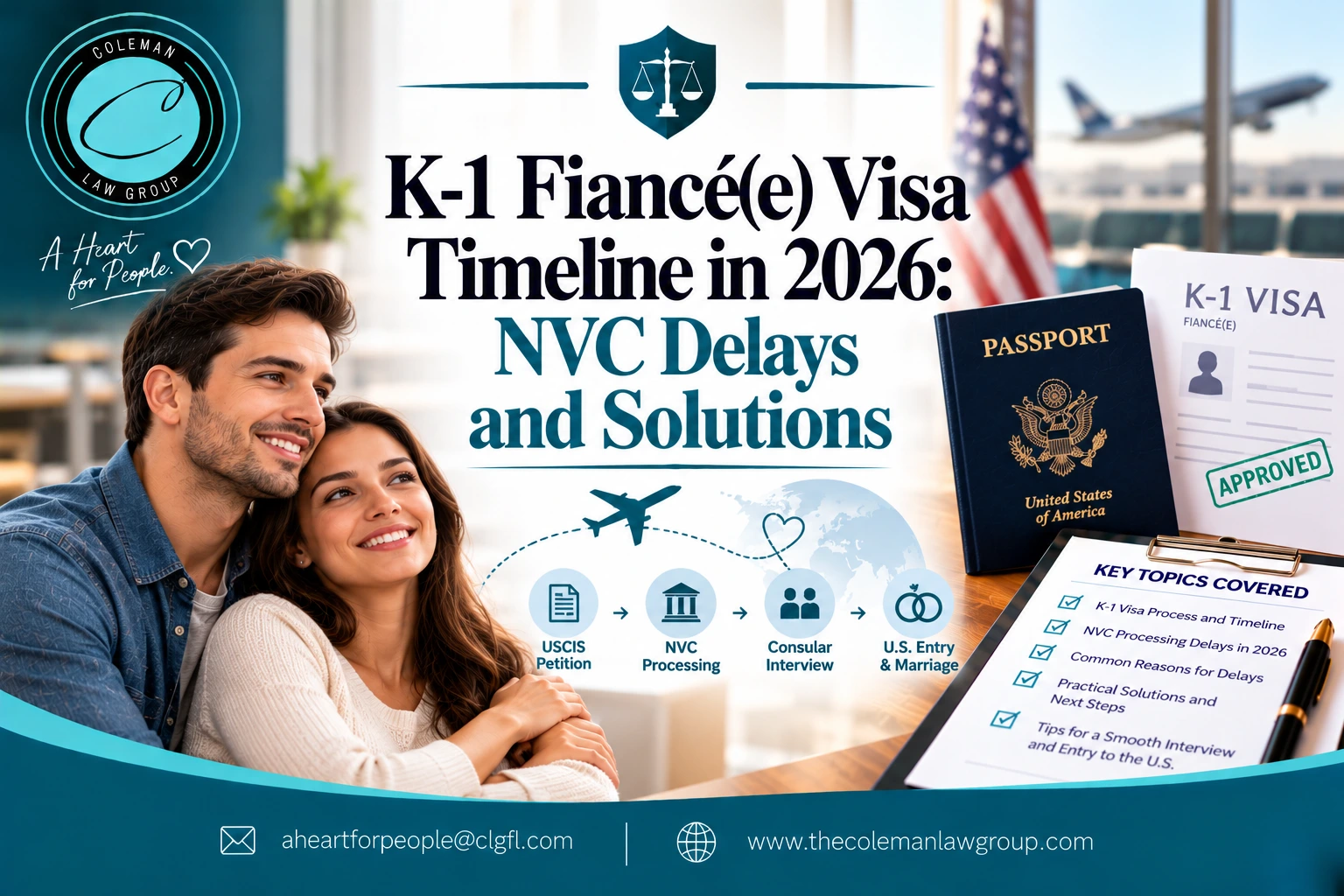
The K-1 visa timeline begins when the U.S. citizen petitioner signs and files Form I-129F with U.S. Citizenship and Immigration Services (USCIS). The NVC will process the petition after USCIS approves it. The file is then sent to the U.S. Embassy/Consulate in the recipient’s country.
A K-1 case is reviewed by three different government agencies: USCIS, the NVC, and the overseas consular post. The overall time is the sum of the staggering delays across all three stages.
How Long Does the K-1 Visa Process Take in 2026?
The realistic overall timeline for the K-1 visa process in 2026 is 18 months+. Timelines may vary because every case involves unique personal circumstances and embassy workloads.
The 6 Key Stages of a K-1 Case:
Stage 1 – Understanding Your Goals
The right strategy often depends on various factors. It includes:
- Where the couple lives
- Whether they can marry abroad
- Whether the consulate is involved
- Prior immigration history
- How quickly the foreign partner needs work authorization
In some cases, a route other than a K-1 is faster or less expensive.
Stage 2 – Filing Form I-129F With USCIS
The U.S. citizen sponsor files Form I-129F with USCIS. Building a petition package with strong supporting evidence of a genuine relationship is what makes the difference at this stage.
Stage 3 – National Visa Center and Consular Processing
The case passes through the National Visa Center to the U.S. consulate after USCIS approves the petition. The fiancé(e) completes the DS-160 and obtains required certificates to attend a consular interview.
Stage 4 – Entry and the 90-Day Marriage Rule
The couple must marry within 90 days after admission on the K-1 visa. This period cannot be extended. The marriage must be to the same U.S. citizen who filed the petition.
Stage 5 – Adjustment of Status
The new spouse applies for a green card after marriage. This can be done through adjustment of status by filing Form I-485 with USCIS. It is also important to collect applications for a work permit and a travel document alongside.
Stage 6 – Removing Conditions on the Green Card
USCIS issues a conditional green card for two years because the marriage is recent at the time of approval. The conditions must be removed by filing Form I-751 within the required window.
Why Do K-1 Delays Occur? (NVC & Consular Bottlenecks)
Applicants often refer to any delay between USCIS approval and the interview as an “NVC delay.” In reality, delays occur at distinct stages across different agencies:
- Requests for Evidence (RFEs) on the bona fide relationship:
USCIS wants to see if the relationship is genuine. It’s not just about the couple meeting in person within the last two years. Thin evidence routinely triggers an RFE that adds three to six months to the K-1 visa timeline. - Embassy backlog and interview scheduling:
Some embassies have interview wait times even after USCIS and NVC processing are complete. This can stretch the process to several months on its own. This should be factored into the K-1 visa timeline from day one.
- Lack of documentation or incorrect documentation:
Differences between the I-129F petition and the final I-485 application cause delays because the I-485 is processed separately.
Expiry of the I-129F Petition: Rules and Whom to Contact
Once the USCIS has signed the approved Form I-129F petition, it remains in effect for four months from that date. Applicants may be concerned that their petitions will expire due to consular backlogs. These can delay interviews beyond this time frame.
Automatic Petition Revalidation:
The I-129F petition can be extended for up to 4 months+ at a time if the couple remains legally free and ready to marry.
Whom to Contact:
-
During NVC Transit:
If you have a pending case with NVC and have not yet received an NVC case number, and your case has been pending longer than the normal processing time, please contact NVC via its official Public Inquiry Form.
-
In the Foreign Post:
Please direct any inquiries concerning the revalidation of the petition and scheduling of interviews to the Immigrant Visa Unit of the U.S. Embassy/Consulate in the respective country.
Practical Workarounds for K-1 Processing Delays
These are simple strategies you can implement to ensure your file stays on track and avoid unnecessary delays or errors in the processing system:
1. The Pre-Collection Workaround
Don’t wait for NVC or Consular instructions to collect civil documentation. While Form I-129F is pending with USCIS, the foreign fiancé(e) should gather the following documents:
- Birth certificates
- Police clearance certificates from all required countries
- Divorce decrees for any prior marriages
- Financial support documents (Form I-134).
These are prepared to allow for steps following the NVC to be completed within the timeline.
2. Monitoring Progress through CEAC
Standard Immigrant Visa Scheduling Status Tool is not available for K-1 applicants. The Consular Electronic Application Center (CEAC) Status Tracker is an effective alternative for monitoring your case using your NVC case number. This indicates your case is “At NVC,” “In Transit,” or “Ready” for processing at the Embassy.
3. Rigorous DS-160 Audit
RFEs are commonly issued when there is a discrepancy between Form DS-160 and the original I-129F petition. A key preventive step is to review all the personal documents related to employment and travel history before submission.
4. Strategic Expedite Requests
Other than that, if an unusual request is made, an expedited request can be made to USCIS, NVC, or the consular post. Expedites are not allowed for routine wedding dates or personal preferences. Valid criteria include:
- Great financial damage to a business or person
- Urgent humanitarian emergencies
- An interest or military deployment requirement of the U.S. government
- Correct administrative mistakes of USCIS/DOS
Note: Expedite request criteria and processes depend on the agency handling the fiancé visa case.
What Happens After the K-1 Visa Is Issued?
Once the K-1 visa is granted, the foreign fiancé(e) has:
- 6 months to enter the United States
- The couple must marry within 90 days of arrival
- The foreign spouse can apply for a green card after marriage
The fiancé visa becomes invalid if the couple does not marry within six months. The foreign partner must leave the United States under this condition.
How Coleman Law Group Can Help With Your K-1 Case
A K-1 case is a multifaceted process that involves USCIS, NVC, and foreign embassies, with cases transferred from one stage to the next. It is necessary to review certain administrative cases and their statuses to determine the cause of the delay.
Coleman Law Group specializes in family immigration issues, visa petitions, complicated delays, expedited processing requests, and green card applications.
Our family immigration lawyers can also review your K-1 case for unusual delays, submit legal workarounds, help you obtain petition revalidations, and get your case done right. Call Coleman Law Group today at 727-214-0400 or send an e-mail message to aheartforpeople@clgfl.com to secure a one-to-one consultation.