

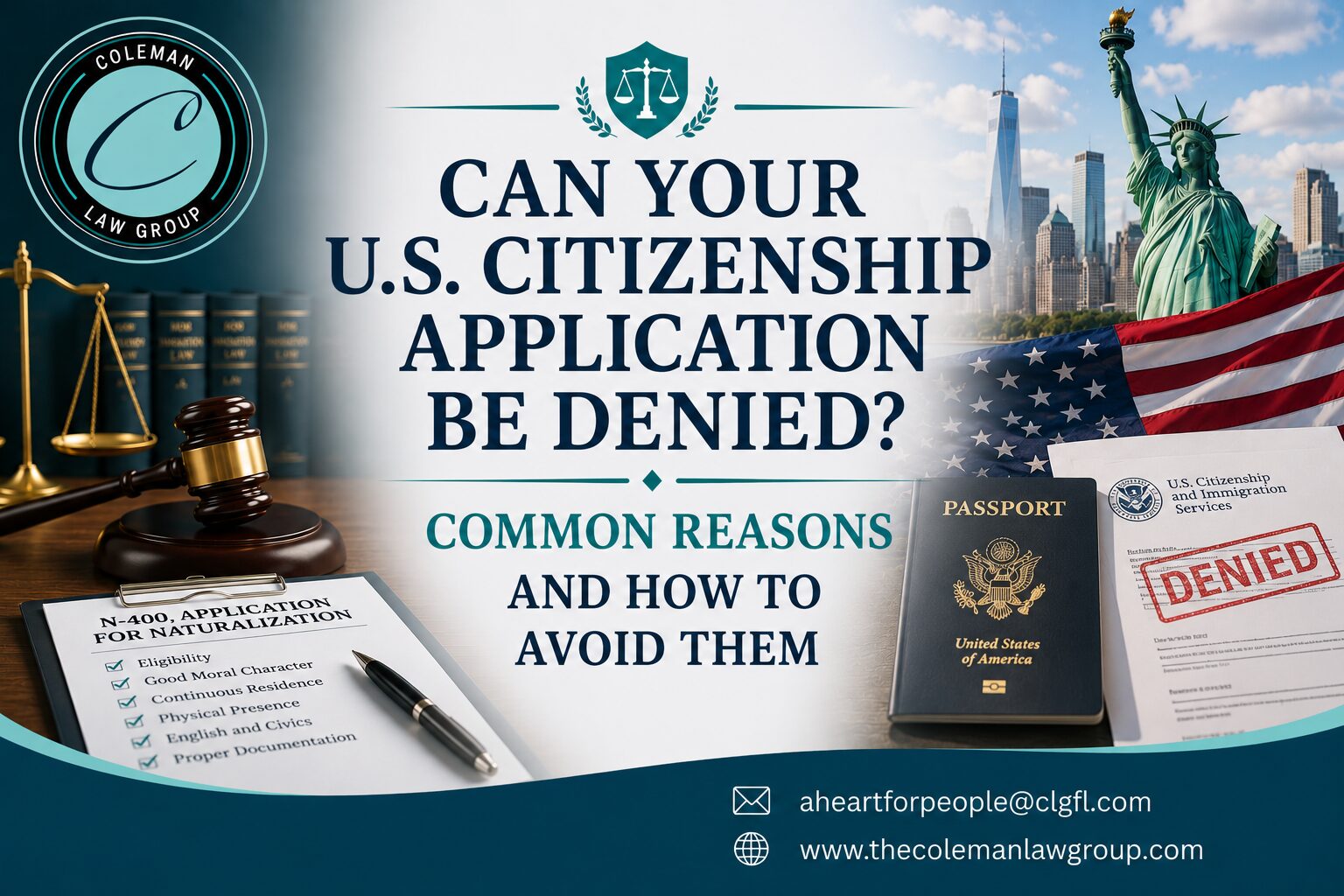
Getting your U.S. citizenship is a huge deal, but the path is full of technical tripwires that can stall your progress. Many people assume that if they’ve held a Green Card for the required period, approval is a sure thing. The N-400 application is a serious legal filing, and even small mistakes or omissions can result in a formal denial. While getting a rejection letter in the mail is stressful, most of these cases don’t fail because of bad luck; they fail because of avoidable errors during the paperwork or interview phase.
Whether you’re worried about your travel history, past tax filings, or just making sure every box on your U.S. citizenship application is checked correctly, knowing how to spot potential issues is your best defense. This guide is meant to strip away the confusion and show you how to build a clean, honest case. By handling these requirements with care and getting your documentation in order now, you stop guessing and start building a solid, successful application.
Why US Citizenship Applications Get Denied
When people start searching for the reason a citizenship application was denied, it’s usually because they didn’t realize how closely the government reviews their entire history. You aren’t just being judged on your behavior but on your overall record for your Green Card. If you don’t hit the basic benchmarks, the agency has the authority to stop your case in its tracks, regardless of how long you’ve lived here.
-
The Residency Trap
You cannot just live in the U.S. whenever it feels convenient. The rules regarding “continuous residence” and “physical presence” are rigid. If you take trips abroad, especially those lasting six months or longer, you might have accidentally broken your continuous residence. This can reset your eligibility clock entirely.
-
The “Good Moral Character” Hurdle
This is where most people make a mistake. Being a person of “good moral character” is a broad standard that goes far beyond a clean criminal record. It covers your tax history, whether you’ve kept up with child support, and even your honesty during the interview itself. If you haven’t filed taxes for a few years or if you have outstanding child support payments, you are already at a disadvantage before you even walk through the door.
-
Simple Paperwork Mistakes
Sometimes, the reason is just plain administrative. USCIS will reject your citizenship application for basic errors like a missing signature, an incorrect payment amount, or answers that conflict with your initial Green Card records. It is maddening to see your progress halted by these clerical mistakes, especially since they have zero impact on your actual eligibility for naturalization.
Keeping Your Residency Status Secure
Many applicants hit a wall with their citizenship application because they didn’t realize how strictly USCIS monitors time spent abroad. You’re required to maintain a continuous residence here, which means you can’t just disappear for months at a time. If you don’t show you’ve kept your main life anchored in the U.S., they will likely rule that your residency has been broken. Think of this as proving your life is truly rooted here, not just that you hold a Green Card.
Taking a trip longer than six months puts you in a tough spot: the government presumes you’ve abandoned your U.S. residence, and you have to scramble to provide evidence that your home and job were still here. If you’re gone for more than a year, it’s an automatic reset. You essentially lose your progress and have to restart your five-year residency requirement from the date you return.
“Physical presence” is the second half of this requirement and is essentially a must-meet condition. You must be physically on U.S. soil for at least half of your waiting period. If you are a standard permanent resident, you need at least 913 days of actual time in the country during the five-year window. If you are applying based on marriage to a U.S. citizen, you need at least 548 days in the U.S. during your three-year window.
How to Track Your Travel Properly
Keep your own record of every trip abroad, because relying on memory or hunting for stamps is a recipe for disaster. The government will cross-check your USCIS citizenship application against its internal records, and if there is a mismatch, it’ll consider you unreliable. Just be precise from the start. A simple inconsistency is a massive headache you really don’t want to deal with.
Proving Good Moral Character
You don’t have to be a perfect person to gain citizenship. What you need to do is show the government that you are a dependable, law-abiding adult. Immigration officials use the term “Good Moral Character” to describe this. They don’t just look at who you are today; they review your entire background to see whether you have been a stable member of society.
To learn how to avoid citizenship denial in this part of your case, you need to stop hiding things and start getting ahead of your past.
-
Be Honest About Your Legal Record
The biggest reason people get a USCIS citizenship application rejected is that they don’t grasp how the “continuous residence” rule actually works. The government needs to see that you’ve kept your life anchored in the U.S. without any long, unexplained gaps. If you’re spending months at a time living abroad, they’ll start to question whether you really consider the U.S. your home, and that’s a quick way to get your case denied.
-
Handling Your Financial and Personal Duties
USCIS wants to see that you’re serious about this process and that you aren’t cutting corners. Before you pull the trigger and mail in your N-400 application, you need to make sure you’ve finalized these things:
- Taxes: If you have unpaid taxes, set up a payment plan with the IRS and hold onto the paperwork. Proving you are actively trying to fix the debt is essential.
- Child Support: If you have court-ordered payments, stay current and keep your payment records in a safe place.
- Family Obligations: Any sign that you aren’t providing for your dependents can be used against you.
You need to show the USCIS that you’re a serious, responsible adult. Address any outstanding issues immediately rather than allowing them to emerge during the background check process. Transparency regarding your personal history is the most reliable way to maintain a straightforward application path.
Avoiding Simple Paperwork Mistakes
Don’t let your N-400 application fall apart over a basic clerical slip-up. While issues such as criminal records or residency time are critical, many applicants encounter problems simply because their documentation is imprecise. Given the sheer volume of forms the government reviews, an inconsistent file creates unnecessary friction that will almost certainly lead to processing delays.
Keep Your History Consistent
The most common mistake in this process is providing details that contradict your past filings. If you marked a different status on a form years ago, or if the addresses you list don’t match your previous records, an officer will ask questions. Make sure every address, every job, and every trip you have taken are accurately reflected and align with what you have told government officers before.
Preparing for the Final Test
You face the English and civics tests at the very end of the process, and they frequently trip people up. Many applicants walk in thinking they can get by with little work, but that is a serious miscalculation.
- Drill the Material: Stop looking for shortcuts; use the official USCIS study guides. They cover exactly what you need. Also, if the idea of the interview has you sweating, grab a friend or a tutor. Have them fire questions at you until you’re comfortable answering on the fly.
Going into that interview nervous is a recipe for trouble. You start stuttering, and suddenly, a simple answer sounds like you’re being dishonest. You need to be comfortable enough to speak clearly. It’s about showing them you’re legit. If you’ve done your homework, it shows, and that’s the kind of impression you want to leave.
-
Interview Day and Getting a Decision
By the time you get to the interview, you’re in the final stretch. Sure, you’ll be stressed, but remember the officer is only there to confirm the info they already have on file. It’s a quick 20-30 minute conversation. It’s not an interrogation; it’s just a standard business meeting.
What Happens When You Arrive
After checking in and clearing security, you’ll be brought into a private office. First thing is the oath; once you’re sworn in, you’re legally bound to be 100% honest. Then, they’ll pull out your N-400 and go through it one page at a time. They’re just making sure your information is still up to date, so expect them to verify every single answer.
While they review your file, they will also test your skills:
- The Language Check: Don’t mistake it for a single, isolated test. It’s happening from start to finish. They’re judging your English during every single exchange you have with them. Our advice? Speak directly and keep your answers focused.
- The Civics Test: They will ask you a handful of questions about American history and how the government works. If you have spent time with the official study guides, you should have no trouble with these.
Understanding Your Results
As soon as the interview wraps up, the officer will hand you a document called Form N-652. This paper tells you the status of your case. You will generally see one of three results:
- Approval: You’ve got the green light. You’ve met all the legal standards, so you’re just sitting tight until they mail you the details for your ceremony. That’s your next, and final, step.
- Continued: It’s not a final rejection; it’s just a pause. This happens if your file is missing proof or if you stumbled on a test. The officer will hand you a note explaining what you need to fix or when to come back. Just follow those instructions, and you’ll get another shot.
- Denial: A denial means you didn’t meet the legal standards, plain and simple. You’ll get a letter explaining the reasons behind the decision. If you think they got it wrong, the notice will tell you exactly how to appeal it.
If you are approved, your final step is the Oath Ceremony. You aren’t a citizen until you’ve taken the oath and gotten your Certificate of Naturalization. It’s that final step that counts. When you go to the ceremony, plan on turning in your Green Card. It’s useless once you’re officially a citizen, so they’ll take it from you then.
What to Do After You Take the Oath
Your journey hits the finish line as soon as you finish the Oath Ceremony and hold your Certificate of Naturalization. You’ve made it. Congratulations, you are a U.S. citizen. While the heavy lifting is done, you still have some tasks to ensure your status is updated across the board. Grab your passport, update your Social Security files, and get ready for your next chapter.
Update Your Personal Files
Your legal status has changed, so you need to inform the agencies you regularly deal with.
- Social Security: Go to a local office to update your record. This ensures your work history and future benefits are tied to your citizenship.
- Passport: Apply for a U.S. passport right away. Most people do this at a post office. It is the most convenient way to prove your status for travel or work.
- Voter Registration: You now have the right to vote in federal elections. You can often register when you apply for your passport or update your driver’s license.
Guard Your Certificate
That Certificate of Naturalization is vital—do not lose it. Replacing a damaged or missing one is a slow, expensive, and massive headache that you really want to avoid. Do not carry it in your wallet. Put it in a fireproof safe or a bank box. You should only take it out when you really need it, like when you apply for your first passport or for a government job.
Becoming a citizen is a huge deal, but completing these tasks helps you avoid government red tape later. Get these done shortly after your ceremony, and you’ll be finished with the process.
Your Path to Citizenship Starts Here
Applying for citizenship is a huge move, though the process can be confusing and draining. It involves strict requirements, repetitive forms, and tight deadlines. Doing it on your own can turn a simple task into a major headache, especially if you’re concerned about past legal issues or the pressure of the final interview.
At the Coleman Law Group, we focus on taking that weight off your shoulders. We don’t just fill out the boxes on your N-400 application; we review your specific history, spot potential roadblocks before they arise, and ensure your file is as solid as possible. You only want to go through this once, and we are here to help you get it right the first time. Give us a call at 727-214-0400, and let’s get your case moving.